
Reviewed · MOZART & CLASSICAL CONCERTS
Vienna: Romantic Classics Piano, Violin, and Cello Concert
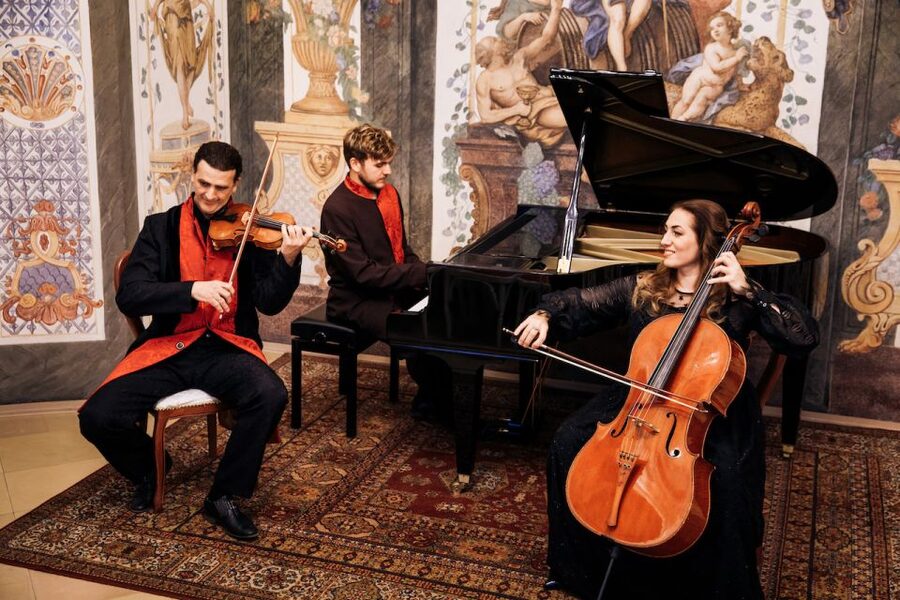
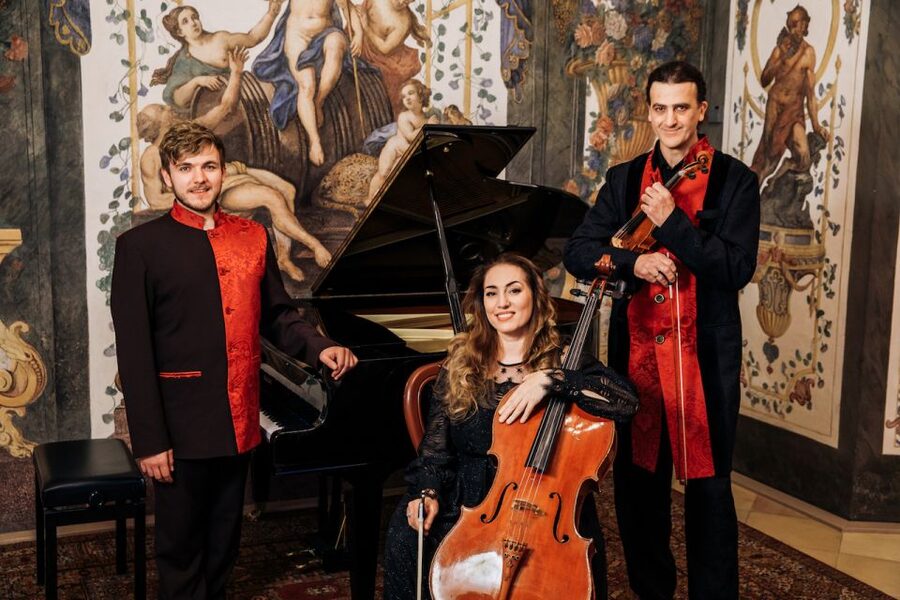
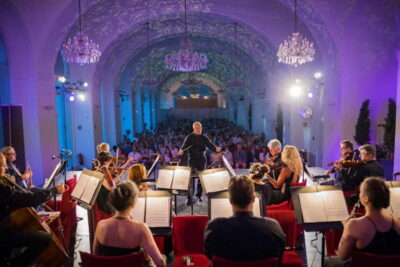
The setting is part of the appeal here: Sala Terrena’s frescoes and intimate scale put you close to a piano, violin, and cello rather than in a huge concert hall. The program moves from Beethoven’s Moonlight Sonata and Liszt’s Un sospiro to Chopin, Schubert, Mozart, Brahms, and several shorter works.
I like the clear acoustics, which let you hear the detail in a small room, and the easy location, just 150 meters from St. Stephen’s Cathedral. Claudio Bentes, Dushan Sretovic, and Teodora Miteva bring strong credentials to the program. The main drawback is that refreshments are not included, and any purchase during the break requires cash.
Key points to know before booking
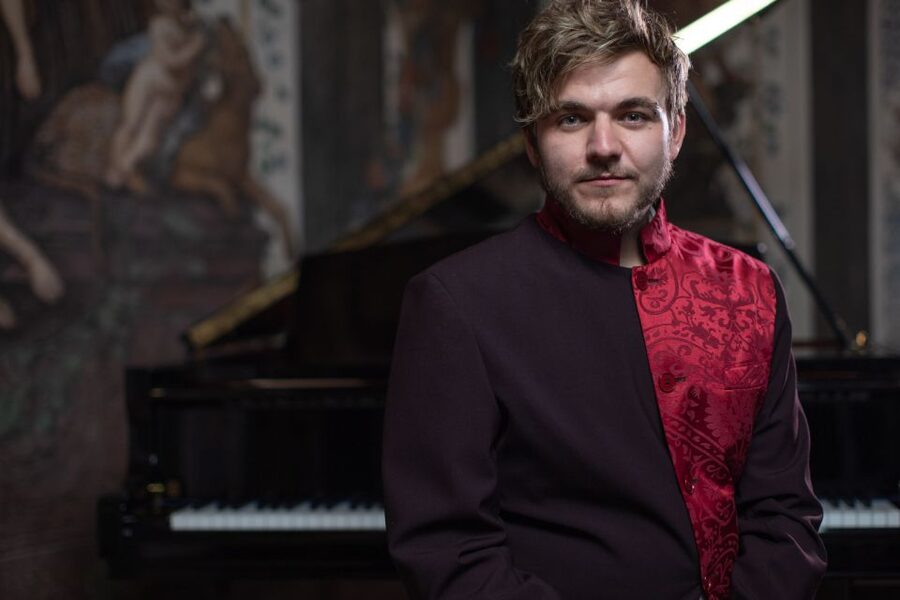
- A frescoed historic room: The Sala Terrena gives this concert a close, personal feel.
- A broad 90-minute program: You hear Beethoven, Chopin, Mozart, Liszt, Schubert, Brahms, Haydn, Bach, Paganini, Saint-Saëns, and Massenet.
- Named performers: Violinist Claudio Bentes, pianist Dushan Sretovic, and soloist Teodora Miteva appear in the program information.
- Several seating choices: Student tickets, back-row tickets, and seats closer to the musicians are available.
- An easy central meeting point: Enter through the Deutschordenskirche gate, near St. Stephen’s Cathedral.
- A few practical limits: Drinks are not part of the ticket, and the nearby toilet signage may be easy to miss.
A chamber concert beside St. Stephen’s Cathedral
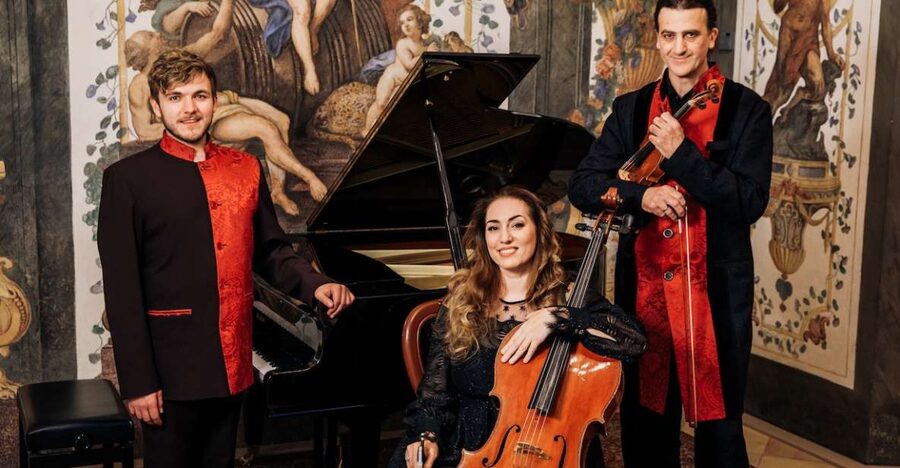
This is a good choice if you want classical music without giving up an evening to a long opera or symphony performance. The concert lasts 90 minutes, and the venue sits in central Vienna, close enough to St. Stephen’s Cathedral that you can pair the music with a walk through the old city before or after.
The entrance point matters. Go to the gate at Deutschordenskirche, where you will find a poster stand for concerts at Mozarthaus. The actual concert venue is about 150 meters from St. Stephen’s Cathedral, so allow time to find the correct doorway rather than arriving at the last minute.
You are asked to arrive 15 minutes before the performance. That is sensible here. A small historic building can feel confusing if you rush in, and you will want time to locate your seat, check a coat, and settle before the first piece begins.
More Classical Concerts in Vienna
- Vienna: Vivaldi’s Four Seasons Concert in Karlskirche
★ 4.7 · 14,951 reviews - Vienna: Classical Concert in the World-Famous Musikverein
★ 4.6 · 6,673 reviews - Vienna: Classical Concert at St. Stephen’s Cathedral
★ 4.1 · 4,177 reviews
Why the Sala Terrena changes the evening
The Sala Terrena is not a large modern auditorium. Its frescoes give the room a decorative, old-world character, while the compact layout keeps the musicians physically close to the audience. One of the strongest features of this concert is the balance between visual atmosphere and good sound.
Small rooms can sometimes produce muddy or overly loud music. That does not appear to be the problem here. The acoustics are described as clear, with enough depth for each note to register. You should be able to follow the contrast between piano passages, singing violin lines, and the lower warmth of the cello.
The close setting also makes the performance feel less formal than a major concert hall. You are not simply watching figures far away on a stage. You can see the musicians work through the phrasing and dynamics at a much shorter distance. That is especially useful if you enjoy the physical side of chamber music, such as the quick exchanges between instruments.
The venue’s size has one tradeoff. A smaller room means the seat you choose can affect your view and sense of closeness. If being near the performers matters to you, select one of the closer seating categories rather than assuming every ticket gives the same experience.
The program: famous melodies and less familiar contrasts
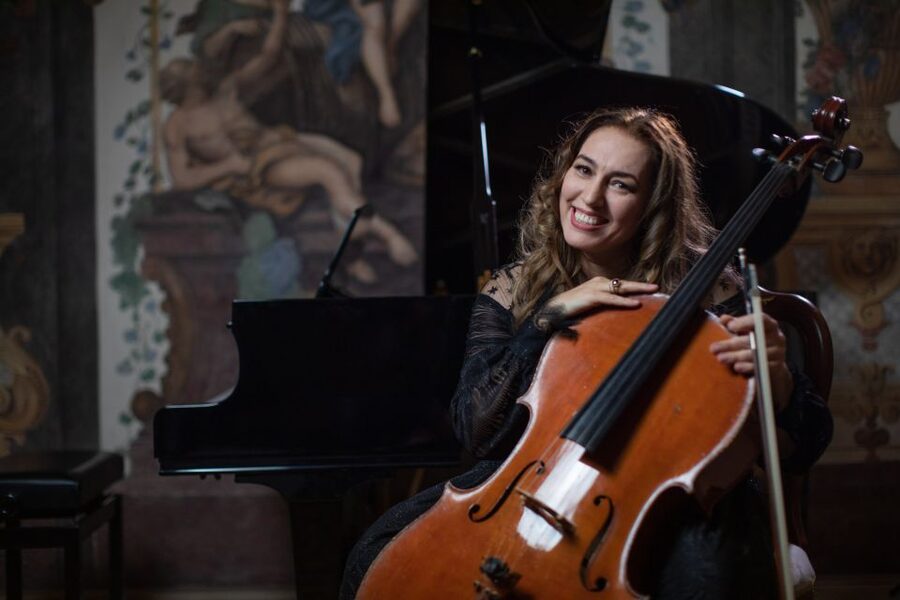
The concert is called Romantic Classics, but the program reaches beyond the Romantic period. It begins with Haydn’s Trio all’ungarese, Hob XV:25, including its Andante, Poco Adagio, and Rondo finale. The work gives the evening a lively opening and brings the three instruments together before the more famous solo selections.
Beethoven follows with the Adagio from the Moonlight Sonata. This slow movement is one of the best-known piano pieces in the classical repertoire. Its power comes from restraint rather than speed, so the quiet room and attentive setting suit it well.
Mozart’s La tartine de beurre, also known as Das Butterbrot, offers a lighter change of mood. The short piece is playful and plainspoken, a useful contrast after Beethoven’s sombre opening.
The program then returns to Beethoven with the Allegro con brio from Sonata Op. 2. Here you get a sharper, more energetic side of the composer. The shift from the Moonlight Sonata’s calm Adagio to a brisk movement gives the first part of the concert some welcome variety.
Liszt’s Un sospiro adds the polished, flowing style associated with a virtuoso piano recital. It is followed by Chopin’s Nocturne in C minor, Op. 48 No. 1, a piece with both lyricism and weight. Chopin’s Étude Op. 10 No. 1 in C major brings technical demands into the program. These works are particularly relevant if you are coming for the piano, since they show different sides of the instrument, from singing melody to athletic fingerwork.
From Bach and Paganini to The Swan
The second half of the listed program broadens the sound again. Bach’s Cello Suite in G major, BWV 1007, begins with the Allegro. A cello suite can make one instrument sound almost like a complete musical conversation, and the cello’s low register should provide a strong change from the piano-heavy works earlier in the evening.
Paganini’s Caprice 13 brings the violin into sharper focus. Paganini is closely linked with violin virtuosity, so this is a natural showcase for Claudio Bentes. It gives you a chance to hear the instrument’s speed and precision at close range.
Saint-Saëns’s The Swan is gentler. The familiar melody is often associated with cello, and its smooth, reflective character offers a calm pause after Paganini’s technical display.
Massenet’s Thaïs Meditation continues that graceful mood. The piece is widely known for its expressive violin line, so it fits the stated focus on love, passion, and Romantic feeling without requiring you to know the full opera from which it comes.
The program closes with Schubert’s Trio in E-flat major, Op. 100, specifically the Andante con moto. This is one of the most substantial ensemble works in the program and gives the evening a proper chamber-music ending. The piano, violin, and cello share the musical conversation, rather than leaving one player to carry the entire work.
Other concert evenings in Vienna:
- Vienna: Mozart Concert at the Golden Hall
★ 4.6 · 3,986 reviews - Vienna: Classical Concert in St. Anne’s Church (Annakirche)
★ 4.6 · 3,414 reviews - Vienna: Classical Concert at Mozart’s First House
2,423 reviews - Vienna: Mozart and Strauss Concert at Schönbrunn
★ 4.5 · 2,364 reviews
The musicians and what they bring
The advertised performers include violinist Claudio Bentes, pianist Dushan Sretovic, and Teodora Miteva, described as an outstanding soloist with numerous international competition wins. Dushan Sretovic is also presented as a multiple award-winning piano virtuoso known for Chopin interpretations and international performances.
Those details matter because the program asks a lot from the performers. It is not just a collection of easy background melodies. The piano selections include Liszt and two demanding Chopin works, while the violin program includes Paganini and Massenet. The ensemble pieces require tight coordination between all three musicians.
You should also know that the information emphasizes different performers in different parts of the presentation. Claudio Bentes is specifically identified as the violinist, while Dushan Sretovic is highlighted for the piano and Chopin. Teodora Miteva is named as a soloist. The exact division of every listed piece between the musicians is not fully explained, so do not expect a detailed performer-by-performer program guide in advance.
The strongest musical appeal is variety. You get familiar names and recognizable pieces, but also shorter works that create contrast. If you are new to classical music, the famous selections provide an easy way in. If you already know the standard repertoire, the close chamber setting and mixed program still give the evening a clear purpose.
Choosing a ticket and seat
Three broad ticket choices are available: student tickets, back-row tickets, and seats closer to the performers. This is useful because the right choice depends on what you value.
The student option is the obvious way to keep the cost down if you qualify. Check the booking conditions for any proof requirement, since the supplied information does not specify how student eligibility is handled.
Back-row tickets suit you if price matters more than proximity. The room is small, and the acoustics are reported to be good, so a back-row seat should still let you hear the music clearly. You may lose some of the visual detail of the players’ expressions and technique, but the sound remains the main reason to attend.
The closer seats are best if you want the chamber-music feeling. They should make the interaction between piano, violin, and cello easier to watch. I would choose this category for a special evening, for a first concert in Vienna, or if you enjoy seeing how musicians shape a performance rather than treating music as background.
Is $69 a fair price?
At $69 per person, this sits above a casual street performance but below the cost of many major Vienna concert evenings. The price includes the concert and cloakroom, with a 90-minute running time. It does not include refreshments.
For me, the value depends on how much you care about the venue and seat location. You are paying for a focused concert in a distinctive room, not for a full evening of dinner, drinks, or a large orchestra. If your priority is famous music performed in a central historic setting, the price is reasonable.
The compact program also helps with time. You can fit it into a busy Vienna schedule without losing an entire night. Attend near St. Stephen’s Cathedral, then continue to dinner or an evening walk through the center.
One cost to keep in mind is the refreshment policy. Drinks are not included, and cash is needed for purchases outside during the break. If you want a completely tidy, all-in-one evening, this may feel slightly awkward. Bring some cash if refreshments matter to you, and do not count on the concert ticket covering them.
Practical details that make the evening easier
The concert is listed as wheelchair accessible. English and German are the available languages, and the host or greeter can assist in either language.
A cloakroom is included, which is helpful in Vienna during colder months. You do not need to carry a heavy coat into a close seating area, though you should still arrive early enough to use it without rushing.
To find the venue, head for St. Stephen’s Cathedral and then look for the Deutschordenskirche gate. The concert poster stand is located there. Since the concert venue is only 150 meters from the cathedral, the area is easy to reach once you identify the correct entrance.
Toilet signage may not be obvious. Plan ahead, especially if you prefer not to leave the room once the music begins. The practical complaint about unclear signs is small, but it is the sort of detail that can affect a short concert evening.
Free cancellation is available up to 24 hours before the start time, and you can reserve now while paying later. That makes this easier to fit into a changing Vienna schedule. Check the available start times when booking, since the exact performance time is not fixed in the basic information.
Who will enjoy this concert most?
I would recommend it to you if you want a compact introduction to Vienna’s classical music scene, especially if you like recognizable composers and a historic setting. The program includes enough familiar material to keep first-time listeners comfortable, while the technical works give experienced listeners something to follow.
It suits couples and solo visitors who want an evening that feels special without requiring formal dress or a long opera production. It also works for a parent and older child who can sit quietly for 90 minutes and would like to hear several instruments in one performance.
You may want to choose something else if you are looking for a full orchestra, a staged opera, or a substantial food-and-drink package. This is chamber music in an intimate room. Its appeal comes from closeness, acoustics, and a focused selection of pieces, not from scale.
Should you book it?
Book this concert if you want a central Vienna location, a beautiful frescoed room, and a wide sample of famous classical works in 90 minutes. I especially like it for a first visit to Vienna, when you want an evening of music that is easy to reach and simple to fit into your plans.
Choose a closer seat if the visual connection with the musicians matters to you. Pick the back row or student option if you mainly want good sound at a lower price. Bring cash for any refreshments, arrive 15 minutes early, and follow the Deutschordenskirche entrance instructions carefully. With those small points handled, this is a practical and atmospheric way to hear Beethoven, Chopin, Mozart, Liszt, Schubert, and more.
FAQ
How long does the concert last?
The concert lasts 90 minutes.
Where is the concert held?
The venue is the Sala Terrena, about 150 meters from St. Stephen’s Cathedral in Vienna.
How do I find the entrance?
Enter through the gate at Deutschordenskirche. You will also find a poster stand for concerts at Mozarthaus there.
Which composers are included?
The program includes Haydn, Beethoven, Mozart, Liszt, Chopin, Bach, Paganini, Saint-Saëns, Massenet, and Schubert. The highlights also mention Brahms.
Who performs in the concert?
The program information names violinist Claudio Bentes, pianist Dushan Sretovic, and soloist Teodora Miteva.
What seating options are available?
You can choose from student tickets, back-row tickets, and tickets for seats closer to the performers.
Is the venue wheelchair accessible?
Yes, the activity is listed as wheelchair accessible.
Are drinks included?
No. Refreshments are not included in the ticket. Purchases during the break are available for cash outside the concert area.
Just added in Vienna
- World War II History Vienna Old Town Private Walking Tour★ 4.8 · 9 reviews
- Vienna: Wiener Schnitzel and Strudel Cooking Class★ 4.9 · 126 reviews
- Vienna: Wine Tasting Tour★ 4.8 · 61 reviews
- Vienna: Winery and Wine Tasting Tour with a Wine Expert★ 5.0 · 5 reviews
- Vienna: Wine Tasting E-Bike Tour★ 4.9 · 46 reviews
- Vienna: Wine Tasting at Schönbrunn Palace★ 4.3 · 71 reviews
- Vienna: Unforgettable Private City Tour★ 5.0 · 7 reviews
- Vienna Urban Art Tour: Explore a different side of Vienna!★ 3.8 · 14 reviews
Mozart & Classical Concerts, compared.
Vivaldi’s Four Seasons Concert in Karlskirche
Read our review →
Classical Concert in the World-Famous Musikverein
Read our review →
Classical Concert in St. Anne’s Church (Annakirche)
Read our review →
Browse the lists this tour appears in