
Reviewed · MOZART & CLASSICAL CONCERTS
Vienna Private Walking Tour including State Opera
Vienna’s grandest surprise is how much history fits into a short walk. This private tour links the State Opera, Hofburg, Roman ruins, Graben, and Stephansdom while explaining the city’s long path from Vindobona to Habsburg capital and modern Austria. I like the clear three-hour route and the freedom of a private group of up to 15 people. I also like that the tour connects architecture with music, from Mozart to Mahler.
The main caution is the State Opera promise. The visit may mean only the lobby, and a full guided Opera tour may need a separate booking and extra payment. Guide quality also matters greatly here: one four-star booking praised the guide’s skill and lively three hours, while another reported deeply troubling political and historical comments by guide Franziska Pfisker. Ask exactly who will guide you and what Opera access is included before paying.
Key points to know before booking
- The Opera visit may be lobby-only: A full backstage or interior tour is not guaranteed by the supplied details.
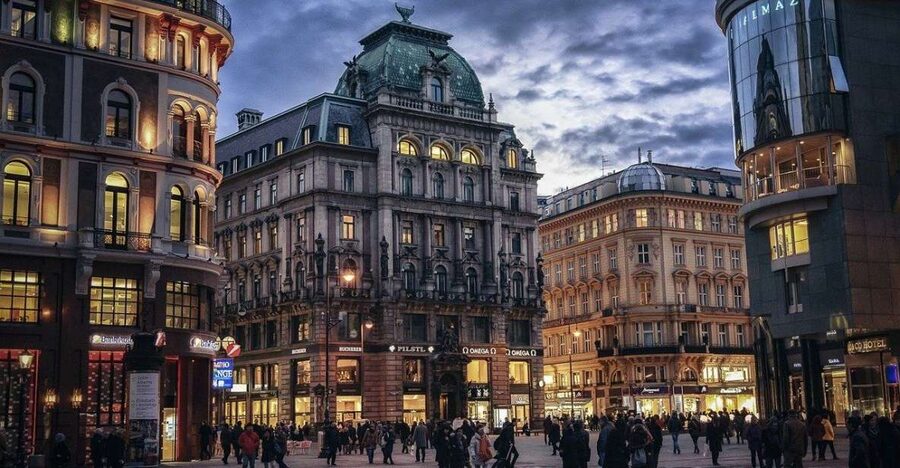
- The route covers Vienna’s central core: You visit Stephansplatz, Stephansdom, Graben, Peterskirche, the Hofburg, Michaelerkirche, the Mozart Monument, and the State Opera.
- Private pricing can work for a group: The listed price is $323 for up to 15 people, not per person.
- The tour packs in several centuries: Roman Vindobona, medieval Vienna, Habsburg rule, the Holy Roman Empire, the Austro-Hungarian Empire, World Wars, and the Second Republic all enter the story.
- Walking shoes matter: The activity is not suitable for people with mobility impairments.
- Guide standards need checking: English and German are offered, but the guide’s approach can shape the entire three hours.
What the $323 private price really buys
The price is $323 per group of up to 15 people. For a full group, that works out to about $22 per person. For two people, however, the same tour costs about $161.50 each, so the value depends heavily on your group size.
You are paying for a private guide rather than a standard shared walk. That can be useful if you want to ask questions about Habsburg rulers, musical history, Jewish Vienna, the World Wars, or the city’s imperial buildings without following a fixed group. It also gives your party more control over the pace, at least in theory.
I would judge the price mainly by the guide and the Opera access. The central walking route includes many sights that you can see without an entrance ticket. The real added value is the explanation: why the Hofburg grew into an imperial complex, how Vienna’s music scene developed, and how the city changed after the monarchy ended.
The phrase including State Opera needs careful attention. One booking reported that the Opera visit was only the lobby. Another booking said a separate Opera tour had to be booked and paid for, and that the guide explained this only during the walk. That is not a small detail. If your main reason for booking is a proper interior tour, confirm the exact arrangement before the cancellation deadline.
More Classical Concerts in Vienna
- Vienna: Vivaldi’s Four Seasons Concert in Karlskirche
★ 4.7 · 14,951 reviews - Vienna: Classical Concert in the World-Famous Musikverein
★ 4.6 · 6,673 reviews - Vienna: Classical Concert at St. Stephen’s Cathedral
★ 4.1 · 4,177 reviews
Starting at Stephansplatz and Vienna Cathedral
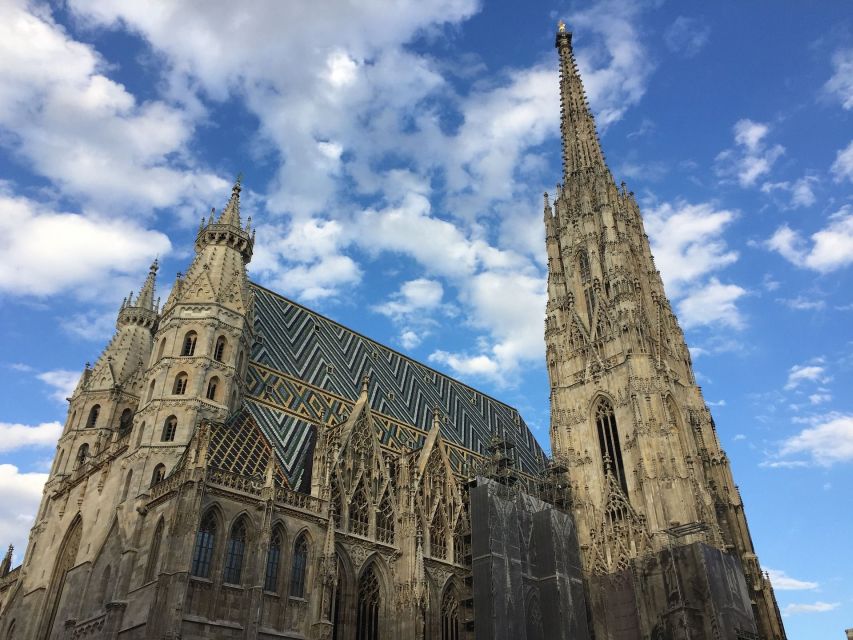
The meeting point is Stephansplatz 8A, in the center of Vienna. This places you beside Stephansdom, the city’s great cathedral and one of the main reference points for central Vienna.
Stephansdom is presented as a Roman-Gothic masterpiece and one of the tallest churches in the world. The tour does not list a cathedral entrance, so you should think of this stop as an exterior visit unless your guide tells you otherwise. Even from outside, the cathedral gives the walk a strong opening. It is the sort of building that helps you understand Vienna’s scale, religious power, and long civic importance.
The square is also a practical meeting point. It is central and easy to recognize, but it can be busy. Arrive early enough to find the exact address without rushing. The tour lasts three hours, and the route contains many stops, so a late start could mean less time for questions.
Roman Vienna beneath the imperial center
One of the better features of this walk is the way it reaches below the polished imperial image. Around the Hofburg and central squares, you can see ancient Roman ruins, sections of medieval walls, and remnants of the old Burg Theatre.
Vienna began as Roman Vindobona, and the route uses those remains to show that the city was not created by the Habsburgs from scratch. The imperial center grew over older streets, defenses, and settlements. That layering is one reason a walking tour can help. A guide can point out traces that are easy to miss when you are focused only on ornate facades.
The remains are not presented as a separate archaeological museum visit. They are part of the city streets, which means this stop is brief and observational rather than a long site visit. You will want a guide who explains what you are seeing clearly. Without context, a few stones and wall fragments can pass by in seconds.
The Hofburg, Michaelerkirche, and Habsburg power
The Hofburg was the Habsburgs’ home for centuries. Its exterior facades help explain how a royal residence can become the center of government, ceremony, religion, and court life.
The tour places the Hofburg beside the Art History Museum, allowing you to compare two types of imperial ambition. One building represents political power and residence. The other points toward collecting, fine arts, and the cultural reach of the monarchy.
You then pass through Michaeler Gate, or Michaeler Tor, and see Michaelerkirche. The church served as the official church of the emperors for years. That detail gives the stop more weight than a quick facade photograph. It connects worship, dynastic ceremony, and the public image of Habsburg rule.
This is also where the tour’s historical range can become useful. The Habsburg story is not only about palaces and waltzes. It includes the Holy Roman Empire, later imperial structures, and the Austro-Hungarian Empire. A good guide should help you keep those political periods separate rather than blending them into one long royal story.
More Walking Tours in Vienna
- Vienna: Guided Walking Tour of City Center Highlights
★ 4.7 · 4,989 reviews - Vienna: Vienna Central Cemetery Guided Walking Tour
★ 4.8 · 3,307 reviews - Vienna: Guided Walking Tour of City Highlights & Hidden Gems
★ 4.9 · 2,180 reviews - Vienna: Viennese Underworld Guided Walking Tour
★ 4.7 · 1,865 reviews
Graben, Richard the Lionheart, and Peterskirche
The walk continues along Graben, one of Vienna’s best-known central streets. Its origins reach back to the Roman period, and the route includes the unusual detail that Richard the Lionheart once used this way to enter the city.
That kind of connection gives the street more character. Graben is not only a shopping and strolling avenue. It sits on an old line through the city, carrying traces of Roman, medieval, imperial, and modern Vienna.
Peterskirche adds another religious landmark. The church has been associated with the site since the fourth century, according to the tour description. You should expect an exterior-focused stop unless an interior visit is specifically confirmed. The point is to see how old religious foundations remain part of the modern center.
I like this part of the route because the sights come close together. You spend less time walking between major points and more time looking at Vienna’s central buildings. The tradeoff is that the tour can feel packed. If your guide tries to cover every date and ruler, the details may blur. Ask questions about the parts that interest you most.
The State Opera and Vienna’s musical identity
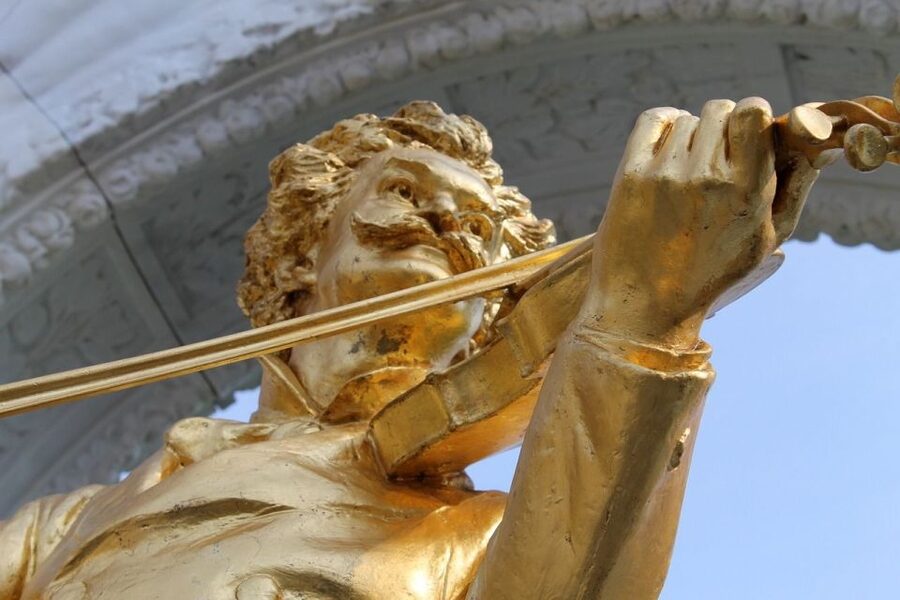
The State Opera is the tour’s headline stop. The building dates from the 1860s, when it was known as the Vienna Court Opera. The name changed in 1920 as the early Austrian Republic took shape.
That name change matters. The Opera is not just a performance venue. It reflects the shift from Habsburg court culture to republican Austria. The building’s history also connects directly with Vienna’s place in classical music.
The Opera’s repertory includes La Traviata, La Clemenza di Tito, and Verdi’s Don Carlo. Its former directors include Gustav Mahler, Herbert von Karajan, and Claudio Abbado. These names give the building a strong musical identity, but a short visit cannot cover the entire story in depth.
The practical issue is access. The supplied details say a visit to the State Opera is included, but a booking reported that the actual stop was limited to the lobby. Another booking said a full Opera tour required a separate reservation and extra payment. Treat the included visit as an introduction unless you receive written confirmation of a longer tour.
Ask three direct questions before booking:
- Is the Opera visit only the lobby?
- Is a guided interior tour included in the $323?
- If not, what is the additional fee and who arranges it?
The answers will tell you if this is primarily a city walk with an Opera stop or a proper Opera tour combined with sightseeing.
Mozart, Mahler, and the city of music
The Mozart Monument adds a music-focused pause to the route. It helps connect the streets and palaces with the composers who made Vienna famous: Wolfgang Amadeus Mozart, Josef Haydn, Ludwig van Beethoven, Franz Schubert, Johann Strauss the elder and younger, Johannes Brahms, and Gustav Mahler.
I like that the music story is not treated as a separate concert topic. It is placed alongside the city’s political and architectural history. Vienna’s musical identity grew within the same court, church, and civic world that produced its palaces and public squares.
Still, this is a walking tour, not a concert or music-history seminar. No performance is included in the activity details. If you want to hear an opera or concert, you will need a separate plan. The tour can help you understand why the city matters musically, but it does not replace attending a performance.
From empire to war and the Second Republic
The tour promises discussion of World War history and the birth of the Second Republic. That is an important part of Vienna, and it should not be skipped in favor of palaces and composers.
The city’s modern identity cannot be understood only through Habsburg ceremony. The end of the monarchy, the First Austrian Republic, the World Wars, and the creation of the Second Republic changed Vienna’s government and public life. The Opera’s renaming in 1920 offers one clear example of that transition.
The route also reaches the Jewish quarter. This is a place where careful language matters. One booking described a guide using an inadequate phrase about people who died in concentration camps, and the customer corrected the wording to reflect the systematic murder of Jewish people and others. That complaint also described political comments about immigrants, a mayor, and social housing.
I cannot verify the full circumstances of that account, but it is a serious warning about guide conduct. Vienna’s Jewish history and the Holocaust require precision and respect. Before joining, ask for the guide’s name and make clear that you expect a factual, respectful presentation of difficult history. Guide Franziska Pfisker was named in that complaint. Another guide received strong praise for being competent and making the three hours pass quickly, so the experience may vary sharply with the person assigned.
Pace, walking conditions, and group size
Three hours is enough to see a large part of central Vienna, but the schedule will be active. You move among Stephansplatz, Peterskirche, Graben, the Hofburg, Michaelerkirche, the Mozart Monument, the Art History Museum, and the Opera.
Wear comfortable shoes. The activity is not suitable for people with mobility impairments, and no special assistance is described. The route includes city streets and several historic areas, so you should be ready to walk and remain standing for much of the tour.
The private group can include up to 15 people. That is a useful size for a family or friend group, especially if you want to ask questions. It is less intimate than a private tour for two or four, but the fixed group price becomes more attractive as your numbers increase.
The advertised languages are English and German. Make sure the requested language is confirmed when you book, especially if your group includes people with different language needs.
Who will get the most from this Vienna walk?
I would consider this tour if you have limited time in Vienna and want a single historical orientation through the central sights. It suits first-time visitors who want the Habsburg story, musical heritage, Roman remains, and modern political history connected in one route.
It also works well for a group of friends or family members who can share the $323 cost. The private format lets you focus questions on architecture, dynasties, opera, music, or twentieth-century history.
I would be more cautious if your main goal is a full State Opera tour. The supplied booking details do not make clear that the Opera visit includes more than the lobby, and one customer said a separate tour and fee were required.
I would also avoid booking without clarification if you want a carefully handled discussion of Nazi history, Jewish Vienna, and modern Austrian politics. The guide may make or break this walk.
Should you book the Vienna Private Walking Tour?
Book it if you want a private three-hour orientation to Vienna’s center and your group is large enough to make the $323 price reasonable. The route covers an impressive number of major sights, and one guide was praised for clear explanations and a lively pace.
Do not book it on the assumption that a full State Opera tour is automatically included. Confirm the access in writing, and ask who your guide will be. If the Opera lobby is enough for you and the guide is a good fit, this can be a useful first walk through Vienna. If you want detailed Opera access or a guaranteed specialist approach to difficult history, arrange those parts separately.
FAQ
How long does the private Vienna walking tour last?
The tour lasts three hours.
Where does the tour meet?
The meeting point is Stephansplatz 8A, 1010 Vienna, Austria.
What languages are available?
The live guide is available in English or German.
How many people can join the private group?
The price covers a private group of up to 15 people.
Is the State Opera visit a full guided tour?
The supplied information does not guarantee a full guided Opera tour. One booking described the visit as limited to the lobby, while another said a separate Opera tour required an additional booking and payment. Confirm the exact access before booking.
Are entrance fees included?
Entrance fees are not included. This is especially important for anyone expecting more than an exterior or lobby visit at the State Opera.
Is the tour suitable for people with mobility impairments?
No. The activity is listed as unsuitable for people with mobility impairments. Comfortable shoes are recommended.
More Mozart and classical concerts in Vienna
- Vienna: Mozart Concert at the Golden Hall
★ 4.6 · 3,986 reviews - Vienna: Classical Concert in St. Anne’s Church (Annakirche)
★ 4.6 · 3,414 reviews - Vienna: Classical Concert at Mozart’s First House
2,423 reviews - Vienna: Mozart and Strauss Concert at Schönbrunn
★ 4.5 · 2,364 reviews
Just added in Vienna
- World War II History Vienna Old Town Private Walking Tour★ 4.8 · 9 reviews
- Vienna: Wiener Schnitzel and Strudel Cooking Class★ 4.9 · 126 reviews
- Vienna: Wine Tasting Tour★ 4.8 · 61 reviews
- Vienna: Winery and Wine Tasting Tour with a Wine Expert★ 5.0 · 5 reviews
- Vienna: Wine Tasting E-Bike Tour★ 4.9 · 46 reviews
- Vienna: Wine Tasting at Schönbrunn Palace★ 4.3 · 71 reviews
- Vienna: Unforgettable Private City Tour★ 5.0 · 7 reviews
- Vienna Urban Art Tour: Explore a different side of Vienna!★ 3.8 · 14 reviews
Mozart & Classical Concerts, compared.
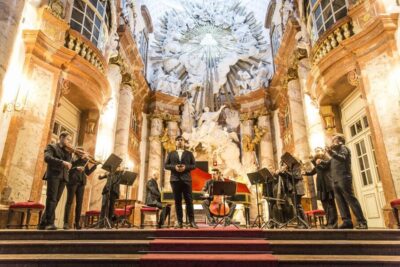
Vivaldi’s Four Seasons Concert in Karlskirche
Read our review →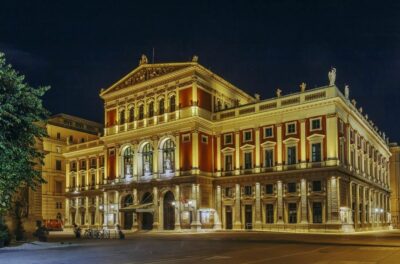
Classical Concert in the World-Famous Musikverein
Read our review →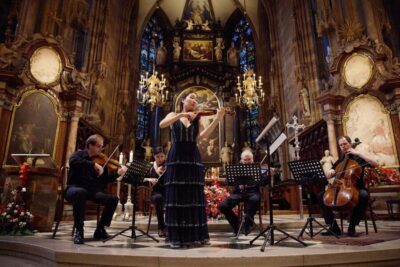
Classical Concert in St. Anne’s Church (Annakirche)
Read our review →
Browse the lists this tour appears in