
Reviewed · MOZART & CLASSICAL CONCERTS
Vienna: Mythos Mozart Experience
Mozart’s final Vienna is presented here as a moving blend of music, light, film, and digital art. In the building where he spent the last year of his life, you’ll pass through rooms devoted to his death, his city, his music, and his lasting influence. The 1,500-candle Requiem room is the most striking stop, while the 360-degree views of 1791 Vienna give useful historical context.
I like the way the exhibition welcomes people who know little about classical music, and I like the hands-on Little Night Music room, where you can try instruments from around the world. The main drawback is that this is more an artistic tribute than a detailed biography, so anyone hoping for a full account of Mozart’s life, compositions, and personal world may find the information light.
Key points at a glance
- Mozart’s final address: Visit the building where Mozart spent his last year and composed The Magic Flute and The Requiem.
- 1,500 candles: The Requiem room creates the most emotional and dramatic part of the experience.
- Vienna in 1791: Walk through a 360-degree digital version of Mozart’s city, including rooftops and the house where he died.
- Hands-on music: Play instruments from different parts of the world in the Little Night Music room.
- Rooftop views: The Sky and Roofgarden looks toward the First District, Karlskirche, the Ferris wheel, and St. Stephen’s Cathedral.
- One-hour visit: A practical choice for a rainy afternoon, an evening gap, or a short cultural stop in central Vienna.
Entering Mozart’s final year in Vienna
Mythos Mozart begins in a place with real historical weight. Mozart spent the last year of his life in this building, where he composed The Magic Flute and The Requiem before his death in 1791. That setting gives the presentation more meaning than a standard digital show in a purpose-built hall.
You are not entering a preserved apartment filled with original furniture and handwritten scores. Instead, the building provides the starting point for a modern production. The exhibition uses projections, sound, lighting, animation, and interactive features to bring Mozart’s world into view.
That distinction matters. If you want a traditional museum with objects in glass cases and long labels, this will feel different. If you want a clear, accessible introduction to Mozart through music and visual effects, the format works well.
The visit is planned around several rooms, with roughly ten minutes in each area. You move at a relaxed pace, and the experience does not depend on a live tour guide explaining every moment. An English-speaking host or greeter is available at the welcome desk, but the main presentation speaks through its audiovisual design.
More Classical Concerts in Vienna
- Vienna: Vivaldi’s Four Seasons Concert in Karlskirche
★ 4.7 · 14,951 reviews - Vienna: Classical Concert in the World-Famous Musikverein
★ 4.6 · 6,673 reviews - Vienna: Classical Concert at St. Stephen’s Cathedral
★ 4.1 · 4,177 reviews
The Requiem room and its 1,500 candles
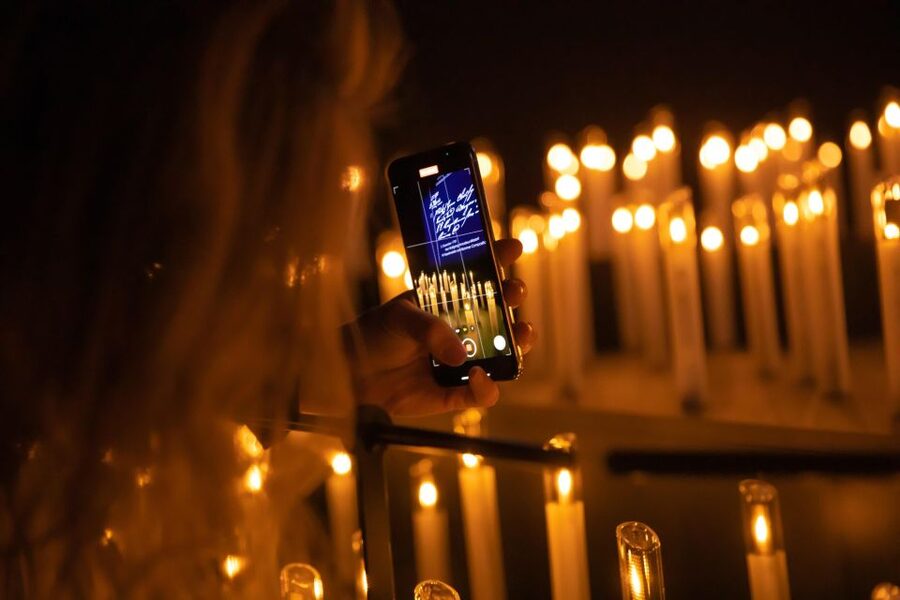
The first major room is devoted to Mozart’s death and his unfinished Requiem. It contains 1,500 candles, arranged as a field of small lights around the room. The design comes from British-German lighting designer Moritz Waldemeyer, and the result is quiet, solemn, and more atmospheric than informational.
This is the room most likely to stay with you. Mozart’s music fills the space while the candlelight changes the mood. You may find it peaceful, unsettling, or simply beautiful, depending on how you respond to the music and the setting.
Starting with death is an unusual choice. It places Mozart’s final days before the exhibition has explained much about his career. For some people, that gives the visit immediate emotional force. For others, it may feel backward, especially if you are looking for a chronological account of his life.
I would give this room time rather than rushing through it. The lighting is the point, and it works best when you stop looking for facts and let the music and visual design carry the moment. Visitors with young children should know that the atmosphere here is serious, even though later rooms are more playful.
A 360-degree view of Vienna in 1791
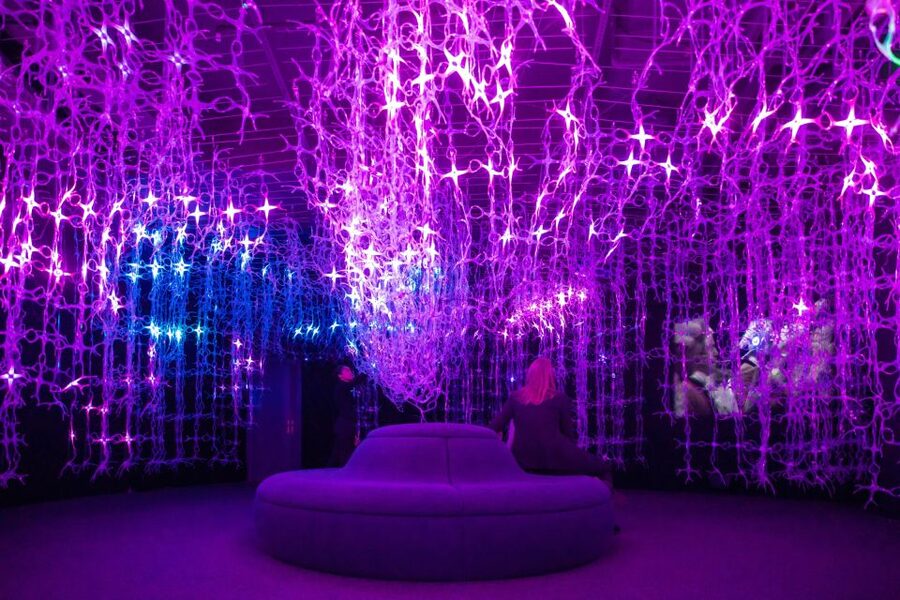
The next section shifts from Mozart’s death to Mozart’s city. In the Vienna 1791 room, projections create a panoramic view of the city as it might have appeared during Mozart’s lifetime.
You can stroll through digital streets, look over rooftops, and rise above the city in a balloon-like viewpoint. The presentation also brings you in front of the house where Mozart died. It is a useful way to picture Vienna as a lived-in city rather than a collection of famous buildings seen on a modern walking route.
This room helps explain why the setting matters. Mozart was not creating music in isolation. He worked in a busy imperial capital filled with musicians, patrons, churches, theatres, crowded streets, and royal connections. The digital city gives you a broad sense of that world without requiring a long history lesson.
The visuals are likely to appeal to families and teenagers, since there is movement and plenty to watch. You do not need to recognize every street or building to enjoy it. Still, the experience gives only a light framework for Mozart’s life. It will not replace a museum visit or a detailed biography if you want dates, relationships, commissions, and musical analysis.
The Little Night Music room lets you play
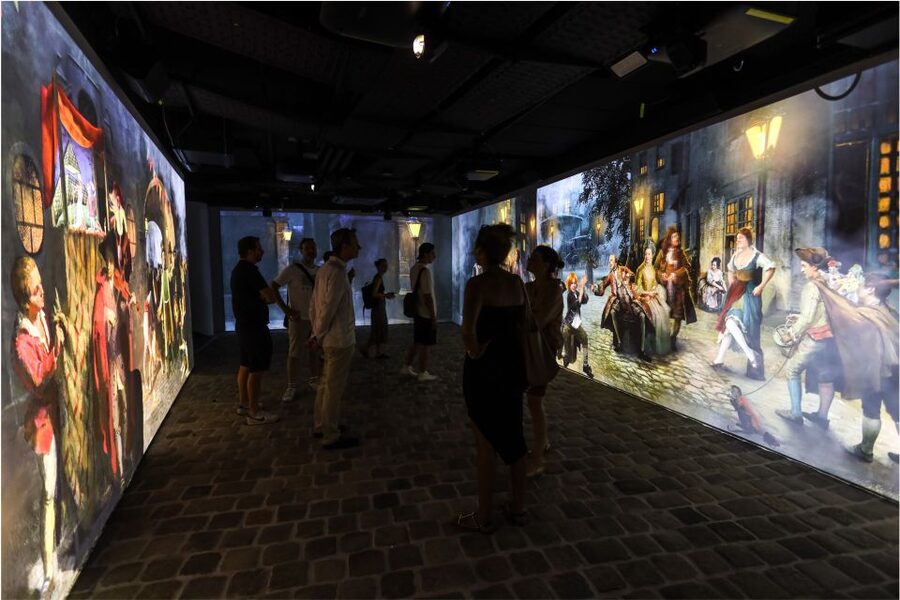
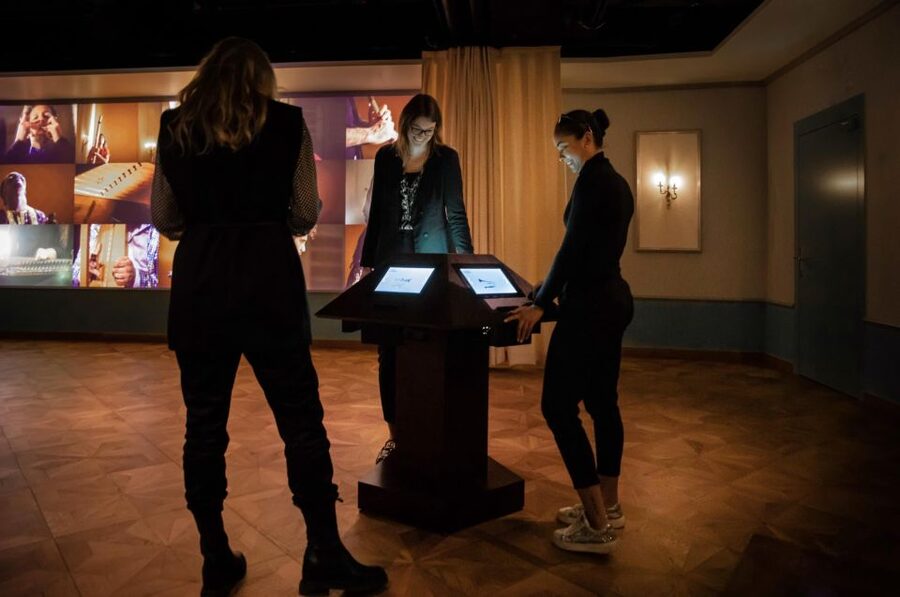
The Little Night Music room is the most active part of the exhibition. Here you can interact with instruments from around the world rather than only listen to Mozart’s work.
This section broadens the experience beyond a simple portrait of one European composer. You get to think about sound, rhythm, and instruments through direct participation. That makes it particularly useful for children, families, and people who do not normally choose classical music attractions.
The name points toward Mozart’s Eine kleine Nachtmusik, one of his best-known works. The room does not require musical training, and you are not expected to perform a concert. It is designed for curiosity and play.
This is also where the experience becomes less solemn. After the candle room and the historical city scenes, the chance to make sounds yourself gives the visit a lighter rhythm. I would not plan the entire visit around this feature, since it is only one part of the hour, but it adds variety and prevents the exhibition from becoming a passive video show.
If the room is busy, you may need to wait for access to some of the instruments. The supplied information does not specify the number or type of instruments, so you should think of this as a playful interactive gallery, not a complete musical instrument collection.
Other concert evenings in Vienna:
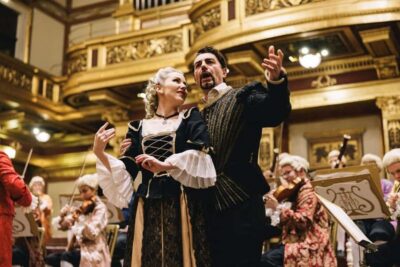
- Vienna: Mozart Concert at the Golden Hall
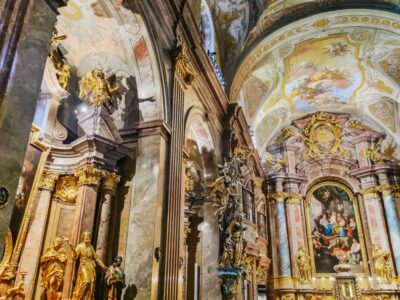
★ 4.6 · 3,986 reviews - Vienna: Classical Concert in St. Anne’s Church (Annakirche)
★ 4.6 · 3,414 reviews - Vienna: Classical Concert at Mozart’s First House
2,423 reviews - Vienna: Mozart and Strauss Concert at Schönbrunn
★ 4.5 · 2,364 reviews
Digital art, Mozart’s music, and the final room
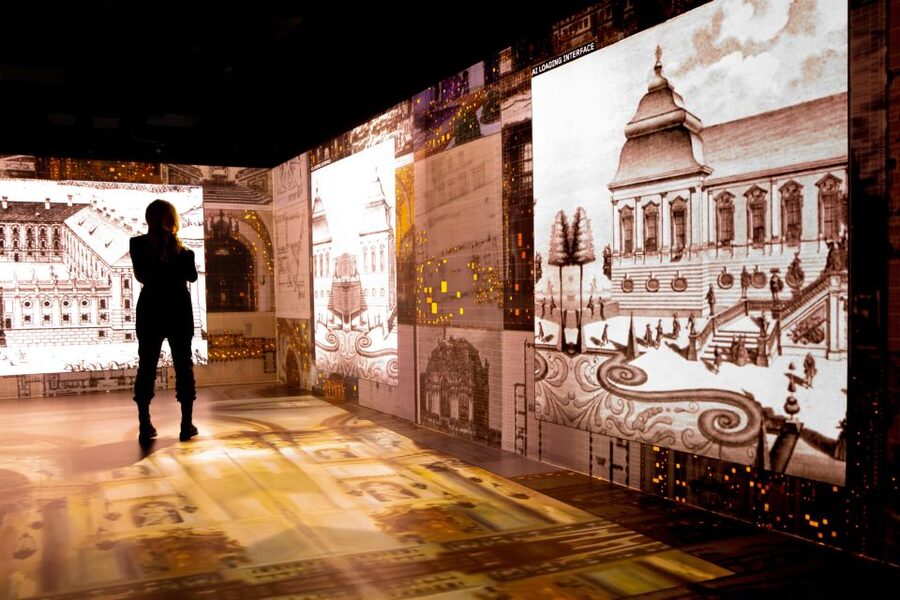
Across the exhibition, Mozart’s music is paired with animation, light, and large-scale digital imagery. The strongest effect comes from the way the music changes as the visuals shift. You are not simply reading about a composition. You are hearing it while the room provides a visual response.
This approach makes Mozart approachable. You can enjoy the sound without knowing musical terms, and you can follow the changing mood without having studied the Classical period. Several parts are designed to create feeling first and explanation second.
The final section uses modern technology, including artificial intelligence. This has divided the experience for some people. I find the idea interesting because it asks what Mozart might have done with tools that did not exist in his time. Others may prefer the historical rooms and feel that the AI section moves too far from the composer himself.
That contrast is worth keeping in mind before you book. Mythos Mozart is not a pure reconstruction of eighteenth-century Vienna. It connects Mozart’s work with contemporary digital art, so the final room is intentionally modern. If you enjoy technology and visual experiments, it may be one of the highlights. If you want historical accuracy at every stage, it may seem less convincing.
The music remains the central thread. Even visitors who do not consider themselves classical music fans can follow the experience through familiar emotional cues: quiet, dramatic, playful, and grand. The presentation is designed to make you listen without turning the visit into a formal lesson.
Ending on the Sky and Roofgarden
After the indoor rooms, the Sky and Roofgarden gives you a chance to step outside and look over Vienna. Views include the First District, Karlskirche, the Ferris wheel, and St. Stephen’s Cathedral.
This rooftop stop gives the visit a practical ending. You have just seen a digital version of Vienna in 1791, and now you can compare it with the modern city. The two views are not a formal side-by-side lesson, but the change from projected history to real rooftops helps connect the presentation with the city outside.
The roof terrace is also part of the Sky Café and Restaurant. Food and drinks are available there, though they are not included in the admission price. If you want to linger, this is the natural place to do it.
Do not treat the rooftop as a guaranteed substitute for a dedicated Vienna viewpoint. The information provided confirms views toward several major sights, but it does not promise a full 360-degree panorama from every spot. Weather and visibility will also affect what you see.
How much time should you allow?
The stated duration is one hour, with the rooms generally taking about ten minutes each. That makes Mythos Mozart easy to fit into a packed Vienna schedule. You can visit before dinner, between major sights, or on a rainy afternoon without giving up half a day.
The one-hour length is also the main limitation. If you become absorbed in the candle room, instruments, or rooftop, the visit may feel short. One person found the experience a little too brief, while another said the pacing felt relaxed and never rushed. Both reactions make sense: the production gives you enough time to experience each room, but not enough time for lengthy reading or repeated visits within the same ticket.
I would plan on one hour indoors, then add time for the rooftop café if you want a drink or meal. Arrive up to 15 minutes before your booked time slot so you can exchange your ticket at the Mythos Mozart Welcome Desk without cutting it close.
Advance booking is sensible because time slots are recommended. Spontaneous entry may be possible when occupancy allows, but you should not count on it during a busy period. Bring identification, and bring a student card if you are using one for admission purposes.
Is $27 a fair price?
At $27 per person, Mythos Mozart is not the cheapest short attraction in Vienna. It is also not priced like a full-day museum or concert. The value depends on what you want from the visit.
I think the price is reasonable if you enjoy large-scale audiovisual art, want an easy introduction to Mozart, or need a weatherproof activity that fits into one hour. The combination of the historic building, candle installation, 360-degree city scenes, interactive instruments, and rooftop views gives you more variety than a single projection show.
The value is weaker if you mainly want detailed musical education. You will not receive a full biography, a long explanation of each composition, or an extensive display of original objects based on the information available. One visitor specifically wished for more about Mozart’s music and life, while another found the lack of commentary or subtitles disappointing.
You should also remember that food and drinks cost extra. That is not unusual, but the café can turn a short $27 visit into a more expensive stop if you add a meal. On the other hand, the rooftop gives you somewhere to pause without needing another attraction immediately afterward.
Who will enjoy Mythos Mozart most?
I would recommend it most strongly to:
- First-time Vienna visitors who want an approachable Mozart introduction
- People who enjoy light shows, projections, music, and interactive art
- Families looking for a cultural activity that children can take part in
- Classical music fans who want to hear familiar works in a different setting
- Anyone seeking a one-hour indoor activity on a wet or cold day
- Visitors already interested in the house where Mozart spent his final year
You do not need to be musically trained. The presentation is built so you can respond to the sound and images without knowing the names of every composition.
I would be more cautious if your main goal is scholarship. For that, you may prefer a traditional Mozart site, a museum with original documents, or a concert. Mythos Mozart can sit alongside those choices, but it should not be your only source for understanding his life.
The venue is wheelchair accessible. Pets are not allowed. English is the listed language for the host or greeter, and the audiovisual experience itself does not depend on a long spoken tour.
Practical tips for a better visit
Book a time slot in advance and arrive at the welcome desk up to 15 minutes early. This keeps the visit simple and avoids hoping for a last-minute opening.
If you have a delayed flight or another problem, speak to the staff as soon as possible. The staff have shown flexibility in individual cases, but you should not rely on a late arrival being accepted.
Use the free lockers and toilets if needed. These small conveniences matter when you are fitting the attraction between train travel, sightseeing, or dinner.
Give yourself a quiet moment in the candle room, then save a little energy for the interactive section. The exhibition works best when you accept its changing moods instead of expecting every room to offer the same type of information.
Finally, check the rooftop before leaving. The views toward St. Stephen’s Cathedral, Karlskirche, the First District, and the Ferris wheel add a real Vienna finish to an otherwise digital visit.
Should you book Mythos Mozart?
Book it if you want Mozart presented through sound, light, animation, and interaction rather than through cases of historical objects. The candle room, Vienna 1791 scenes, hands-on instruments, and rooftop views create a varied one-hour outing, and the format works even if classical music is not normally your thing.
Skip it if you want a detailed biography, extensive commentary, or a long museum visit. At $27, it is best understood as a polished multimedia art experience in a historically important building. For the right audience, especially families, music lovers, and visitors needing a rainy-day plan, it is a sensible and memorable use of an hour.
FAQ
How long does the Mythos Mozart experience last?
The experience lasts one hour. The rooms generally allow about ten minutes each, with time to move between the different sections.
Where does the experience take place?
It takes place in the building in Vienna where Mozart spent the last year of his life and where he died in 1791.
What is included in the ticket?
The ticket includes entry to the Mythos Mozart multimedia experience.
Are food and drinks included?
No. Food and drinks are not included, but they can be purchased at the Sky Café and Restaurant, which has a large rooftop terrace.
Do I need to book a time slot?
All visitors are advised to book a time slot in advance. Spontaneous visits may be possible depending on occupancy.
Is Mythos Mozart wheelchair accessible?
Yes, the experience is wheelchair accessible.
Can I bring my pet?
No. Pets are not allowed.
What should I bring?
Bring a passport or ID card. You should also bring a student card if it applies to your booking.
Just added in Vienna
- 3 hour private tour in Vienna by private car★ 4.4 · 6 reviews
- Private Christmas Markets Walking Tour Vienna★ 5.0 · 31 reviews
- Christmas Markets & Shopping in Vienna★ 5.0 · 17 reviews
- Christmas Market Vienna Tour★ 4.0 · 53 reviews
- Vienna: Christmas Markets Tour★ 4.3 · 99 reviews
- From Vienna: Prague Small-Group Guided Day Tour★ 4.7 · 141 reviews
- The unknown Vienna City- a guided walking tour in 3 hours★ 4.7 · 137 reviews
- Vienna Classical Concert – Strauss in Historic 1837 Hall★ 5.0 · 136 reviews
Mozart & Classical Concerts, compared.
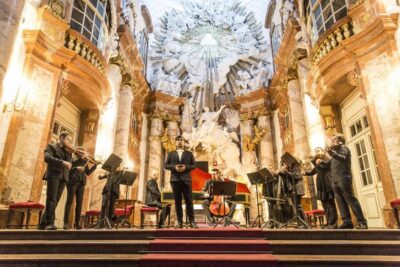
Vivaldi’s Four Seasons Concert in Karlskirche
Read our review →
Classical Concert in the World-Famous Musikverein
Read our review →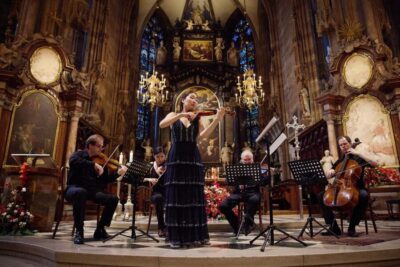
Classical Concert in St. Anne’s Church (Annakirche)
Read our review →
Browse the lists this tour appears in