
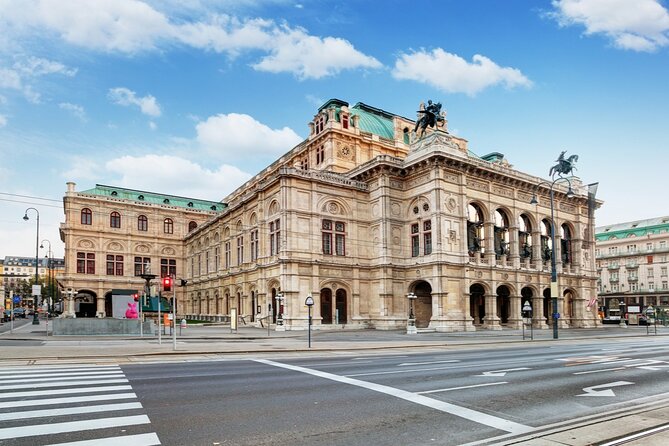
Reviewed · MOZART & CLASSICAL CONCERTS
Vienna: Freud, Mozart & Beethoven Exploration Game
Vienna’s grand center becomes a giant puzzle board in this self-guided walk, which connects the worlds of Mozart, Beethoven, Freud, and Empress Sisi through clues on your phone. You begin at St. Stephen’s Cathedral and work your way toward the Sigmund Freud Museum, with several puzzle stops along the route.
I like the low price and the freedom to start at almost any hour. I also like that the game sends you to parts of central Vienna you might otherwise pass without a second look. The main drawback is the setting: solving clues on a bright phone screen while standing in crowded streets can become tiring, especially at midday.
- Start at St. Stephen’s Cathedral: The game begins at Stephansplatz, one of Vienna’s easiest central meeting points.
- Finish at the Sigmund Freud Museum: The route ends at Berggasse 19, giving the walk a clear finish in Vienna’s ninth district.
- Play without mobile data: Download the game first, then use it offline while walking.
- Follow a historical cast: Mozart, Beethoven, Freud, and Sisi shape the subject matter, with explanations at each stop.
- Pause whenever you wish: The game works well for a flexible day, with breaks for coffee, lunch, or another sight.
- Plan for a phone-based walk: There is no physical guide, and admission to the Sisi Museum is not included.
A Vienna walk built around clues, not a guide’s speech
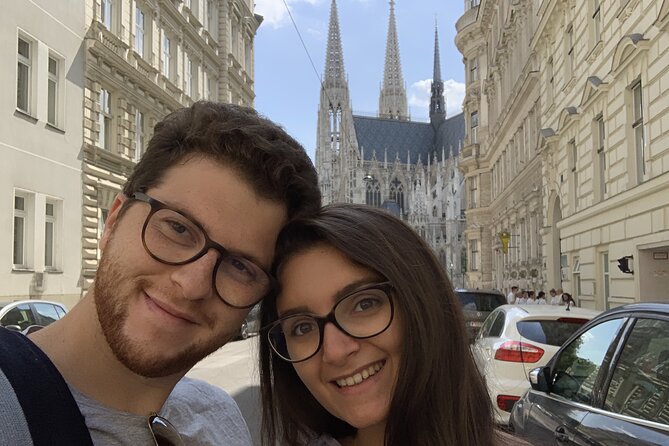
This is not a standard sightseeing tour with a guide waiting at a corner. It is a private city game from Questo, played through your phone. You follow a clue, solve a puzzle, reach the next place, and receive instructions and background information before continuing.
That format changes the pace. Instead of standing in one spot while someone gives a long talk, you keep moving and make small discoveries as you go. The historical information is tied to the place you have reached, so the city itself becomes part of the game.
The route begins at St. Stephen’s Cathedral, Stephansplatz 3, and ends at the Sigmund Freud Museum, Berggasse 19. The stated playing time is about one to two hours, though your own time can vary. You may stop to look around, take photos, eat, or pause the game and return later.
You should think of this as a light history activity with a walking route, not as a full museum tour or a substitute for a professional guide. Its strength is the combination of movement, puzzles, and short explanations.
Starting beneath the towers of St. Stephen’s Cathedral

Stephansplatz is a practical starting point. St. Stephen’s Cathedral is one of Vienna’s best-known landmarks, and the address is easy to reach by public transportation. Starting here gives the game an immediate sense of place, even before the first puzzle is solved.
The exact clue sequence is designed to guide you from one location to the next. At each stop, you solve a puzzle, arrive at a place, and receive information about what you have found. Since the supplied route details do not name every stop, you should not expect a printed checklist of attractions in advance.
That can be part of the fun. You are not simply ticking off famous sights. You are watching the city for details that help answer the next question. A doorway, monument, building feature, or street setting may matter more than it would on an ordinary walk.
Still, give yourself room to stop. Stephansplatz can be busy, and reading a clue while people move around you is not always easy. Find a spot at the side of the square before starting each puzzle. This small habit will save time and reduce the chance of entering an answer in a hurry.
More Classical Concerts in Vienna
- Vienna: Vivaldi’s Four Seasons Concert in Karlskirche
★ 4.7 · 14,951 reviews - Vienna: Classical Concert in the World-Famous Musikverein
★ 4.6 · 6,673 reviews - Vienna: Classical Concert at St. Stephen’s Cathedral
★ 4.1 · 4,177 reviews
The puzzle format and what you learn at each stop
The basic rhythm stays consistent:
- Read a clue on your phone.
- Work out where it leads.
- Walk to the location.
- Solve the puzzle connected with that place.
- Read the explanation and receive the next instruction.
This structure gives the walk a clear purpose. You are not wandering without direction, yet you still have control over the pace. If you are playing with children, the puzzle gives them a job beyond simply following an adult from one sight to another.
The historical material covers the people named in the title, including Mozart, Beethoven, Sigmund Freud, and Empress Sisi. The explanations are intended to help you understand the places you reach, rather than offering a long academic lecture.
The game appears best suited to people who enjoy short bursts of information. If you want detailed musical analysis of Mozart and Beethoven, or a full account of Freud’s work, you will need other sources. If you want an entertaining way to connect Vienna’s streets with famous figures, the format makes sense.
The puzzles are generally approachable. That is good for a mixed-age group, since you do not need a specialist background to take part. It also means serious puzzle fans may find some sections too easy. The value comes from combining the questions with the walk, not from difficult brainteasers alone.
The Sisi Museum stop and the cost of going inside
The itinerary includes a stop at the Sisi Museum, with about 10 minutes assigned to it. Admission is not included in the game price, so you should separate the outdoor puzzle from the decision to enter the museum.
That distinction matters. You can reach the stop, learn about the place, and continue without buying a museum ticket. If the Sisi Museum is high on your Vienna list, you may choose to pay separately and spend longer inside, but the game itself does not cover that admission.
A 10-minute stop is enough for a quick orientation. It is not enough for a careful museum visit, especially if you want to read displays or see the collection at a relaxed pace. Treat the game’s timing as a guide for the puzzle route, not as a complete schedule for every attraction.
Sisi is a useful part of the route because imperial Vienna can otherwise feel like a series of enormous palaces and formal squares. A game gives you a more active way to connect the empress with the city. Just keep your expectations clear: this is a short stop within a larger walk.
Finding Vienna beyond the biggest postcard sights
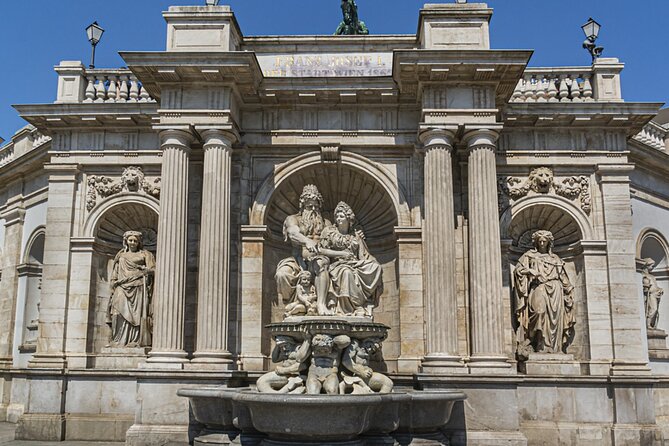
One of the strongest reasons to book this experience is the route’s promise of places you may not seek out on your own. The game uses clues to lead you through areas connected with the subject matter, and the explanations draw attention to locations that might otherwise blend into the city.
That does not mean every stop will be quiet or unknown. Central Vienna is popular and can be crowded. One of the main practical complaints about this type of walk is that looking down at a phone while searching for an answer is awkward in a busy street.
You can improve the experience by going early or later in the day, when possible. The available playing hours are listed as 5:00 AM to 9:30 PM, Monday through Sunday, for the stated operating period. You still need to consider daylight, personal comfort, and the opening times of any attraction you hope to enter.
Bright sunshine creates another small problem. Glare can make a phone screen hard to read, so shade is useful. Increase the screen brightness before setting out, and keep the map or clue visible only when you are safely out of the main flow of pedestrians.
Other concert evenings in Vienna:
- Vienna: Mozart Concert at the Golden Hall
★ 4.6 · 3,986 reviews - Vienna: Classical Concert in St. Anne’s Church (Annakirche)
★ 4.6 · 3,414 reviews - Vienna: Classical Concert at Mozart’s First House
2,423 reviews - Vienna: Mozart and Strauss Concert at Schönbrunn
★ 4.5 · 2,364 reviews
Ending at the Sigmund Freud Museum
The finish at the Sigmund Freud Museum gives the route a clear change of subject. You begin near the cathedral and imperial center, then end at Berggasse 19, associated with Freud and the museum dedicated to his life and work.
The museum is the official endpoint, not necessarily a museum visit included in the game. The supplied details do not state that admission is included, so check separately if you want to go inside. The game’s final instructions should tell you how to complete the activity at the end of the route.
Ending here can be useful for planning the rest of your day. Berggasse 19 is in Vienna’s ninth district, and you can treat the game as a route between central Vienna and the Freud Museum rather than as an isolated activity. If Freud interests you, you may want to allow extra time after the game. If not, the endpoint still gives you a definite place to stop.
The route’s themes are a little unusual for one short city game. Music, imperial culture, and psychology do not naturally belong to one simple story, but they reflect the variety of Vienna’s past. The game’s job is to connect those subjects through places and puzzles, not to present one continuous biography.
How the offline feature works in practice
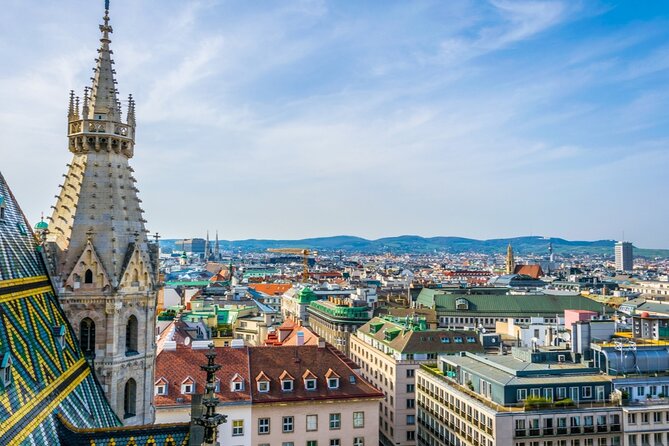
The offline option is one of the most useful features here. You need an internet connection to download the game before setting out, but after that, the game is intended to work without an internet connection.
Do this preparation before reaching Stephansplatz. Download the app and game while you have reliable WiFi, then open it and make sure the content is available. A small access or download problem can otherwise delay the start, and there is no physical guide to solve it for you.
You also need enough battery for a one to two-hour walk. That is not a special requirement of this particular route, but any phone-based activity depends on your device. Carry a power bank if your battery is already low.
The offline setup is especially useful if you do not want to use roaming data. It also removes some worry about a weak signal in the middle of a puzzle. The key point is simple: offline play begins after a successful download, not before.
Price, group value, and what you actually receive
At $7.21 per person, this is inexpensive for a private activity lasting roughly one to two hours. The price buys the digital game, clues, explanations, and route structure. It does not buy a physical guide, museum admission, or a traditional guided tour.
That makes the value strongest for a small group that enjoys playing together. A family can share the work of solving clues, while friends may divide the task between reading, spotting details, and entering answers. Group discounts are available, which can improve the cost for a larger party.
The price is less attractive if you want expert commentary at every stop. You are paying for an interactive route, not personal conversation or tailored answers. You also need to accept that a few minutes may be lost to finding a clue, reading instructions, or dealing with phone access.
For a low-cost introduction to Vienna, the risk is limited. If you finish in under two hours, you have still paid less than many conventional sightseeing activities. The main question is not the price. It is whether you enjoy self-guided play enough to make the format worthwhile.
Who will enjoy this most
I would recommend this game most strongly to:
- Families with children or teenagers who like solving clues
- Couples who want a flexible walk rather than a fixed group tour
- Friends who enjoy light puzzles and city exploration
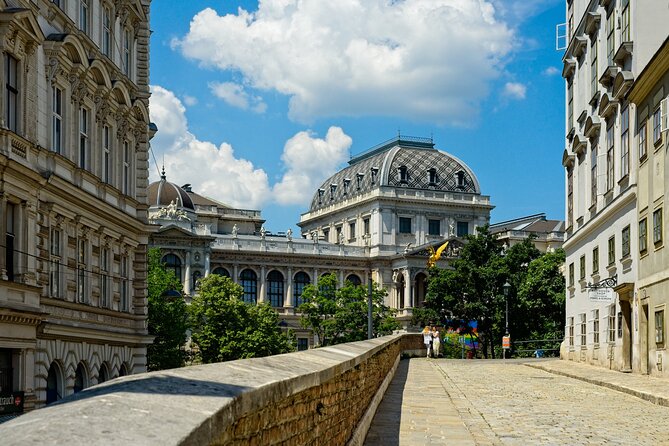
- First-time visitors looking for a structured introduction to central Vienna
- Independent visitors who do not want to follow a guide’s timetable
The game also suits people who like to stop for food or another attraction along the way. Since you can pause and resume later, you are not forced to finish in one continuous session.
It is less suitable if you dislike using your phone while sightseeing. It may also frustrate you if you want a quiet, polished route with no crowds, since several central locations can be busy. People seeking a highly detailed account of Viennese music, psychology, or imperial life should pair this with a museum visit or a proper guided tour.
Families should note one content issue. One detailed account describes an unexpected ending involving a disturbing story and sexual behavior. The overall activity was considered amusing and interesting by that family, but the ending was judged inappropriate for a younger child. If you are playing with children, especially around age 12, consider that the story may not stay completely clean or child-focused.
Booking, timing, and small practical details
You receive confirmation at booking, and the experience is available every day. The listed opening hours run from 5:00 AM to 9:30 PM, and you can begin at any hour within that window.
The activity is private, so only your own group participates. There is no contact with a guide and no need to match your schedule to strangers. Service animals are allowed, and the starting and ending points are near public transportation.
Cancellation is free if you cancel at least 24 hours before the start time. Within 24 hours, the amount paid is not refunded, and changes made during that period are not accepted. The cut-off uses Vienna local time.
The experience is often booked well ahead, with an average of 16 days in advance. That does not change the flexible start time, but it suggests that you should reserve ahead if the activity is part of a tightly planned Vienna visit.
Should you book the Vienna Freud, Mozart and Beethoven game?
Book it if you want a cheap, flexible city walk with puzzles, short historical explanations, and no guide or group timetable. It is particularly good for families and friends who enjoy discovering a city by solving small challenges.
Skip it if your priority is expert commentary, quiet streets, or full access to every museum along the route. You will also want to plan carefully around bright sun, busy pedestrian areas, and the need to download the game before starting.
For $7.21, the format offers a fair amount of structure for very little money. I would treat it as a playful introduction to Vienna, then add the Sisi Museum or Sigmund Freud Museum separately if those subjects interest you. That combination gives you both the game’s freedom and the fuller museum experience it cannot provide on its own.
FAQ
Where does the Vienna exploration game start?
It starts at St. Stephen’s Cathedral, Stephansplatz 3, 1010 Vienna, Austria.
Where does the game finish?
The stated endpoint is the Sigmund Freud Museum at Berggasse 19, 1090 Vienna, Austria.
How long does the activity take?
The estimated duration is about one to two hours.
Can I start the game at any time?
Yes. The activity is available every day, and the listed operating hours are 5:00 AM to 9:30 PM.
Do I need an internet connection while playing?
No. You need WiFi or another connection to download the game first, but it is designed to work offline afterward.
Is a physical guide included?
No. This is a self-guided mobile game, and no physical tour guide is included.
Is the Sisi Museum admission included?
No. Admission to the Sisi Museum is not included. The itinerary allows about 10 minutes for that stop.
Is this a private activity?
Yes. Only your own group participates.
Is the activity offered in English?
Yes. English is the listed language.
What is the cancellation policy?
You can receive a full refund if you cancel at least 24 hours before the experience start time. Cancellations or changes made within 24 hours are not refunded or accepted.
Just added in Vienna
- World War II History Vienna Old Town Private Walking Tour★ 4.8 · 9 reviews
- Vienna: Winery and Wine Tasting Tour with a Wine Expert★ 5.0 · 5 reviews
- Vienna: Wiener Schnitzel and Strudel Cooking Class★ 4.9 · 126 reviews
- Vienna: Wine Tasting Tour★ 4.8 · 61 reviews
- Vienna: Wine Tasting E-Bike Tour★ 4.9 · 46 reviews
- Vienna: Wine Tasting at Schönbrunn Palace★ 4.3 · 71 reviews
- Vienna: Unforgettable Private City Tour★ 5.0 · 7 reviews
- Vienna Urban Art Tour: Explore a different side of Vienna!★ 3.8 · 14 reviews
Mozart & Classical Concerts, compared.
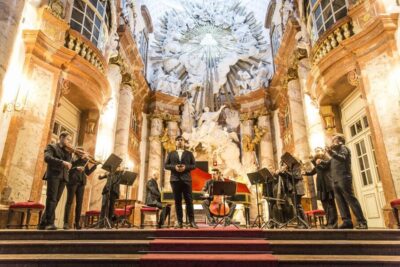
Vivaldi’s Four Seasons Concert in Karlskirche
Read our review →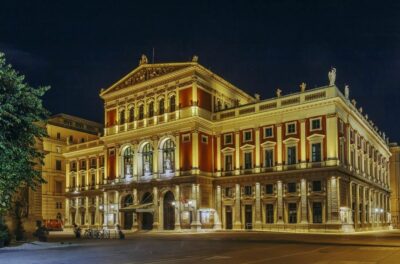
Classical Concert in the World-Famous Musikverein
Read our review →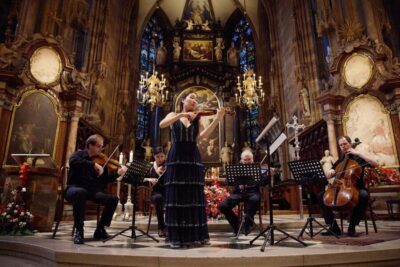
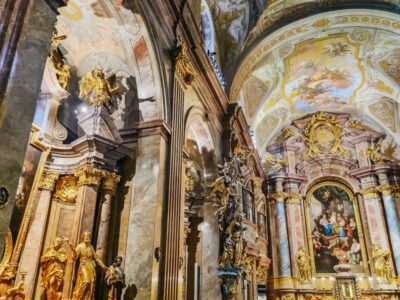
Classical Concert in St. Anne’s Church (Annakirche)
Read our review →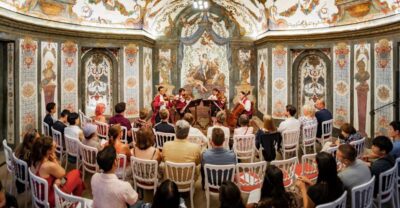
Browse the lists this tour appears in