
Reviewed · AUSTRIA
Small Group Tour; The Balkans & Central Europe – Tirana to Vienna
The real appeal here is the sweep: in 14 days, you move from Kruja’s medieval bazaar to Vienna by way of Kosovo, the Adriatic coast, Bosnia, Serbia, Hungary, and Slovakia. I like the small maximum of 10 people and the private transport, which make a complicated multi-border route far easier than piecing it together yourself.
I also like the mix of major sights and smaller places, from Rahovec’s wine country and Sremski Karlovci to Mostar, Budapest, and Bratislava. The drawback is the pace: you cover eight countries, so several stops get only an hour or two, and long road days are part of the bargain.
Key points at a glance
- Eight countries in 14 days: Albania, Kosovo, Montenegro, Bosnia and Herzegovina, Serbia, Hungary, Slovakia, and Austria all fit into one carefully packed route.
- Private transport for up to 10 people: Border crossings and rural stops are simpler than managing buses and trains on your own.
- A strong run of historic towns: Kruja, Prizren, Mostar, Sarajevo, Belgrade, Novi Sad, Budapest, and Bratislava each bring a different chapter of southeastern Europe.
- Food and wine are part of the trip: Expect time at Mrizi i Zanave farm, Rahovec vineyards, Sremski Karlovci cellars, and local restaurants.
- Fourteen breakfasts and 3-star hotels are included: Rooms are based on shared double, twin, triple, or quadruple occupancy.
- The tour ends with a Vienna hotel drop-off: This is useful if you want to continue a Central European trip without arranging a final transfer.
Why this route works for curious, energetic sightseers
This is not a slow holiday based in one or two cities. It is a moving portrait of a region shaped by Ottoman, Byzantine, Austro-Hungarian, Venetian, Yugoslav, and modern national identities. You see how those layers meet in mosques, synagogues, churches, bazaars, fortresses, cafés, and riverside squares.
The private vehicle matters. Some places on this route are awkward to connect by public transport, particularly when you are crossing several national borders and stopping in smaller towns. With a tour leader handling the route, you can focus on the view, the changing architecture, and the practical business of getting from one country to the next.
The trade-off is simple: breadth over depth. You will see far more than you could comfortably arrange in two weeks on your own, but you will not have a full day in every major city. If you want long museum visits, unhurried meals, or several free mornings, this schedule may feel too tight.
The group limit of 10 is a real advantage. It is small enough for a more personal atmosphere and easier coordination at borders, hotels, and walking tours. Choose Balkans has used guides including Sokol and Mandi on its tours, though your assigned tour leader can vary.
More days out of Austria:
- Vienna: Vivaldi’s Four Seasons Concert in Karlskirche
★ 4.7 · 14,951 reviews - Vienna: Spanish Riding School Training
★ 3.9 · 9,281 reviews - Vienna: Skip-the-cashier-desk-line Giant Ferris Wheel Ride
★ 4.5 · 7,859 reviews
Day 1: Kruja’s bazaar, castle paths, and Prizren
The journey begins with Kruja, an Albanian hill town tied to the 15th-century resistance against Ottoman expansion. The setting is dramatic, with the town built on rocky ground about 560 meters above sea level on the slopes of Sarisalltik Mountain.
Kruja’s Old Bazaar is one of the best early stops on the route. Its narrow lanes and wooden shops sell handmade carpets, jewelry, and other Albanian crafts. You get an hour here, which is enough for a walk and some browsing, though serious shoppers may wish for more time.
Kruja Castle sits above the town. The tour leader takes you along lesser-used paths associated with the old defenses, then into the castle area. This is a good example of the trip’s approach: the emphasis is not only on taking a photograph, but also on hearing how the place worked and why it mattered.
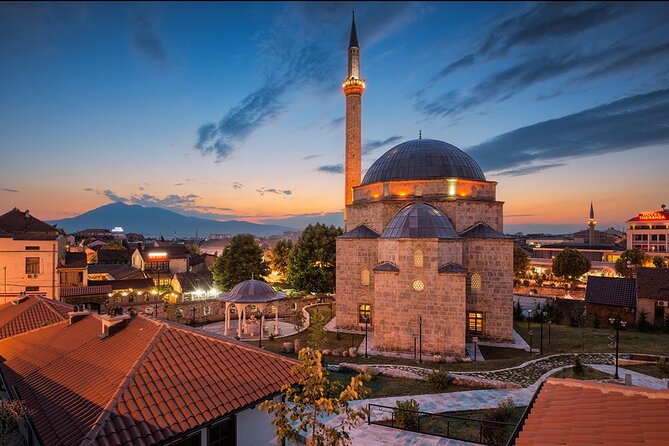
After the border crossing into Kosovo, Prizren gives you a very different mood. The river runs through the old town, beneath its many bridges, while Ottoman-era houses, religious buildings, craft shops, and cafés fill the streets. The Sinan Pasha Mosque is the main religious visit, with colorful arabesque decoration.
The hilltop Prizren Fortress provides a broad view over the town. The scheduled visit is short, followed by free time, so you can wander, eat, or look for local filigree work. Prizren is also home to the Dokufest film festival each August, although the tour schedule does not promise festival dates.
Day 2: Gjakova, Dečani, and Kosovo wine country
Gjakova brings another bazaar, rebuilt after repeated destruction during the Balkan wars, World War II, and the Kosovo War. The long market area is a chance to see traditional crafts and stop for a local meal.
The Dečani Monastery is one of the day’s most important cultural stops. Orthodox monks still live there and produce food such as cheese. Its white exterior is memorable, but the interior frescoes are the main reason for the visit. The paintings show 14th-century life and Byzantine artistic development, and the monastery joined UNESCO in 2004.
The day ends in the Rahovec Valley, Kosovo’s main wine-producing area near Prizren. Grapes have been grown here since Illyrian times, and vineyards cover the low hills between roughly 350 and 520 meters. September’s annual wine festival is a useful seasonal detail, but you should not assume the festival will coincide with your dates.
This is one of the route’s more satisfying days because it moves beyond headline sights. You see a market town, a living religious site, and an agricultural region. The limitation is that each receives roughly an hour, so wine enthusiasts may want to arrange extra time separately.
Day 3: Albanian farm cooking and Shkodra
At Mrizi i Zanave, a farm-based restaurant and food project, you learn how a family business adapted old communist buildings for storage and production. The farm gathers, preserves, and prepares regional organic products, and its work has created jobs for more than 400 people in the surrounding area.
You have time to walk around the farm, eat a traditional lunch, or buy local produce. Lunch is not included, so budget separately for it. This stop adds a welcome modern side to the journey: local food is presented as a working business, not just a staged cultural display.
In Shkodra, the focus shifts to a city with more than a thousand years of settlement. Rozafa Castle occupies a commanding position above the lake and the meeting point of three rivers flowing toward the Adriatic. The city also carries Venetian influence, and its handmade carnival masks are a distinctive local craft.
The castle visit is short, so the main reward is the view and the historical setting. If you prefer long urban walks, the schedule may leave you wanting more time in Shkodra itself.
A different kind of evening in Austria:
- Vienna: Schönbrunn Palace & Gardens Skip-the-Line Tour
★ 4.7 · 7,739 reviews - Vienna: Light of Creation Votive Church Immersive Light Show
★ 4.8 · 6,779 reviews - Vienna Spanish Riding School Guided Tour
★ 4.7 · 6,765 reviews - Vienna: Classical Concert in the World-Famous Musikverein
★ 4.6 · 6,673 reviews
Day 4: Montenegro’s coast, from Sveti Stefan to Kotor
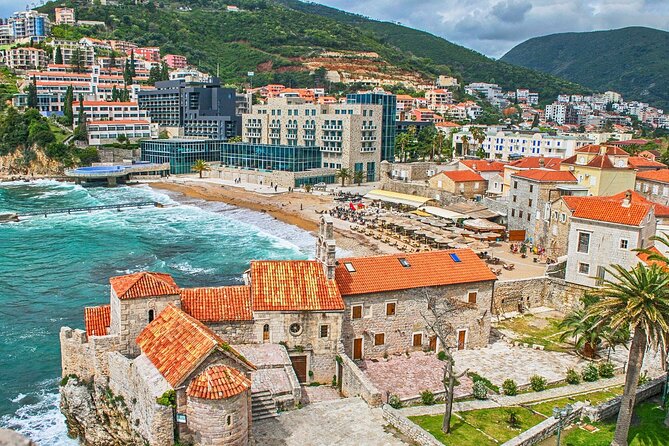
The viewpoint near Sveti Stefan is a quick but worthwhile photo stop. The former fishing settlement now operates as an exclusive residential resort, and access to the island is not available. You see it from the coast, which is still enough to understand why it became one of Montenegro’s famous images.
Budva gives you an hour to see its old center, churches, and medieval streets. The newer part of town has modern buildings, shops, restaurants, and bars, while the old section preserves the compact historic core. This is a taste rather than a full beach stay.
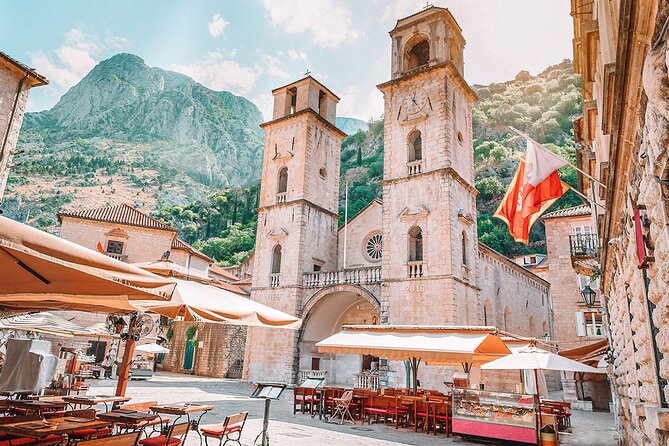
Kotor deserves the extra attention it receives. Its UNESCO-listed old town is built as a maze of narrow cobbled lanes, originally useful for confusing attackers. Saint Luke’s Church is included, and the small plaques on older buildings help explain their original use and dates.
The day is attractive but road-heavy. Coastal traffic and border formalities can affect timing, and the visit to Kotor is more about orientation than a museum-by-museum exploration.
Day 5: Mostar and the spring at Blagaj
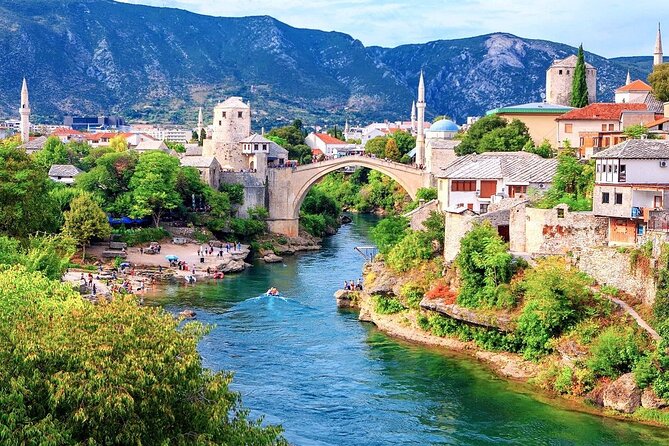
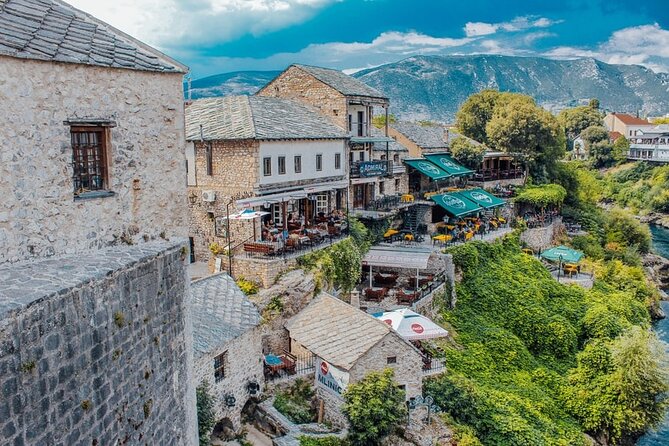
Crossing into Bosnia and Herzegovina, you reach Mostar and its famous Old Bridge, Stari Most. The 16th-century bridge uses Islamic architectural forms and remains the city’s defining sight. The surrounding old town has stone lanes, Turkish-style market streets, mosques, and shops.
The words Don’t Forget appear around Mostar as reminders of the city’s wartime destruction. You should take time to notice the contrast between restored historic buildings and the newer parts of town. The experience is more meaningful when you treat Mostar as a living city, not only as a bridge photograph.
Blagaj, outside Mostar, brings a calmer setting. The Ottoman-era tekija sits below a cliff beside the blue-green spring of the Buna River. The visit adds natural scenery and a religious site without requiring a full extra day.
You also receive free time in Mostar. Use it for a meal, a second walk across the bridge, or a slower look at the old bazaar. The central area can be uneven and crowded, so comfortable shoes are sensible.
Day 6: Sarajevo’s Ottoman and Austro-Hungarian layers
Sarajevo is one of the most rewarding stops because the city’s different eras sit close together. The walk takes in Ottoman markets and mosques, Austro-Hungarian buildings, churches, synagogues, and reminders of the Yugoslav War.
Bullet holes and cannon marks remain visible in parts of the city. The tour leader connects these traces with Sarajevo’s older story, including the medieval Bosnian kingdom and the city’s growth under Ottoman rule.
At the Latin Bridge, you learn how the assassination of Archduke Franz Ferdinand helped trigger World War I. The bridge once linked the Miljacka River’s right bank with the Catholic quarter known as Latinluk during Ottoman times.
There is free time for Bosnian food and desserts in the old town. Sarajevo is a place where I would gladly accept more hours, but the scheduled program gives you a useful first look. Expect uneven surfaces and some walking around damaged or historic areas.
Days 7 and 8: Zvornik, Belgrade, and Sremski Karlovci
Zvornik provides a quieter stop on the Drina River before Belgrade. You can eat lunch or walk through the town, which combines river scenery with a complicated regional past.
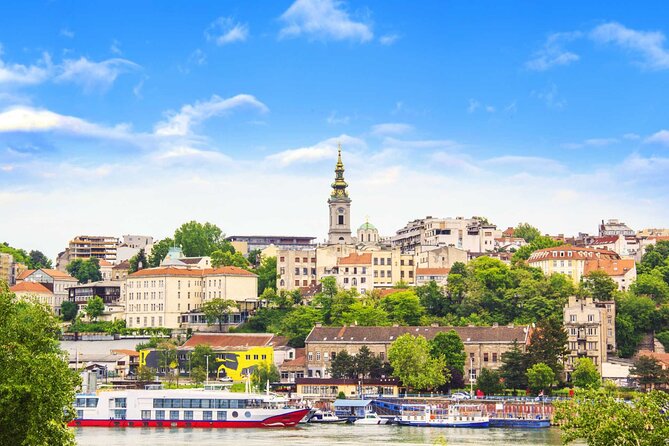
In Belgrade, the main visit is the fortress and Kalemegdan Park at the meeting point of the Sava and Danube. The Pobednik monument gives you a broad view over the rivers and city. The walk continues along Knez Mihailova, Belgrade’s central pedestrian street, toward Republic Square.
Belgrade receives only a short guided visit, so you should think of it as a well-chosen introduction. The city deserves several days, but this route gives you its historic viewpoint and main central axis rather than trying to cover every museum.
Sremski Karlovci is a pleasant change of pace. Its Baroque center, wine cellars, churches, and cultural institutions reflect its role in Serbian culture during the 18th century. The Four Lions fountain carries a local legend that drinking from it brings you back to Karlovci and leads to marriage.
The wine element is optional in practical terms, since tastings and personal purchases are not listed as included. Still, the town gives the route a more relaxed cultural stop between major cities.
Days 9 and 10: Novi Sad, Subotica, and the road to Budapest
Novi Sad sits near the old meeting line of the Austro-Hungarian and Ottoman worlds. Its pedestrian streets, Baroque buildings, and mix of cultural influences make it one of Serbia’s most appealing urban stops.
Petrovaradin Fortress, sometimes called the Gibraltar on the Danube, is the major sight. You also walk through Zmaj Jovina and Dunavska streets, then have free time to explore. An overnight in Novi Sad helps this section feel less rushed than some earlier stops.
Subotica is prized for its decorated architecture and relaxed central squares. The City Hall dominates the center, surrounded by parkland, fountains, and a large square rather than a cathedral. You have several hours here, enough for a proper walk, a meal, and time to notice the colorful details of the former Austro-Hungarian city.
The late drive to Budapest is mainly a transfer. You arrive in Hungary after the Serbian portion of the trip, with the main Budapest sightseeing scheduled for the next day.
Day 11: Budapest on both sides of the Danube
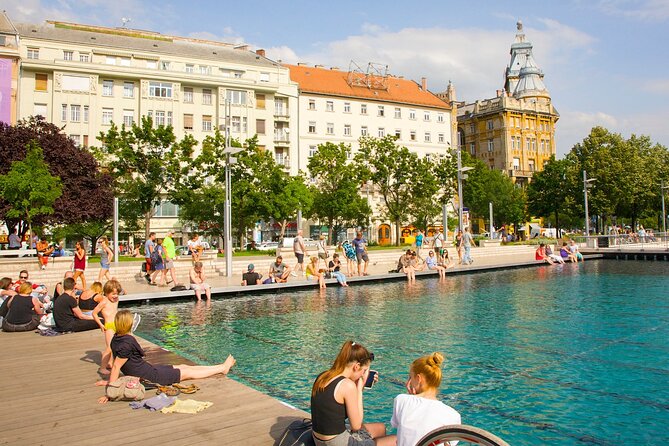
Budapest is one of the route’s major rewards. The Danube divides Buda from Pest, and the city combines Baroque, Neoclassical, and Art Nouveau buildings with grand boulevards and river views.
The guided route includes Saint Stephen’s Basilica, the Opera area, Parliament, Heroes’ Square, and Fisherman’s Bastion. Buda Castle is also included, along with a walk over the bridges and through the Baroque-style streets.
The schedule is compact, so you will see the main visual story rather than tour every interior. The free evening is important. Budapest is at its best when you can choose your own meal, walk beside the river, or simply see the city lit up after dark.
Days 12 and 13: Győr and Bratislava
Győr, known as the City of Rivers, is a smaller Hungarian stop with colorful houses, churches, and Baroque streets. The Town Hall has a 59-meter tower with a green roof, while the Cathedral of the Virgin Mary dates to the 11th century.
The Győr Synagogue is another worthwhile sight. Its large gray dome can be seen from a distance, and its design influenced synagogues elsewhere in Central Europe. Baross Gábor Way supplies cafés, shops, bars, and restaurants, with free time for Hungarian food and the locally noted blueberry beer.
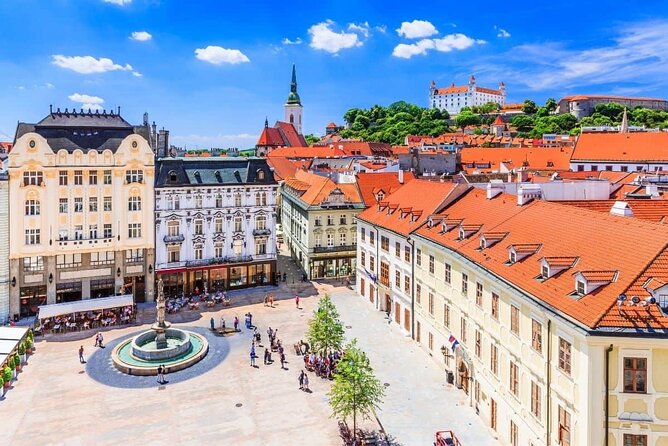
Bratislava follows as the final full city visit. The old town includes the medieval Old Town Hall and Michael’s Gate, the only preserved gate from the medieval fortifications. Bratislava Castle requires a walk uphill, but the view over the Danube and city repays the effort.
You also have time for a traditional coffee shop. That slower café break is welcome after many days of road travel and short walking tours.
Cost, accommodation, and what is included
At $4,876.33 per person, this is a substantial purchase. The value depends on how much you would otherwise spend arranging a private vehicle, cross-border transport, hotels, fuel, road taxes, tourist taxes, and local guidance across eight countries.
The package includes private transportation, a professional tour leader, 3-star accommodation, 14 breakfasts, entry tickets for the listed paid sites, hotel pickup in Tirana, and hotel drop-off in Vienna. Those practical inclusions remove many of the hardest pieces of planning.
The price is based on double, twin, triple, or quadruple occupancy. A solo booking may therefore need clarification about room arrangements and any possible supplement before payment. Lunches, dinners, drinks, snacks, souvenirs, and personal spending are extra.
The non-refundable cancellation policy also matters. Since the full amount is not returned after cancellation or amendment, you should have firm dates and suitable travel insurance before booking.
Who should book this Tirana to Vienna journey?
You should consider it if you want to see a large part of the Balkans and Central Europe without managing eight national transport systems. It suits people who enjoy historic towns, religious buildings, food traditions, wine regions, and long overland days.
It is especially useful for first-time visitors to the region who want a structured route and a small group. The named stops are varied enough to keep the trip from becoming a parade of similar old towns.
You may want another style of holiday if your priority is beach time, nightlife, museums, or several free days in each capital. The schedule has real road mileage, and some visits last only an hour.
FAQ
How long is the tour from Tirana to Vienna?
The tour lasts approximately 14 days, beginning with pickup in Tirana and ending with hotel drop-off in Vienna.
Which countries does the tour visit?
The route passes through Albania, Kosovo, Montenegro, Bosnia and Herzegovina, Serbia, Hungary, Slovakia, and Austria.
What accommodation is included?
Accommodation is included in 3-star hotels. Prices are calculated for double, twin, triple, or quadruple room occupancy.
Is transportation included?
Yes. Private transportation, petrol, road taxes, and tourist taxes are included.
Are meals included?
Fourteen breakfasts are included. Lunches, dinners, drinks, snacks, and personal food purchases are not included.
How large is the group?
The tour has a maximum of 10 people. Hotel pickup in Tirana and hotel drop-off in Vienna are included.
Should you book it?
Book this tour if your main goal is range, convenience, and cultural variety. You will see major cities such as Sarajevo, Belgrade, Budapest, and Bratislava, while also reaching smaller places that are difficult to connect on your own.
Skip it if you need a slow pace or dislike long drives. For the right person, the price buys a carefully linked route through a fascinating part of Europe, with the major transport headaches handled for you.
Just added in Austria
- Zurich: Liechtenstein, Austria and Germany Private Day Tour★ 5.0 · 6 reviews
- Zell am See: Schmittenhöhe Tandem Paragliding Flight★ 4.9 · 82 reviews
- Zell am See: Paragliding Tandem Flight★ 5.0 · 31 reviews
- Zurich: Private Liechtenstein, Austria, and Germany Day Trip★ 5.0 · 16 reviews
- From Krems: Wachau Valley River Cruise on the Danube★ 4.6 · 95 reviews
- Vienna: UNESCO Schönbrunn Palace Guided Tour with Entry★ 4.5 · 94 reviews
- World War II History Vienna Old Town Private Walking Tour★ 4.8 · 9 reviews
- Villach/Ossiachersee: Paragliding “Action” Tandemflug★ 5.0 · 4 reviews