
Reviewed · MOZART & CLASSICAL CONCERTS
Vienna: Vivaldi’s Four Seasons Concert in Karlskirche
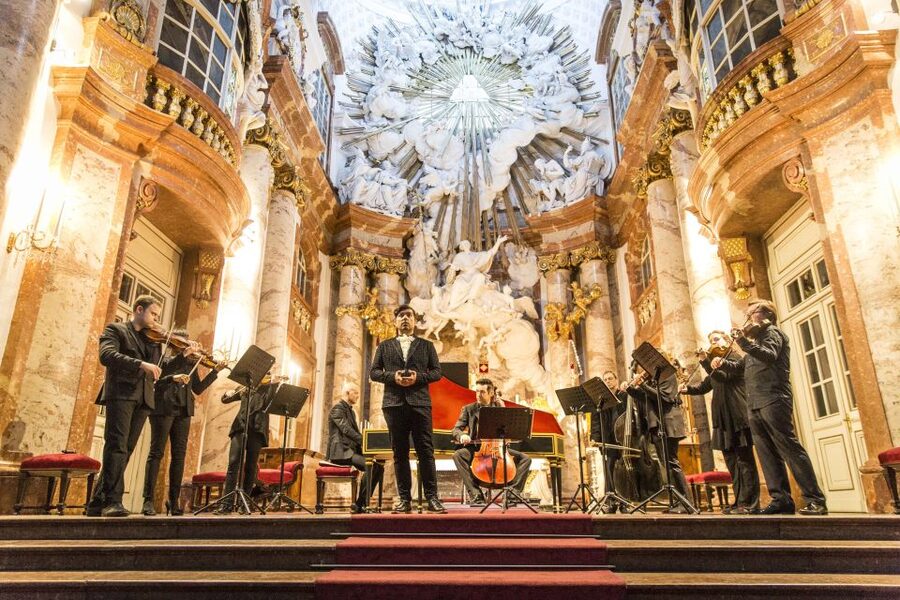
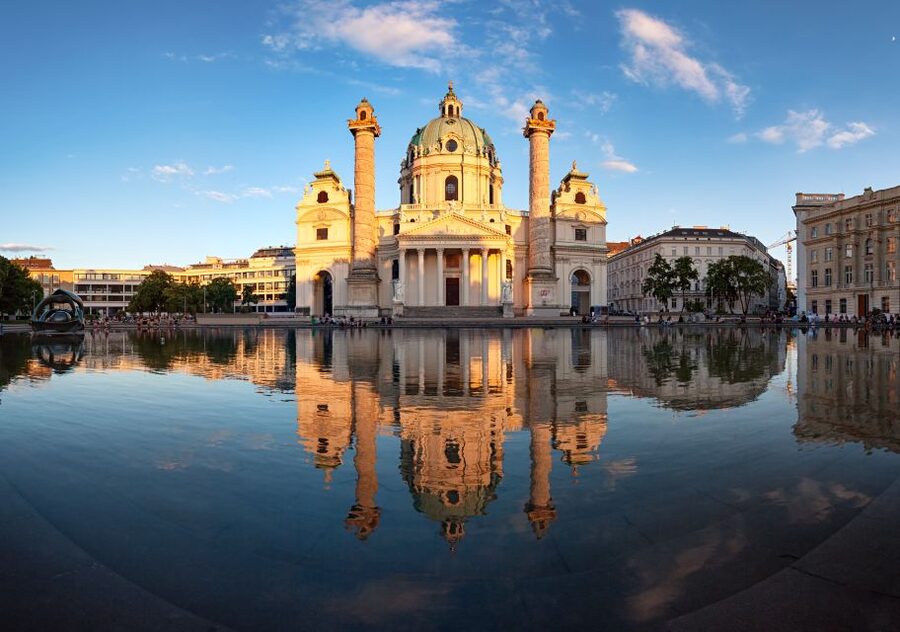
Vivaldi’s Four Seasons gets a powerful setting at Karlskirche, one of Vienna’s most striking churches. The music describes birdsong, storms, cracking ice, hunting parties, and a sleeping shepherd, while the high interior adds a long, resonant echo to every note.
I like two things here: Orchestra 1756 plays on period instruments, giving the concert a lighter, more textured sound than a modern symphony performance, and the 75-minute length fits neatly into an evening. You can also see the musicians at close range if you choose a front section.
The main drawback is practical rather than musical. Karlskirche is cold in winter, hot in summer, and the seating is mostly on a flat surface or hard church pews. Far-back and balcony seats can make the musicians difficult to see and, at times, harder to hear clearly.
Key points to know before booking
- Vivaldi’s Four Seasons fills the main program, with one concerto for each season.
- Orchestra 1756 uses period instruments, creating a historically styled sound.
- Karlskirche supplies the drama, with monumental architecture and strong natural acoustics.
- Front and middle sections offer the best experience, especially if seeing the musicians matters to you.
- Bring warm clothing in winter, since the church can be very cold despite blankets and some heated seats.
- The concert lasts 75 minutes, with no entry after the performance begins and no re-entry if you leave.
Karlskirche gives Vivaldi a dramatic stage
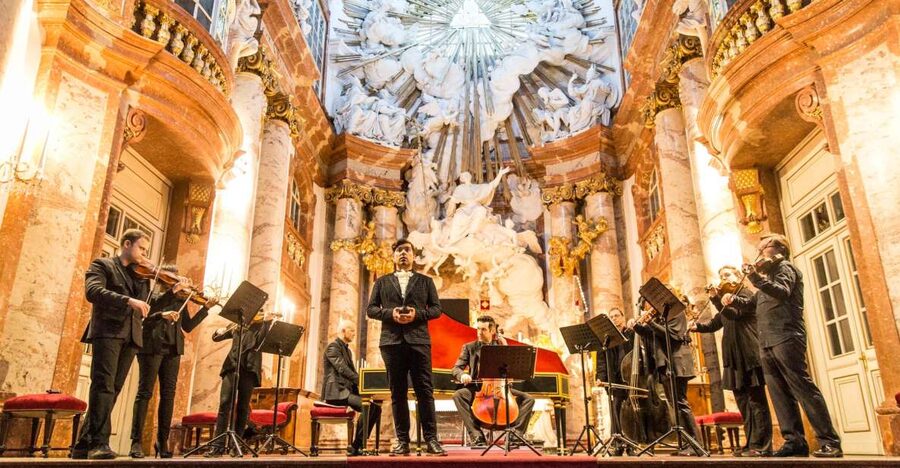
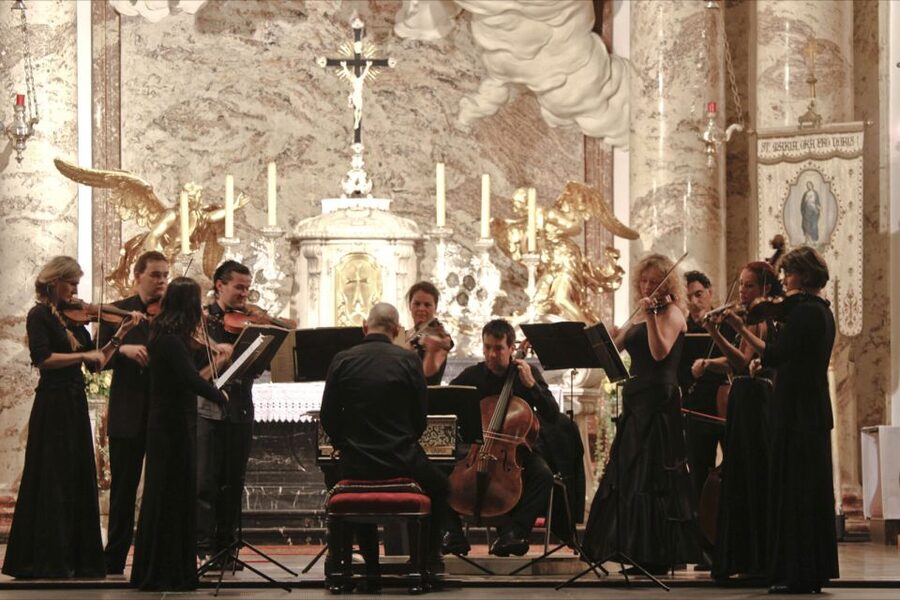
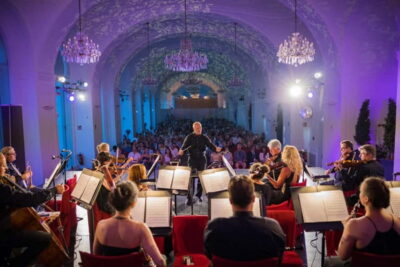
You do not enter an ordinary concert hall here. Karlskirche is a grand Baroque church, and the performance takes place against its ornate interior and altar artwork. The building is part of the evening, not just a container for the music.
That setting changes how you hear the Four Seasons. Vivaldi wrote music full of natural effects: spring birds, summer thunder, autumn hunting calls, and winter winds. Inside a large church, the notes carry and linger, giving the concert a broad, atmospheric quality.
The acoustics are also the one thing you should understand before choosing your seat. The natural echo can make the music sound grand, but it can soften detail in the far back or balcony. If you want to follow the lead violinist’s quick passages and facial expressions, pay extra for a front section if your budget allows.
I find the contrast appealing. The ensemble is relatively intimate, yet it performs inside a monumental space. You get the direct energy of a small group with the scale of a historic Viennese church.
More Classical Concerts in Vienna
- Vienna: Classical Concert in the World-Famous Musikverein
★ 4.6 · 6,673 reviews - Vienna: Classical Concert at St. Stephen’s Cathedral
★ 4.1 · 4,177 reviews - Vienna: Mozart Concert at the Golden Hall
★ 4.6 · 3,986 reviews
The 75-minute program: four seasons and changing extras
The central work is Le quattro stagioni, or The Four Seasons, from Vivaldi’s Opus 8. The four concertos are performed in this order:
- Spring, Op. 8 No. 1
- Summer, Op. 8 No. 2
- Autumn, Op. 8 No. 3
- Winter, Op. 8 No. 4
Each concerto is inspired by a sonnet linked to its season. You do not need to read the sonnets before attending, but knowing the basic images helps you listen more closely. In Spring, you can listen for birdsong and the arrival of warmer weather. Summer brings tension, heat, thunder, and lightning.
Autumn turns toward harvest celebrations, dancing, drinking, and hunting. Winter gives you cold winds, slipping on ice, and the warmth of sitting indoors beside a fire. The music is highly visual even without a narrator explaining it.
One or two additional pieces may be included, and these change from week to week. The possible composers include Wolfgang Amadeus Mozart, Johann Sebastian Bach, Heinrich Ignaz Franz Biber, and other major figures. That variation is useful if you attend more than once, but it also means you may not know the full program in advance.
If you want every piece listed before booking, check the current details as closely as possible. The fixed part of the evening is Vivaldi’s Four Seasons. The shorter additions are the variable part.
Why period instruments change the sound
Orchestra 1756 is a classical period-instrument ensemble. That means the musicians aim for the sound and performance style associated with the era rather than using only modern orchestral equipment and habits.
You may notice a crisp attack, clear rhythmic movement, and a more intimate balance between the instruments. The string sound can feel less heavy than a large modern orchestra, which lets the individual lines speak clearly. The basso continuo adds the harmonic foundation beneath the strings.
The group is described as a string ensemble with basso continuo, and the performance has also been presented with a nine-piece ensemble. This is not a full symphony orchestra. That smaller scale suits Vivaldi, whose concertos depend on conversation between the solo violin, the other strings, and the continuo.
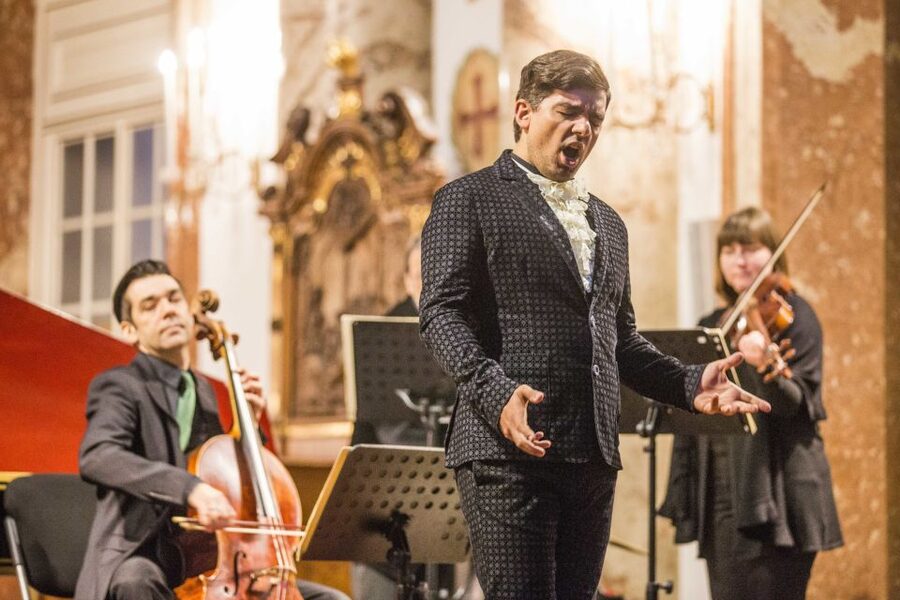
The principal violinist carries much of the drama. From a front seat, you can watch the lead player shape the phrases, trade ideas with the ensemble, and respond physically to the music. If you sit far back, the sound remains part of the experience, but the visual connection is weaker.
You do not need to be a dedicated classical music listener to follow the concert. The program is familiar, highly descriptive, and divided into recognizable sections. If you usually find classical concerts too formal, the changing moods and short movements make this an approachable introduction.
Choosing the right seating section
Your seat can make a real difference. Seating categories are offered, but the exact arrangement can vary by option and by the way the church is set up for a particular concert.
Category 1 or the front sections are the safest choice if you want to see the musicians well. Several people who chose these areas were placed in the first few rows or close to the front. That position lets you watch the principal violinist and the exchange among the players.
Middle seating is a sensible compromise. You remain close enough to see the group, while the sound has room to blend inside the church. Some people found the middle area very satisfactory, especially when they cared more about the overall music than a close view.
Category 2 can be perfectly enjoyable, but do not assume it always means a near-stage seat. One practical issue is the flat seating layout. If a tall person sits directly in front of you, your view may be limited.
Category 3 and some balcony positions are less dependable for sight and sound. You may see little of the musicians from the far back, and the echo can be more noticeable. A balcony seat may work if the architecture matters more to you than watching the performers, but it is not the choice I would make for a first visit.
Arrive early if you have a seating category rather than a specific numbered seat. Doors open 30 minutes before the concert, and arriving promptly gives you a better chance of choosing within your section. Staff guide people to the seating areas, but the best position in a general section can go quickly.
Other concert evenings in Vienna:
- Vienna: Classical Concert in St. Anne’s Church (Annakirche)
★ 4.6 · 3,414 reviews - Vienna: Classical Concert at Mozart’s First House
2,423 reviews - Vienna: Mozart and Strauss Concert at Schönbrunn
★ 4.5 · 2,364 reviews - Vienna Classical Concert at St. Peter’s Church
★ 4.5 · 2,039 reviews
Cold church, hard pews, and useful comfort tips
The church has no air conditioning. In winter, it can be distinctly cold, not merely a little cool. In summer, the opposite problem applies, so choose clothing with the season in mind.
Blankets are provided on many seats, and some front seats have heating beneath them. Those touches help, but they do not replace a warm coat in November, December, January, or February. Bring gloves or hand warmers if you feel the cold easily. A scarf and warm socks are sensible too.
The church seating can include hard pews or basic chairs. Seventy-five minutes is manageable for most people, but the seat is part of the tradeoff for hearing music in this setting. If you need extra comfort, a front category with heated seating may be worth considering.
The short running time helps. You get a complete presentation of the Four Seasons without spending a full night on a long opera or symphony program. The concert is long enough to feel substantial, yet short enough to fit before or after dinner.
Food and drinks are not allowed inside. There is also no cloakroom included, so avoid bringing large bags, luggage, or bulky items. Pets, baby strollers, smoking, vaping, alcohol, and drugs are prohibited.
What the evening feels like from arrival to final note
The doors open 30 minutes before the start. Use that time to find your seating area, settle in, and look around Karlskirche before the lights and music focus your attention on the ensemble.
Once the performance begins, late entry is not permitted. This is important because the church doors may be closed during the music, and arriving after the scheduled start can mean missing the entire concert. Plan enough time to reach the venue and get seated without rushing.
The program begins with the musicians in the church setting, then moves through the four concertos. The performance is not a guided tour, so you should not expect spoken commentary or a host explaining every movement. The music itself carries the narrative.
You also cannot enter and leave during the concert. If you leave, re-entry is not allowed. Plan a restroom visit before taking your seat, and keep your phone silent and out of use once the performance starts.
Photography is not allowed during the performance. You can take pictures before and after, which gives you a chance to record the church interior without interrupting the music. Cameras are listed among the prohibited items during the event, so keep photography for those permitted moments.
Is $40 good value for Vienna?
At about $40 per person, this concert offers a reasonably priced way to hear a complete classical program in a major Viennese church. You are paying for the entrance ticket only. Transfers, food, drinks, and cloakroom service are not included.
The value is strongest if you care about both music and setting. A standard concert in a plain room would not offer the same architectural backdrop, while a much grander Viennese concert experience can cost more. Here, the 75-minute format also makes it easier to fit into a busy city itinerary.
The price becomes less attractive if you choose a far-back or balcony seat and mainly want to watch the musicians. The music may still be enjoyable, but the distant view and church echo can reduce the impact. If the difference between categories is modest, I would spend more for the front or middle.
For a first classical concert, the familiar Vivaldi program makes the cost easier to justify. You already know the broad musical idea, and the Four Seasons gives you clear images to follow. For a serious concert listener, the period instruments and Karlskirche setting add another reason to go.
Who should book this concert?
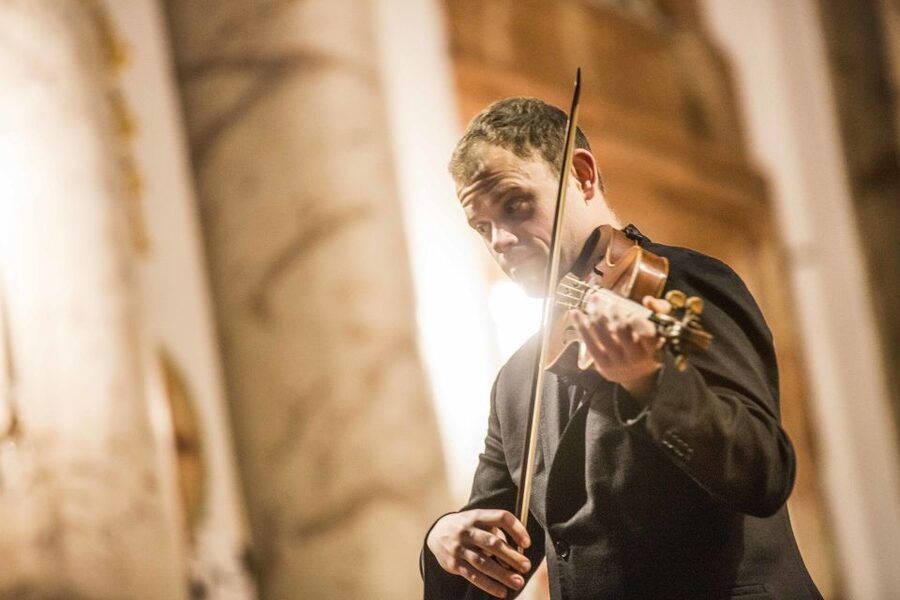
I would recommend it to you if you want an evening activity that feels distinctly connected to Vienna, especially if you enjoy historic buildings, string music, or short cultural performances. It also suits couples, solo visitors, and families with older children.
Children under six are not admitted. Unaccompanied minors are also not permitted, so this is not a casual activity for very young children.
You should think twice if you use a wheelchair, since the experience is not suitable for wheelchair users. You may also want to skip it if you need plush seating, dislike cold interiors, or cannot sit quietly for 75 minutes.
The concert works particularly well on a first visit to Vienna because it combines three easy-to-understand elements: a famous piece, a beautiful church, and musicians playing in a period style. It is also a pleasant final-night choice, with the church and music giving the evening a formal finish without requiring several hours.
Booking and cancellation details
The meeting point can vary according to the option you book, so check your confirmation carefully rather than assuming every ticket uses the same entrance arrangement.
You can cancel up to 24 hours before the concert for a full refund. A reserve-now, pay-later option is available, which can help if your Vienna schedule is still changing.
The performance provider is Orchester 1756 GmbH. The main program remains Vivaldi’s Four Seasons, while one or two additional works may change from week to week.
Final recommendation: book it for the setting and the close-up music
I would book this concert if you can dress for the temperature and choose a front or middle section. The combination of Karlskirche’s grand interior, Vivaldi’s instantly recognizable seasonal scenes, and Orchestra 1756’s period-instrument sound gives you a memorable 75-minute evening.
Paying less for a distant seat can still work, but it shifts the experience toward listening in a dramatic church rather than watching a close musical performance. For the best balance, arrive when the doors open, choose the strongest available seat in your category, bring warm layers in winter, and treat the concert as both a music event and a visit to one of Vienna’s most impressive interiors.
FAQ
How long is the Karlskirche Vivaldi concert?
The concert lasts 75 minutes.
What music is performed?
The main program is Vivaldi’s The Four Seasons: Spring, Summer, Autumn, and Winter from Opus 8. One or two additional works may also be performed.
Which other composers may be included?
Additional pieces may come from Mozart, Bach, Biber, and other major composers. The extra works change from week to week.
Who performs the concert?
Orchestra 1756, a classical period-instrument ensemble, performs the program.
Is the church cold?
Karlskirche can be cold in winter and hot in summer because it does not have air conditioning. Blankets are provided on the chairs, and some seats have heating underneath.
How early should I arrive?
Doors open 30 minutes before the concert starts. Arrive before the scheduled start because no entry is permitted after the performance begins.
Can I take pictures during the concert?
No. Photography is not allowed during the performance, although you can take pictures before and after it.
Are children allowed?
Children under six are not admitted. Unaccompanied minors are also not allowed.
Is the concert suitable for wheelchair users?
The experience is not suitable for wheelchair users.
Just added in Vienna
- 3 hour private tour in Vienna by private car★ 4.4 · 6 reviews
- Private Christmas Markets Walking Tour Vienna★ 5.0 · 31 reviews
- Christmas Markets & Shopping in Vienna★ 5.0 · 17 reviews
- Christmas Market Vienna Tour★ 4.0 · 53 reviews
- Vienna: Christmas Markets Tour★ 4.3 · 99 reviews
- Schlumberger Sparkling Wine Cellar World Entrance Ticket in Vienna★ 4.5 · 147 reviews
- Schmetterlinghaus – Imperial Butterfly House Vienna Admission Ticket★ 3.5 · 144 reviews
- Salzburg Small-Group Day Trip from Vienna★ 5.0 · 148 reviews
Mozart & Classical Concerts, compared.
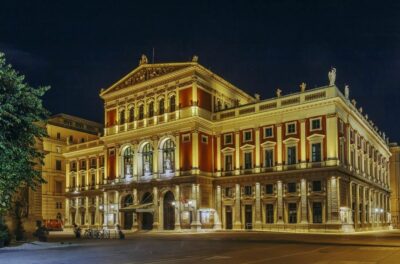
Classical Concert in the World-Famous Musikverein
Read our review →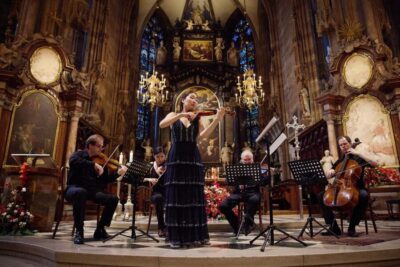
Classical Concert in St. Anne’s Church (Annakirche)
Read our review →
Vienna Classical Concert at St. Peter’s Church
Read our review →Browse the lists this tour appears in