
Reviewed · MOZART & CLASSICAL CONCERTS
What do Mozart and Henry Ford have in common? – The freemason in Vienna
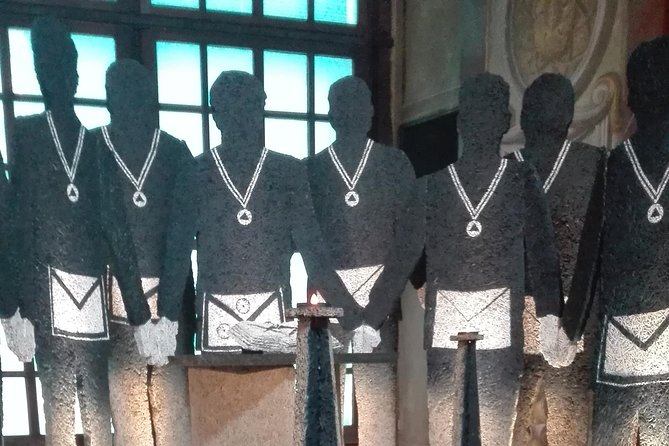
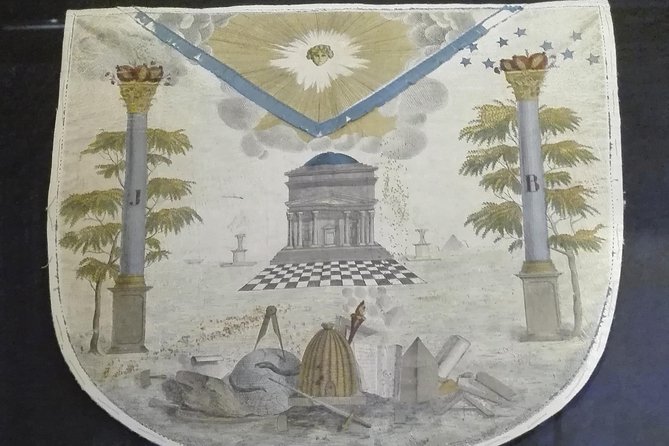
Vienna’s grand churches and palaces hold more than imperial stories. This private walk looks at the city through the less familiar world of Freemasonry, linking places in the center with figures such as Mozart, Henry Ford, Goethe, George Washington, Puccini, and Henri Dunant. I like the unusual subject and the fact that the route stays in central Vienna, with no admission fees required at the listed stops.
I also like the small private format, limited to your own group, and the chance to ask questions rather than follow a large crowd. The main caution is that the tour spends a short time at each location and describes the Albertina from outside, so you should book it for the story and interpretation, not for museum interiors or a full architectural tour.
Key points at a glance
- A different way to read Vienna: The tour examines Masonic symbols, people, and meeting places rather than focusing only on Habsburg rulers.
- Four central stops: The route includes St. Stephen’s Cathedral, Rauhensteingasse, St. Michael’s Church, and the Albertina.
- Private group setting: Only your party participates, with a minimum of five and a maximum of 25 people.
- Sandra Blum leads the experience: The provider is Sandra Blum, operating under Safu, exklusiv Wien entdecken.
- About 1 hour 45 minutes: This is a compact city walk, useful alongside a fuller Vienna sightseeing plan.
- No listed entry tickets: The stops are viewed or discussed from public areas, though the Albertina description is outside only.
Vienna’s Masonic story begins beneath familiar landmarks
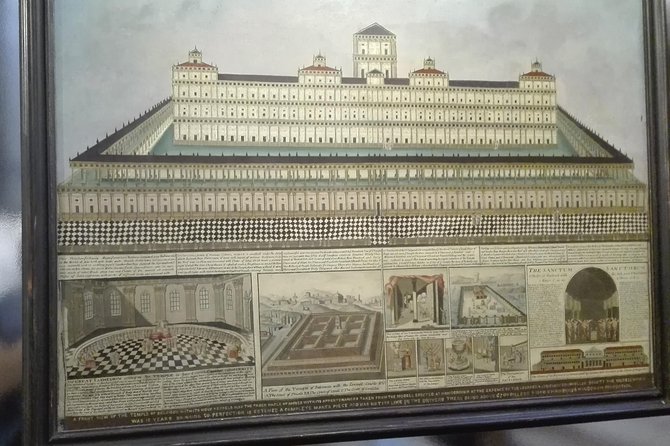
Most first-time visits to Vienna revolve around the imperial court, classical music, coffeehouses, and monumental churches. This tour takes a different route through the same city center. It asks you to look for signs and associations connected with Freemasonry, a long-running fraternity that has often attracted claims of secrecy and conspiracy.
That subject can be rewarding because Vienna is full of places whose meaning changes depending on the question you bring to them. Instead of simply admiring a church facade or a palace square, you are asked to consider how symbols, public buildings, famous residents, and private associations may intersect.
The connection to Mozart gives the walk an immediate hook. Henry Ford, Goethe, George Washington, Henri Dunant, Giacomo Puccini, Gotthold Ephraim Lessing, and Fritz Muliar are also presented as figures linked to Freemasonry. The appeal is not that every one of these people shaped Vienna directly. It is that the tour places them within a wider story about an international fraternity whose members included artists, writers, political figures, inventors, and public servants.
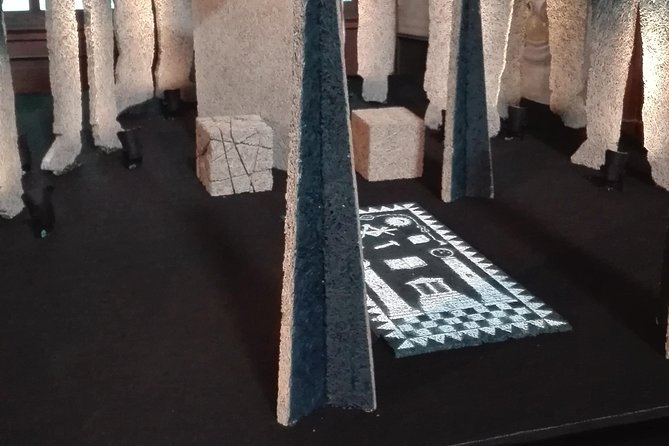
You should approach the experience with curiosity rather than expecting a sensational expose. The supplied description promises an introduction to members, symbols, temples, and traces left in Vienna. It does not promise access to a Masonic lodge or secret chambers. The value lies in the guide’s explanation of visible places and their possible connections.
More Classical Concerts in Vienna
- Vienna: Vivaldi’s Four Seasons Concert in Karlskirche
★ 4.7 · 14,951 reviews - Vienna: Classical Concert in the World-Famous Musikverein
★ 4.6 · 6,673 reviews - Vienna: Classical Concert at St. Stephen’s Cathedral
★ 4.1 · 4,177 reviews
St. Stephen’s Cathedral and the first look at Masonic symbols
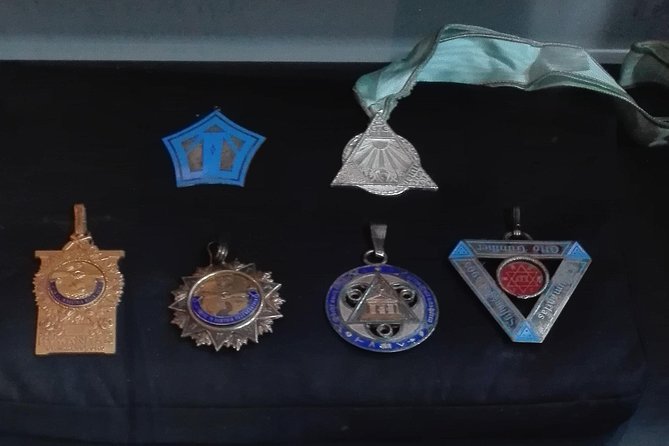
The meeting point is Judenplatz 5 in Vienna’s first district. From there, the walk includes St. Stephen’s Cathedral, where the focus is a cathedral emblem considered from a Masonic angle. The listed time is about 10 minutes, and there is no admission ticket included or required for this portion as described.
St. Stephen’s is an obvious place to begin because it gives you a powerful visual setting immediately. The cathedral is one of Vienna’s defining buildings, and a short stop allows the guide to show how a familiar emblem can be read in more than one way. That shift in viewpoint is the point of the visit.
Do not expect a full cathedral tour in ten minutes. The stop is tightly focused on the emblem and its Masonic interpretation. If you want to study the interior, climb the towers, or spend time on the cathedral’s art and construction, you will need a separate visit and additional time.
I would arrive early at the meeting point. The tour description gives the start address as Judenplatz 5, while the first named stop is St. Stephen’s Cathedral. Since the route remains in central Vienna and public transport is nearby, getting to the area should be straightforward, but you will want to confirm the exact meeting instructions after booking.
Rauhensteingasse, a specific address with Masonic importance
The longest listed stop is Rauhensteingasse, with about 20 minutes devoted to an important address for the fraternity. This is likely where the walk moves from symbols to place, giving the story a more concrete anchor.
That extra time matters. A street address may not look dramatic compared with Vienna’s churches and palaces, but it can explain how an organization operated in the city. The stop gives the guide room to discuss the local union, its connections, and the way Masonic activity fit into Vienna’s urban life.
This is also the kind of stop where your questions can improve the experience. In a private group, you can ask what the address represented, how the organization was structured, or how much of the site remains visible today. The description does not provide a detailed account of the building itself, so you should not assume that you will enter a lodge or see a preserved ceremonial room.
For me, this is one of the tour’s more useful stops because it moves beyond famous names. Mozart and Goethe are easy conversation starters. A particular address helps connect the subject to the streets under your feet.
St. Michael’s Church and another Masonic connection
The walk continues to St. Michael’s Church for roughly 10 minutes. The church is described as another place related to Freemasonry, but the available details do not specify the exact symbol, member, or event connected with it.
That lack of detail is worth noting before you book. The stop may be most useful if you enjoy hearing a guide develop a story on location. If you want a precise academic account of the church’s Masonic links, ask for clarification during the tour or before confirming your reservation.
The church adds variety to the route. Rather than discussing Freemasonry only through private associations and named individuals, the walk returns to a major public religious building. That contrast raises interesting questions about symbolism, religious space, and the often complicated relationship between public institutions and private societies.
The scheduled ten minutes means you will receive a focused explanation, not a general survey of St. Michael’s architecture. If the church itself interests you, consider returning independently when you can give it more attention.
Other concert evenings in Vienna:
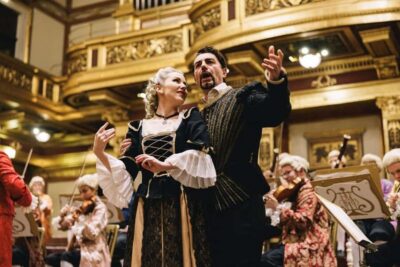
- Vienna: Mozart Concert at the Golden Hall
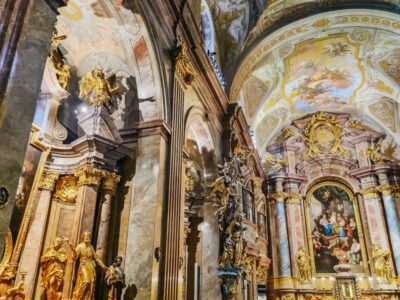
★ 4.6 · 3,986 reviews - Vienna: Classical Concert in St. Anne’s Church (Annakirche)
★ 4.6 · 3,414 reviews - Vienna: Classical Concert at Mozart’s First House
2,423 reviews - Vienna: Mozart and Strauss Concert at Schönbrunn
★ 4.5 · 2,364 reviews
The Albertina from outside, with palace scenery but no museum visit
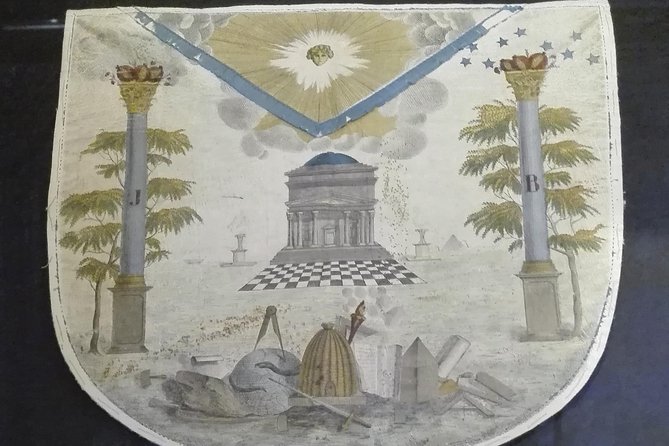
The final listed stop is the Albertina, where the description is specifically from outside. The stop lasts about 10 minutes, and admission is not included.
This distinction is important. You will look at the building and hear about its relevance to the theme, but the tour does not include entry to the Albertina museum. If you hoped to see its art collections, print rooms, or interior state apartments, plan a separate ticket and visit.
The Albertina is a strong endpoint for a short central-city walk because it places the discussion in one of Vienna’s most famous cultural areas. The route ends at Josefsplatz, also in the first district, so you finish close to other major sights and transport links. The supplied details do not state the precise path between the Albertina and Josefsplatz, but both locations are in central Vienna.
The tour’s ending also gives you an easy choice. You can continue sightseeing, stop for food, or visit another nearby attraction. Since the experience lasts less than two hours, it fits neatly into a morning or afternoon without taking over the day.
What the private format means for the experience
This is a private activity, with only your group taking part. The stated minimum is five people, and the maximum is 25. That range is worth considering because private does not necessarily mean intimate if your party is close to the upper limit.
For a group of five to ten, the format should make it easier to hear the guide and ask questions. At 25, it may feel more like a small group walk, although it is still limited to one booking party rather than a mix of unrelated participants.
The tour provider is Sandra Blum, operating as Safu, exklusiv Wien entdecken. Since the description does not list additional guides, you should expect the booking to be associated with Sandra Blum, subject to confirmation and availability.
A mobile ticket keeps the arrangement simple. You should still have the booking confirmation ready on your phone and check the meeting instructions before setting out. Confirmation is stated to arrive within 48 hours of booking, subject to availability.
Is $49.78 a fair price for 1 hour 45 minutes?
At $49.78 per person, this is not the cheapest way to see central Vienna. The price makes more sense if you are booking for a group that values a private guide and a specialized subject.
The arithmetic works differently depending on your party size. For five people, the total comes to about $249. For a larger private group, the per-person price may feel more reasonable, especially if everyone is interested in the topic. You are paying for interpretation and a custom group setting, not entry tickets, transport, or a long list of included attractions.
The lack of admission costs is both a benefit and a limitation. You do not need to budget for cathedral, church, or Albertina tickets as part of the stated walk. On the other hand, the tour’s physical content is mostly exterior viewing and guided discussion, so someone who prefers museums or interiors may find the price harder to justify.
I would compare this tour with a standard Vienna city walk by asking one question: do you want a broad introduction to Vienna, or do you want one unusual theme explained in a compact private setting? If you want the second option, the price can be reasonable. If you simply want the city’s major sights, a general walking tour may offer more locations and wider context for similar money.
Who will enjoy this Vienna walk most?
I would recommend it to you if you already know the basic Vienna sights and want a fresh subject. It also suits anyone interested in Mozart, European intellectual life, symbolism, private societies, or the way famous people become part of a city’s story.
The tour may work well for families with older children, especially if the group likes puzzles, symbols, and unusual historical connections. The provider states that most people can participate, but the route is a walking tour and no detailed accessibility information is supplied. If you have specific mobility needs, contact the provider before booking rather than assuming every street, entrance, or stopping point will suit you.
You should be less interested if your main goal is to enter historic buildings. The stops are short, the Albertina is viewed from outside, and the description does not include a lodge visit or a museum admission.
The subject may also require a little patience. Freemasonry is often presented through rumor and dramatic claims. A useful guide should separate documented connections from speculation, but the description does not explain how the tour handles that distinction. Ask questions and listen for clear explanations rather than accepting every mysterious suggestion at face value.
Timing, meeting point, and cancellation details
The experience lasts approximately one hour and 45 minutes and is offered Monday through Friday between 9:00 a.m. and 8:00 p.m., according to the supplied operating information. The date range shown runs from August 2, 2020, through June 18, 2026, so check the available date and time when you book.
You meet at Judenplatz 5, 1010 Vienna, and finish at Josefsplatz, 1010 Vienna. Both are in Vienna’s central district, and the activity is listed as being near public transportation.
The booking requires at least five participants. If that minimum is not met and the activity is canceled, you are offered another date or experience, or a full refund. You can cancel for a full refund up to 24 hours before the start time. A cancellation within 24 hours, or a late change, is not refundable.
One practical point deserves attention: the published rating is 4.3 from six entries, but the accompanying comments supplied for this experience do not actually describe this Vienna walk. They refer to unrelated meals, lodging, airline service, and airport assistance. I would therefore treat the numerical rating cautiously and make your decision from the route, subject, group format, and provider details instead.
Should you book the Freemason in Vienna tour?
Book it if you want a short, private, theme-led walk rather than a conventional sightseeing circuit. The strongest reasons are the unusual focus, central route, named connections to major historical figures, and the chance to ask questions within your own group.
Skip it if you want interior visits, extensive architecture, or a broad survey of Vienna. The four stops are compact, the Albertina is exterior only, and the tour’s value depends heavily on the guide’s ability to explain Masonic links clearly and responsibly.
For an interested group of five or more, this can be a useful addition to a Vienna itinerary. I would schedule it early in your stay, then use the ending at Josefsplatz as a launch point for further sightseeing. Just keep your expectations precise: you are booking a focused walking conversation about Freemasonry in central Vienna, not access to secret rooms or a full museum tour.
FAQ
How long does the tour last?
The tour lasts approximately 1 hour and 45 minutes.
Where does the tour begin?
The meeting point is Judenpl. 5, 1010 Vienna, Austria.
Where does the tour end?
The tour ends at Josefsplatz, 1010 Vienna, Austria.
Which places are included in the route?
The listed stops are St. Stephen’s Cathedral, Rauhensteingasse, St. Michael’s Church, and the Albertina.
Is admission to the Albertina included?
No. The Albertina portion is described from outside, and admission is not included.
Is the tour private?
Yes. Only your group participates. The stated minimum is five people, and the maximum is 25.
What is the cancellation policy?
You can cancel up to 24 hours before the start time for a full refund. Cancellations or changes made within 24 hours are not accepted for a refund.
Just added in Vienna
- World War II History Vienna Old Town Private Walking Tour★ 4.8 · 9 reviews
- Vienna: Wiener Schnitzel and Strudel Cooking Class★ 4.9 · 126 reviews
- Vienna: Wine Tasting Tour★ 4.8 · 61 reviews
- Vienna: Winery and Wine Tasting Tour with a Wine Expert★ 5.0 · 5 reviews
- Vienna: Wine Tasting E-Bike Tour★ 4.9 · 46 reviews
- Vienna: Wine Tasting at Schönbrunn Palace★ 4.3 · 71 reviews
- Vienna: Unforgettable Private City Tour★ 5.0 · 7 reviews
- Vienna Urban Art Tour: Explore a different side of Vienna!★ 3.8 · 14 reviews
Mozart & Classical Concerts, compared.
Vivaldi’s Four Seasons Concert in Karlskirche
Read our review →
Classical Concert in the World-Famous Musikverein
Read our review →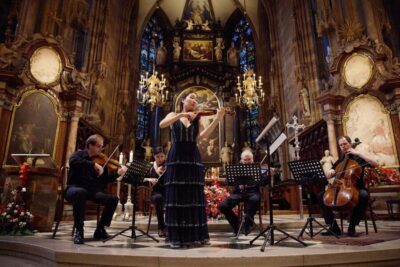
Classical Concert in St. Anne’s Church (Annakirche)
Read our review →
Browse the lists this tour appears in