
Reviewed · MOZART & CLASSICAL CONCERTS
STATE OPERA – PRIVATE guided tour (tickets included)
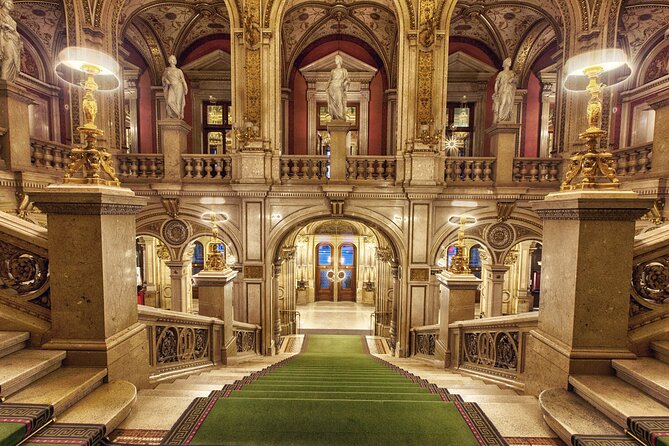
The most interesting part of this private Vienna State Opera tour is the contrast between its grand 19th-century rooms and the modern sections rebuilt after the Second World War. You’ll also hear how the opera house changes its stage sets from day to day, a useful reminder that this famous building is a working institution, not just a pretty hall.
I like the private format, since Giselle can adjust the conversation to your group. I also like the blend of architecture, music, performers, and backstage organization. The main consideration is time: 90 minutes gives you a focused introduction, not an exhaustive look at every corner or a full performance.
Key points to know before you book
- A private tour with Giselle: Only your group takes part, allowing room for personal questions and changes in emphasis.
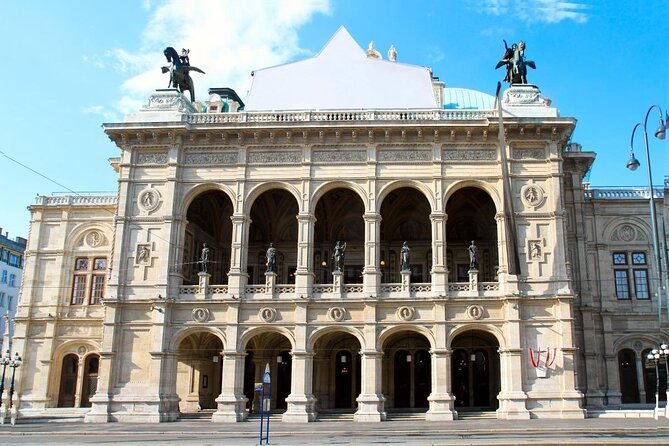
- Two eras of opera-house design: See the ornate original sections alongside areas rebuilt after World War II.
- Stories beyond the facade: Learn about Opera Ball customs, famous performers, changing stage sets, and the many people who keep the institution running.
- Tickets included: Admission to the guided visit is included in the $267 price.
- A compact 90-minute visit: The tour begins and ends at the Vienna State Opera, Opernring 2.
- Strong guide feedback: Giselle is praised for her humor, professionalism, communication, and ability to tailor the visit to different interests.
Why the Vienna State Opera deserves more than a quick photo
Vienna has a powerful claim to being a city of music, and the Wiener Staatsoper is its most visible musical address. Even if you do not know your Mozart from your Mahler, the building gives you a clear sense of how music, politics, wealth, celebrity, and daily work meet in one place.
This visit is not simply a walk through a grand foyer. Giselle presents the opera house as a living workplace. You’ll hear about the stars who performed here, the changing repertoire, the logistics of staging productions, and the social spectacle of the Opera Ball. That mix makes the tour useful for first-time visitors and for people already familiar with opera.
The building’s past is not entirely polished. Its original construction caused a major scandal, and the controversy was so severe that it contributed to the death of one of the architects. That detail gives the architecture a human edge. The opera house was not greeted as an unquestioned triumph. It had critics from the start.
You’ll also see how the building changed after wartime damage. The older rooms retain their pomp and formal decoration, while the postwar sections reflect a different period and purpose. Comparing the two makes the building easier to understand than simply admiring it room by room.
More Classical Concerts in Vienna
- Vienna: Vivaldi’s Four Seasons Concert in Karlskirche
★ 4.7 · 14,951 reviews - Vienna: Classical Concert in the World-Famous Musikverein
★ 4.6 · 6,673 reviews - Vienna: Classical Concert at St. Stephen’s Cathedral
★ 4.1 · 4,177 reviews
A 90-minute route through two different opera houses
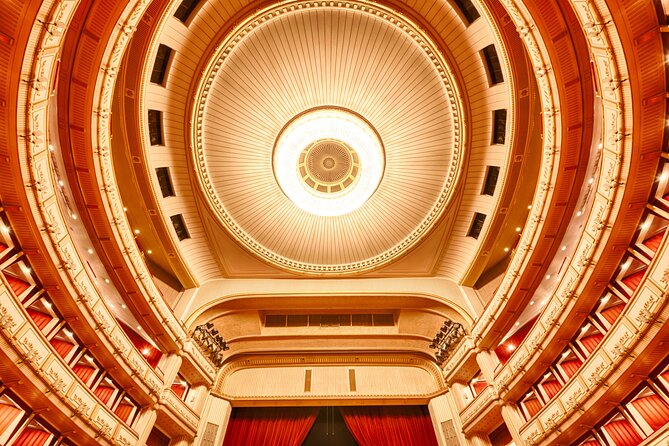
The tour lasts about one hour and 30 minutes and covers the public areas open during the visit. That wording matters. You are getting a guided look at the parts available to the public, not a promise of access to every rehearsal room, office, storage area, or technical workspace.
Still, the route has plenty to discuss. The original sections let you appreciate the scale and ceremony expected of a major 19th-century opera house. Expect a setting designed to make an evening at the opera feel like a social event, not merely a seat in front of a stage.
The later sections tell a different story. The postwar rebuilding adds a layer of loss and repair, showing how the institution adapted after a destructive period. I like this part because it prevents the visit from becoming a simple parade of gilded surfaces. You see both continuity and change.
Giselle also connects the building to the way performances work. Stage sets change daily, and the tour explains where those sets are stored. You’ll hear about how many people work for the institution as a whole, though the supplied details do not give a specific staff number. The point is clear: what you see on stage depends on a large operation behind it.
That practical angle is one of the strongest reasons to choose this tour. A performance can look effortless from your seat. The guided visit helps you picture the labor, storage, planning, and coordination required to make that appearance possible.
From Mahler and Karajan to Domingo and Nureyev
The State Opera’s story is closely tied to major names in music and dance. Giselle discusses performers and directors associated with the stage, including Placido Domingo, Montserrat Caballé, José Carreras, Gustav Mahler, Herbert von Karajan, Rudolf Nureyev, and Margot Fonteyn.
The value here is not just collecting famous names. These people represent different parts of the opera house’s identity. Some are singers, some are conductors, and others are major figures in ballet. Their careers help explain why the State Opera has mattered across several generations and artistic fields.
If you already play music or have a strong interest in composers, the conversation can become more personal. One past guest who was a musician was able to discuss Beethoven with Giselle, and she adjusted naturally to that interest. You do not need advanced musical knowledge to follow the tour, but you can bring your own questions and interests into it.
The guide’s style appears especially useful for mixed groups. One person may care about architecture, another about famous singers, and someone else may want to know how the stage machinery works. A private guide can spend more time on the subjects your group actually enjoys instead of following a fixed talk designed for strangers.
The Opera Ball and the social side of the building
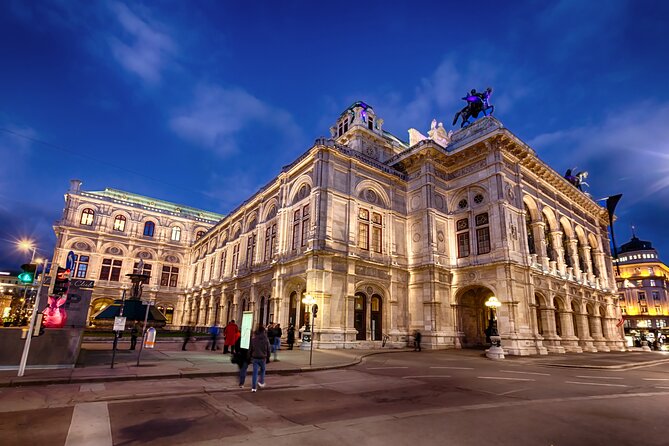
The Vienna State Opera is also a place of ceremony and status. Giselle explains how the Opera Ball is celebrated, including the participation of wealthy patrons and local politicians. This gives you a look at the building as a social stage, not only an artistic one.
The ball is an important part of understanding Vienna’s public image. It combines formal tradition, high society, politics, music, and spectacle in one night. You may not attend the event itself on this tour, but learning how it functions adds context to the rooms around you.
I appreciate that the visit includes this kind of subject. Architecture can feel remote if you only hear dates and construction facts. Stories about the Opera Ball explain how people have used the building and what it represents in the city.
At the same time, this is a guided visit to public areas rather than a ticket to the ball or an evening performance. If your main goal is to hear an opera, this tour cannot replace a seat at a show. If your main goal is to understand the institution and its setting, the social history adds real value.
Other concert evenings in Vienna:
- Vienna: Mozart Concert at the Golden Hall
★ 4.6 · 3,986 reviews - Vienna: Classical Concert in St. Anne’s Church (Annakirche)
★ 4.6 · 3,414 reviews - Vienna: Classical Concert at Mozart’s First House
2,423 reviews - Vienna: Mozart and Strauss Concert at Schönbrunn
★ 4.5 · 2,364 reviews
What a private guide changes
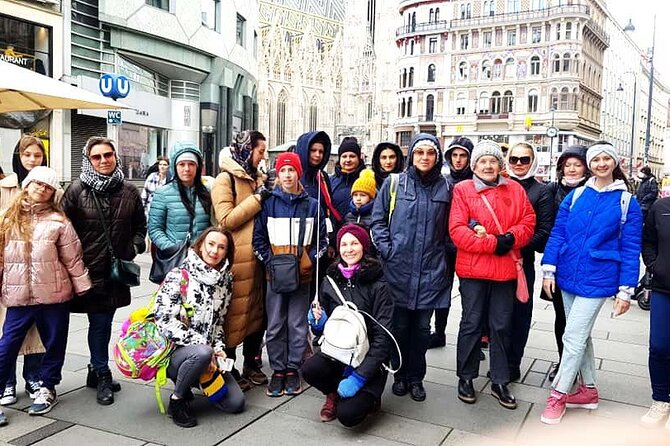
A private tour is most useful when you want conversation rather than a standard speech. Only your group participates, so you can ask for more detail about the subjects that interest you. Giselle is described as friendly, funny, professional, and able to adjust easily to a group’s wishes.
That flexibility is particularly helpful at the State Opera because the building appeals to different kinds of visitors. You may want more time on the original architecture. Your companion may care about the careers of Domingo or Caballé. Another person may be curious about the stage sets and storage areas. A private format gives the guide room to connect those topics.
Communication before the meeting is another practical strength associated with Giselle. That can make the start of the tour easier, especially if your group has specific interests or questions. The available information does not promise a particular tour language, so you should confirm language needs when booking if that matters to you.
The tone also seems suitable for families and friend groups. Giselle’s replies to past guests show warmth and humor, including a playful comment that her guests are the nobility of Vienna. That light touch can keep a formal building from feeling stiff.
Is $267 good value for this experience?
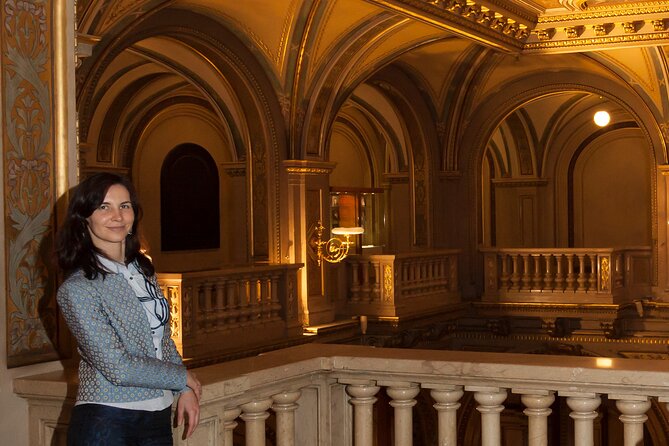
The price is $267, with admission included. Since this is a private activity, the value depends heavily on how many people are in your group and how much you care about personal attention.
For a larger family or group of friends, the cost can make more sense because you are sharing one guide rather than paying for separate individual arrangements. For one or two people, it is a more deliberate splurge. You are paying for privacy, a guide who can respond to your questions, and a focused visit inside one of Vienna’s major cultural institutions.
The 90-minute duration is also worth weighing. It is long enough to cover the building, its major eras, famous figures, the Opera Ball, and the work behind performances. It is short enough to fit into a day that includes other central Vienna sights.
I would not choose it if you want the cheapest possible way to see the interior or if you mainly want a performance. A standard public visit, when available, may suit a tighter budget. But if you value a personal guide and want the building explained rather than merely entered, the price has a reasonable case, especially for a group.
Meeting at Opernring 2
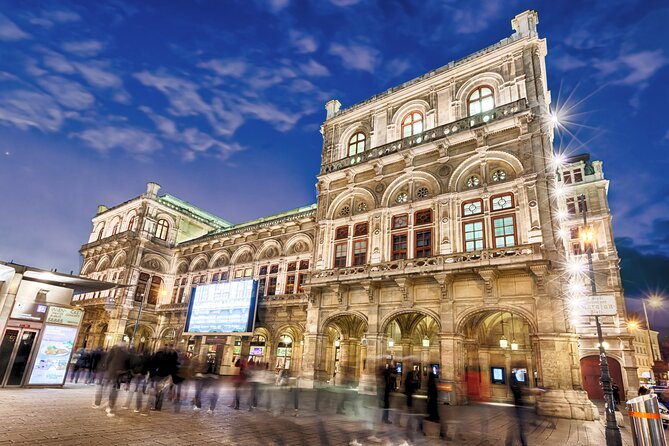
The meeting point is the Vienna State Opera at Opernring 2, 1010 Vienna. The tour ends back at the same place, which makes planning simple. You do not need to arrange a separate return transfer or work out where the guide will leave you.
The opera is near public transportation, so it fits easily into a central Vienna sightseeing day. The information provided does not specify a particular station, route, or entrance procedure, so check the final booking details for the exact meeting instructions.
A mobile ticket is provided. Confirmation normally arrives at booking, though reservations made within one hour of the start time are confirmed as soon as possible and depend on availability. In practical terms, booking earlier is sensible if your schedule is fixed.
The activity is described as suitable for most participants. No special physical requirements are listed. Since this is an interior guided visit, you should still be comfortable spending 90 minutes moving through the public areas at the guide’s pace.
Who will get the most from this tour?
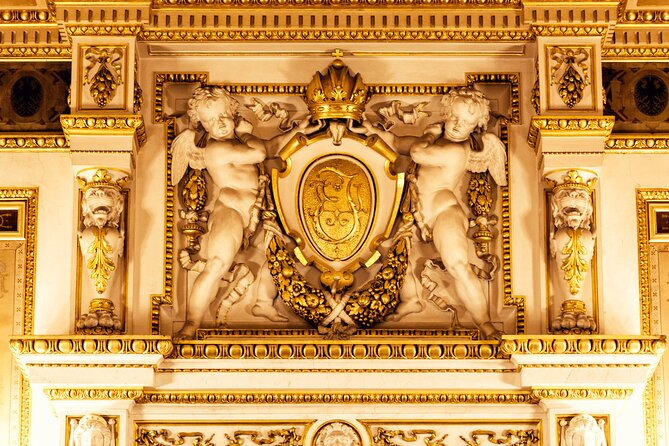
This tour fits you well if you enjoy architecture but want more than a photo stop. It also works for music fans who want to connect famous names with a real venue, rather than reading about them in a guidebook.
Families and friend groups may appreciate the private setup. You can ask basic questions without worrying about slowing down a larger group, and more experienced music lovers can take the conversation further. The guide’s ability to shift between history, music, and everyday opera work is useful for groups with mixed interests.
It is also a good choice if you have limited time in Vienna. The central meeting point and 90-minute schedule leave room for nearby sights, a meal, or another activity. The tour does not require you to commit to an entire morning or afternoon.
You may want to skip it if you are seeking a full performance, access to every behind-the-scenes area, or a highly technical account of stage machinery. The visit stays within the public areas open to visitors, and its strength is the guide’s broad explanation of the institution rather than specialist access.
Booking and cancellation details
You can cancel for a full refund up to 24 hours before the experience begins. Cancellations made within 24 hours are not refunded, and changes during that period are not accepted. The cut-off follows local Vienna time.
The activity has a 5.0 rating from 14 ratings, with 100 percent recommending it. The most consistently praised qualities are Giselle’s friendly manner, clear communication, professional approach, humor, and ability to answer questions across history, music, and Vienna.
Those qualities matter because a private tour depends heavily on the guide. The opera house supplies the setting, but Giselle’s handling of the visit shapes how much you take away. The available comments also show that she can engage both experienced musicians and visitors who simply want an entertaining introduction.
Should you book the Vienna State Opera tour?
Book this private State Opera tour if you want a personal introduction to Vienna’s musical center, especially if you are traveling with family or friends and can share the $267 cost. You’ll see both the ornate original areas and the postwar sections, while learning about famous performers, the Opera Ball, stage sets, storage, and the people who keep the institution working.
Skip it if your priority is a live opera performance or the lowest possible admission price. For everyone else, the combination of a central location, included admission, a manageable 90-minute visit, and Giselle’s flexible guiding style makes this a strong choice for understanding one of Vienna’s most important buildings.
FAQ
Where does the private State Opera tour begin?
It begins at the Vienna State Opera, Opernring 2, 1010 Vienna, Austria.
Where does the tour end?
The activity ends back at the meeting point at the Vienna State Opera.
How long does the tour last?
The tour lasts approximately one hour and 30 minutes.
Is admission included?
Yes. The admission ticket is included in the experience.
Is this a private tour?
Yes. Only your group participates in the activity.
What does the tour cover?
You visit the public areas open during the tour and learn about the opera house’s original architecture, postwar rebuilding, famous performers, the Opera Ball, changing stage sets, storage, and the people who work for the institution.
Who provides the tour?
The experience is provided by Giselle Tours Vienna, with Giselle serving as the guide.
Is the meeting point near public transportation?
Yes. The Vienna State Opera meeting point is near public transportation.
What is the cancellation policy?
You can cancel at least 24 hours before the start time for a full refund. Cancellations or changes made less than 24 hours before the start time are not accepted, and the amount paid is not refunded.
Just added in Vienna
- World War II History Vienna Old Town Private Walking Tour★ 4.8 · 9 reviews
- Vienna: Wiener Schnitzel and Strudel Cooking Class★ 4.9 · 126 reviews
- Vienna: Wine Tasting Tour★ 4.8 · 61 reviews
- Vienna: Winery and Wine Tasting Tour with a Wine Expert★ 5.0 · 5 reviews
- Vienna: Wine Tasting E-Bike Tour★ 4.9 · 46 reviews
- Vienna: Wine Tasting at Schönbrunn Palace★ 4.3 · 71 reviews
- Vienna: Unforgettable Private City Tour★ 5.0 · 7 reviews
- Vienna Urban Art Tour: Explore a different side of Vienna!★ 3.8 · 14 reviews
Mozart & Classical Concerts, compared.
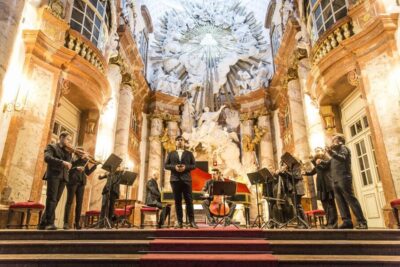
Vivaldi’s Four Seasons Concert in Karlskirche
Read our review →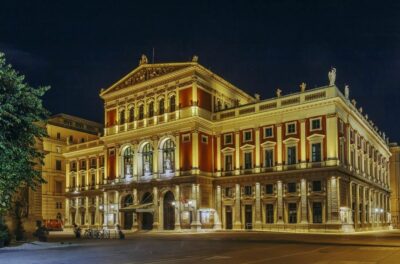
Classical Concert in the World-Famous Musikverein
Read our review →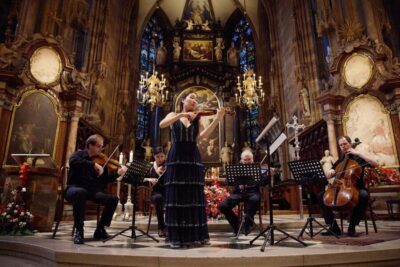
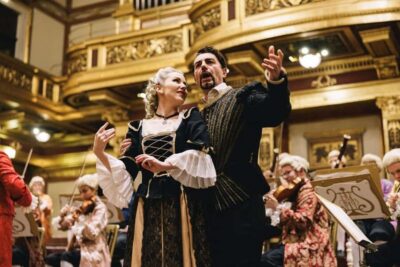
Classical Concert in St. Anne’s Church (Annakirche)
Read our review →
Browse the lists this tour appears in