
Reviewed · WALKING TOURS
Salzburg Introduction Walking Tour
Salzburg is much more than Mozart and The Sound of Music. This 2.5-hour walking tour connects the city’s music, salt trade, medieval churches, medical history, and grand Baroque buildings in one steady route through the old center. You’ll see the places that make Salzburg famous, but you’ll also learn why the city grew where it did and how local customs took shape.
I like the small-group or private format, which gives you room to ask questions, and I like that the guides come from academic and publishing backgrounds. Guide Liza, a Salzburg local, has been praised for answering questions from both children and adults. The main drawback is price: at $176 per person, this is costly for a walk, especially since admission to the Mozart Residence is not included.
Key points to know
- The route covers Salzburg’s essential old-town sights: Mirabell Gardens, Mozart’s birthplace, Alter Markt, Residenzplatz, Domplatz, and St. Peter’s Abbey.
- The focus goes beyond Mozart: Expect discussion of salt commerce, medical advances, local customs, architecture, and Salzburg’s place in popular culture.
- The guide makes the difference: The experience is led in English by a historian, professor, doctoral student, journalist, art critic, or published author.
- It is a walking orientation, not a museum tour: You see the major sites from outside and receive guided explanations along the way.
- The Mozart Residence costs extra: Plan separately if you want to enter the museum.
- The price suits travelers who value discussion: At $176, the tour makes the most sense for a private booking or a small group that wants time for questions.
Why Salzburg makes a strong first-day walk
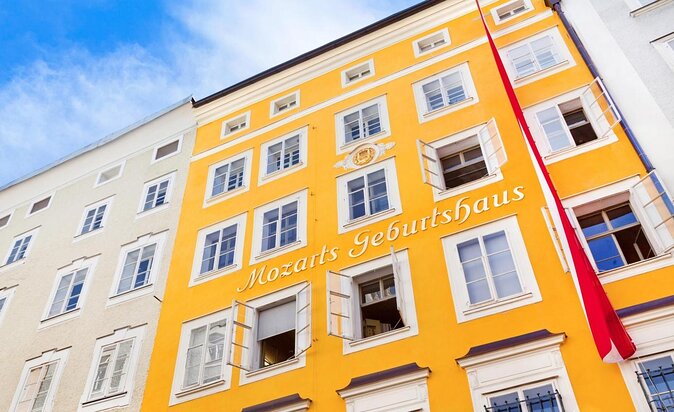
Salzburg’s historic center has been protected as a UNESCO World Heritage site since 1997, and the reason becomes clear quickly. In a compact area, you encounter Gothic churches, Baroque squares, palace gardens, old merchant buildings, and places tied to Mozart.
That compact setting is useful. You do not spend the tour riding between scattered sights. Instead, you move through the center on foot while the guide explains how each place fits into the larger story. I like this approach because Salzburg can look almost too polished at first glance. A guide helps you see the forces behind the pretty facades: wealth from salt, church power, music, trade, and centuries of rebuilding.
The tour also gives you a practical first look at the old town. After 150 minutes, you should have a clearer sense of where the main squares and churches are, which is helpful if you plan to return later for museums, concerts, or a closer look at the buildings.
More Walking Tours in Salzburg
- Salzburg 2.5-Hour Walking Tour: Mozart, Old Town & More
★ 4.2 · 987 reviews - Salzburg: Old Town, Mozart, & Mirabell Gardens Walking Tour
★ 4.8 · 461 reviews - Salzburg Oldtown: Sightseeing Walking Tour with Licensed Local Guide
★ 5.0 · 392 reviews
Meeting at Linzergasse 39

The walk begins outside Coffeehouse Salzburg at Linzergasse 39. This gives the experience a clear starting point on the Linzergasse side of the historic center.
You should arrive ready to walk for the full 150 minutes. The supplied details do not specify the exact walking distance, terrain, or seating breaks, so ask about those points when booking if they matter to you. The tour is built around Salzburg’s central sights, with explanations at each stop rather than long indoor visits.
The guide language is English. Private and small-group options are available, which matters here because the value of a discussion-led tour depends heavily on how easily you can ask questions. A private walk should offer the most room to shape the conversation around your interests, while a small group can reduce the per-person cost if that option is available for your date.
Mirabell Gardens: a graceful opening
Mirabell Gardens is the first listed stop. Its formal setting provides an easy introduction to Salzburg’s Baroque character, with the garden serving as a visual counterpoint to the city’s medieval and Gothic buildings.
Here, the guide can set up the larger story of Salzburg’s rulers, church influence, and taste for grand design. You should expect a guided explanation rather than a separate garden activity. The point is to understand how this planned space fits into the city’s architecture and political story.
This opening also lets you begin with one of Salzburg’s most recognizable settings before moving into the denser streets of the old town. If you enjoy photography, the garden gives you a natural pause, but remember that the tour’s emphasis is interpretation rather than free time.
Mozart’s birthplace and the cost of going inside
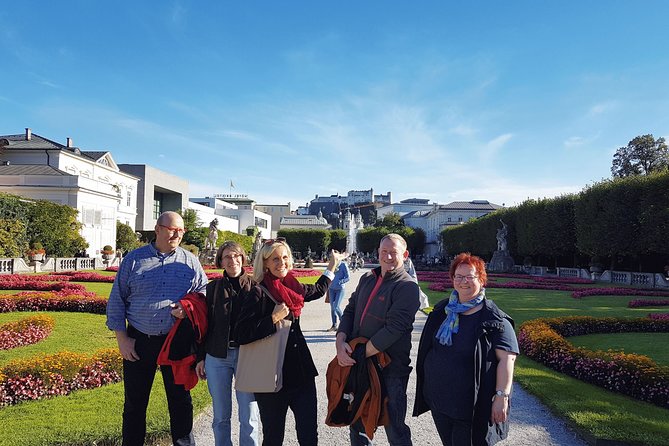
Mozart’s birthplace, listed as Mozart Geburtshaus, is one of the tour’s central stops. The guide explains Salzburg’s musical heritage and Mozart’s connection to the city, helping place the composer within the wider story of Salzburg rather than treating him as the only reason to visit.
The important practical point is that admission is not included. The walk can introduce you to the site from the outside, but you need a separate ticket if you want to enter the Mozart Residence. That makes the tour easier to fit into a busy schedule, since you are not required to spend time inside, but it also adds to the total cost of a Mozart-focused visit.
I would not book this walk solely for museum access. Book it if you want context first, then decide if the interior visit is worth your time and extra money. The guide’s discussion can help you understand why the birthplace matters before you commit to another admission.
More walking routes in Salzburg:
- Salzburg Old Town Walking Tour, Mozart, Mirabell Gardens
★ 4.5 · 201 reviews - Salzburg Old Town Highlights Private Walking Tour
★ 4.5 · 78 reviews - Salzburg Private Walking Tour
★ 4.6 · 48 reviews - Private Walking Tour of Salzburg
★ 5.0 · 42 reviews
Alter Markt and Salzburg’s everyday center
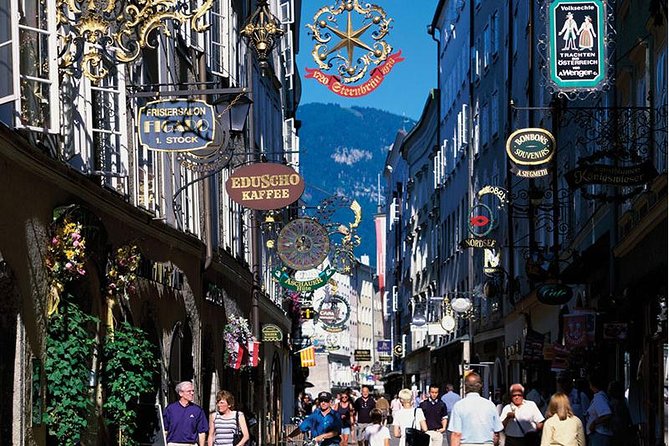
Alter Markt brings the tour into one of the old city’s important public squares. This is where the route shifts from individual attractions to the way Salzburg functioned as a town.
Expect discussion of buildings, shops, local customs, and the role of the square in daily life. The supplied details specifically point to the stories behind squares, churches, shops, and buildings, so this is not simply a stop for a quick photograph. You get help reading the street around you.
That kind of explanation is one of the strongest reasons to take a walking tour early in your stay. Without context, Salzburg’s historic center can feel like a series of beautiful fronts. With a guide, you begin to notice how commerce, religion, and civic life shared the same tight urban space.
Residenzplatz and the power of Baroque Salzburg
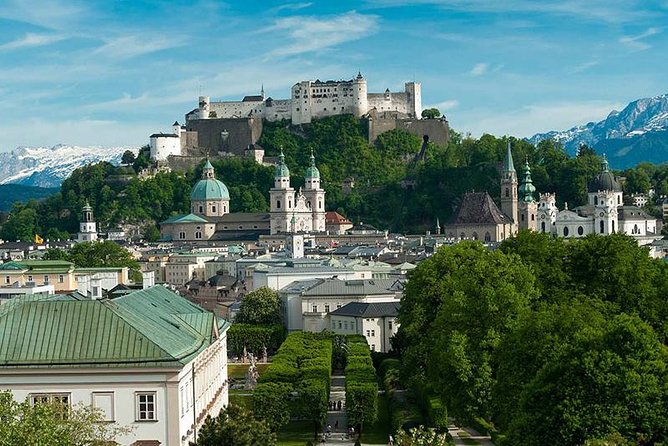
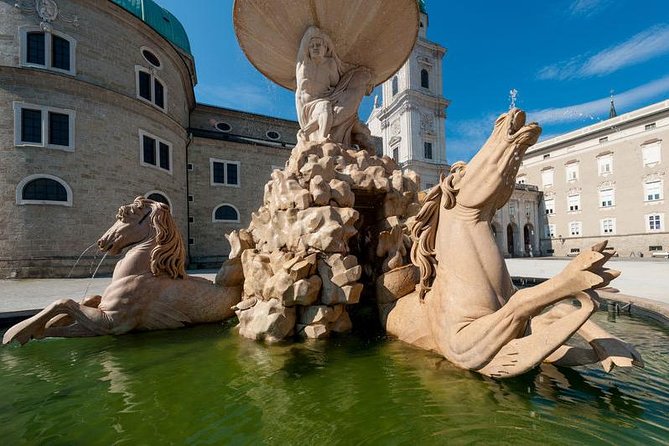
Residenzplatz is the grander part of the route. Its scale and formal design show how Salzburg’s church rulers used architecture to express authority and wealth.
This is an ideal place to discuss the city’s Baroque identity. The guide can connect the square’s appearance to the wider story of Salzburg’s rulers and the money that flowed through the region’s salt trade. The tour description also points to medieval salt commerce, so you should expect that economic background to be part of the explanation.
I value this kind of context because it keeps the architecture from becoming decoration alone. The square looks impressive, but the useful question is why Salzburg could build on such a scale. A good guide turns that question into a clear story about power, trade, religion, and urban design.
Domplatz and the Gothic to Baroque shift
Domplatz gives you another major architectural setting, this time with Salzburg Cathedral at the center of the city’s religious identity. The tour highlights both Gothic and Baroque architecture, and this square helps you compare those styles in a direct way.
You can expect the guide to point out how the city changed over time. Salzburg’s buildings are not all from one era, and the contrast between medieval forms and later Baroque work is part of what makes the center so striking. The walk’s value comes from having those changes explained while you are looking at them.
Domplatz also reinforces the scale of church influence in Salzburg. The experience is not limited to music or royal residences. It shows you how religious institutions shaped the city’s appearance and public life.
St. Peter’s Abbey and the city’s older roots
The final listed stop is St. Peter’s Abbey, one of the key religious sites in the historic center. The abbey gives the walk a strong ending because it connects Salzburg’s grand public spaces with its older monastic traditions.
The guide’s discussion here can help pull together the themes from earlier stops: religion, learning, architecture, music, and the long development of the city. The tour does not list a separate interior admission, so you should treat this as a guided stop rather than assume that an indoor visit is included.
Ending at St. Peter’s Abbey also leaves you close to some of Salzburg’s most important central sights. The exact end point and timing are not specified, so confirm those details if you have a concert, meal, or timed admission immediately afterward.
A guide-led experience with real discussion
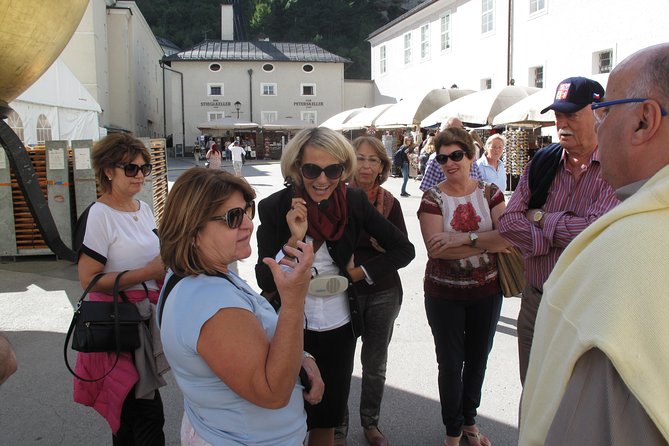
The strongest feature of this walk is the guide. The experience is presented as historian-led, with guides drawn from backgrounds that include professors, doctoral students, historians, journalists, art critics, and published authors.
That range matters because the tour is built around conversation. You are not simply following a script from one photo stop to another. The description promises discussion of history, music, architecture, local customs, medicine, salt, and The Sound of Music. A guide who can move between those subjects makes the city feel connected rather than divided into separate facts.
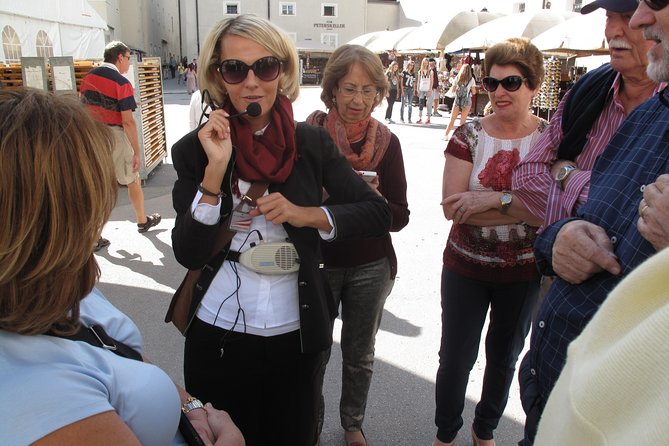
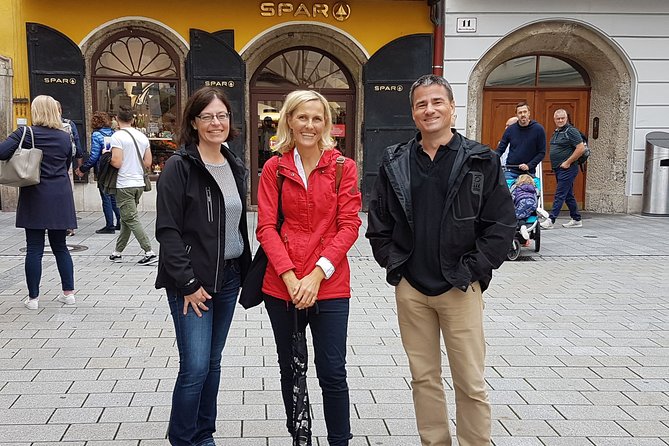
Liza is one especially useful name to know. She is from Salzburg and has led the walk with a strong grasp of local places and stories. Her approach, based on the available feedback, included regular stops to explain the background of squares, churches, shops, and buildings, while answering questions from people of different ages.
There is one point to keep in mind. One participant felt the guide did not match the advertised historian description and considered the price too high. That does not erase the positive feedback, but it is a fair warning: guide quality can vary, and at this price you are paying for the person leading the conversation as much as for the route itself.
What $176 buys you
At $176 per person, this is not a budget orientation walk. You are paying for 150 minutes with an expert guide, plus the convenience of a route that links the main historic-center sights.
The value improves if you choose a private tour and want detailed answers about Salzburg’s history, music, architecture, or customs. It can also make sense for a group that prefers a focused discussion over a large, standard city tour. The price is harder to justify if you mainly want a quick introduction or if you are comfortable reading about each sight on your own.
The Mozart admission fee is extra, so include that in your planning if the interior visit matters to you. I would also compare the cost of a private booking with the price of a small group before paying. The supplied information confirms that both formats are available, but not the exact group sizes or rate differences.
The tour includes the walk and guide. It does not promise food, transport, museum entry, or a concert. That clarity helps you judge it properly: this is a high-priced, discussion-focused city walk, not a full-day Salzburg package.
Who should book this Salzburg walk
I would recommend it most strongly to:
- First-time visitors who want a clear introduction to the old center
- History and architecture fans who want more than postcard views
- Mozart fans who want context before visiting the birthplace
- Families or mixed-age groups that benefit from stopping for questions
- Visitors who prefer private or small-group discussion
- People who want to understand Salzburg’s salt trade, church power, and music together
You may want to skip it if your main goal is independent museum time, a very cheap orientation, or a fast route with little explanation. It is also less suitable if you dislike walking for two and a half hours or have a tightly packed schedule immediately afterward.
The free-cancellation policy allows cancellation up to 24 hours before the start for a full refund, and you can reserve now and pay later. Confirmation is subject to availability and is sent within 48 hours of booking, so do not leave it until the last minute if your schedule is fixed.
Should you book it?
Book this tour if you want Salzburg explained by a serious English-speaking guide, not simply pointed out. The route covers the old town’s main landmarks, while the subject matter reaches into salt, medicine, music, religion, architecture, and local life.
At $176, I would choose it only when the guide-led conversation is the main attraction. If you value questions, personal attention, and historical context, it can give you a useful foundation for the rest of your stay. If you mainly want to see the sights and keep costs low, take a self-guided walk and spend the money on the Mozart Residence or another paid attraction instead.
FAQ
Where does the Salzburg walking tour begin?
The meeting point is outside Coffeehouse Salzburg at Linzergasse 39.
How long does the tour last?
The tour lasts 150 minutes, or 2.5 hours.
What language is the tour conducted in?
The live tour guide speaks English.
Which places are included on the route?
The route includes Mirabell Gardens, Mozart’s birthplace, Alter Markt, Residenzplatz, Domplatz, and St. Peter’s Abbey.
Is admission to Mozart’s Residence included?
No. The Mozart Residence admission ticket is not included in the tour price.
Is this a private tour or a group tour?
Private and small-group options are available.
Who leads the tour?
The guides include professors, doctoral students, historians, journalists, art critics, and published authors. Liza is one guide who has led the walk and is from Salzburg.
Can I cancel for a full refund?
Yes. You can cancel up to 24 hours in advance for a full refund.
Just added in Salzburg
- Zell am See Alpine Village Private Day Trip from Salzburg★ 5.0 · 3 reviews
- Werfen World’s Largest Ice Caves and Golling Waterfalls Tour★ 4.5 · 7 reviews
- Viator Exclusive: ‘The Sound of Music’ Private Tour★ 5.0 · 28 reviews
- Musical Salzburg: Follow the Trail of the Beloved Movie★ 5.0 · 5 reviews
- Private transfer from Salzburg to Vienna, 2 hours for sightseeing★ 4.5 · 7 reviews
- Salzburg Marionette Theater: The Magic Flute SHORT version (1 hour)★ 5.0 · 11 reviews
- Private Transfer from Salzburg to Munich with 2 hours for sightseeing★ 5.0 · 8 reviews
- Private Austrian Food Tasting Tour in Salzburg’s Old Town★ 4.5 · 3 reviews
Walking Tours, compared.
Guided Walking Tour of City Center Highlights
Read our review →
Guided Walking Tour of City Highlights & Hidden Gems
Read our review →

Vienna Historic Center Small Group Walking Tour
Read our review →
Browse the lists this tour appears in