
Reviewed · WALKING TOURS
Graz Private Walking Tour
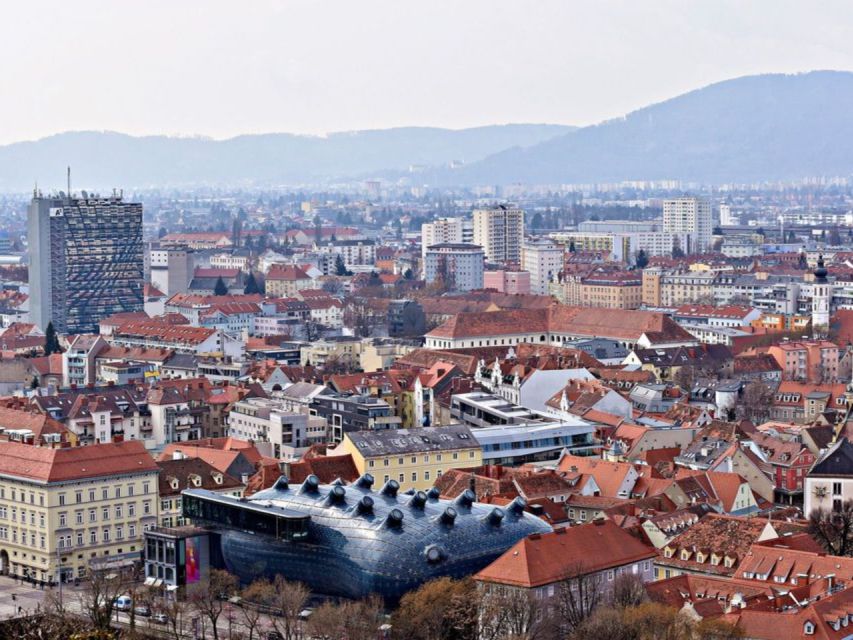
Graz reveals its character through contrasts: a medieval hilltop, Habsburg power, Renaissance stonework, and the blue, blob-like Kunsthaus all sit within one compact city center. I like the way this private walk connects those layers instead of treating Graz as just another handsome Austrian square. Schlossberg views give you a quick sense of the city’s past, while the old town shows how that past still shapes daily life.
I also like the private format and the small-group price. At $289 for as many as 15 people, the cost can work well for a family or group, though it is a serious outlay for one or two people. The main consideration is time: 90 minutes gives you a well-shaped introduction, not a slow, thorough visit to every building or museum.
Key points to know
- Schlossberg sets the scene: Begin with views over Graz and the medieval story of the city.
- Habsburg history meets local politics: Learn how imperial rule and the Styrian Diet shaped Graz.
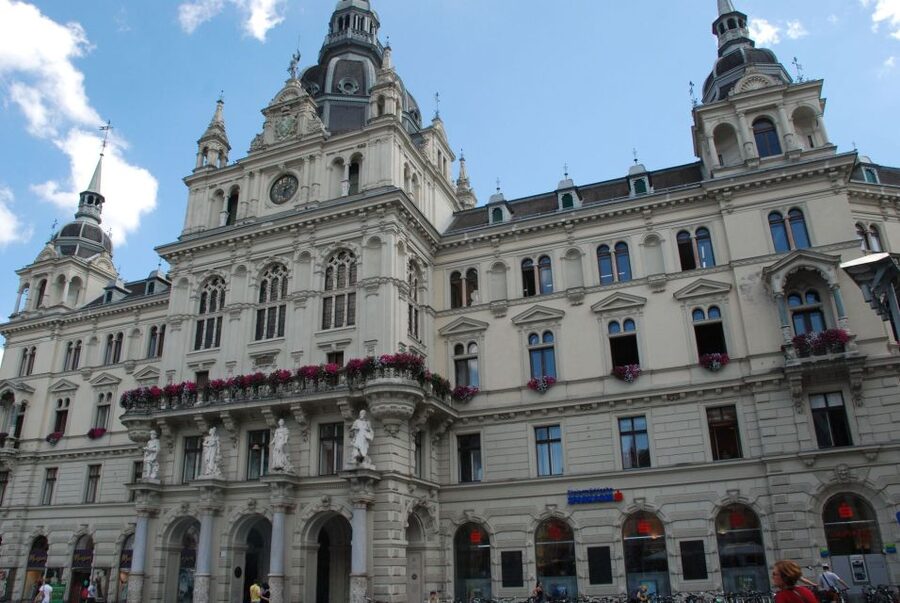
- The Hauptplatz packs in detail: See the Town Hall, Luegg House, White House, Eagle Pharmacy, Palais Sturgkh, and Archduke Johann’s fountain.
- Landhaushof adds Renaissance elegance: Its courtyard was the first of its kind in Graz.
- Kunsthaus brings you into the present: The unusual modern exhibition building makes a sharp contrast with the old town.
- Leo may be your guide: He is praised for memorable stories and helpful ideas for the rest of the day.
Why Graz rewards a guided walk
Graz is Austria’s second-largest city, but the historic center feels manageable on foot. Its old town has been a UNESCO World Heritage site since 1999, and much of the pleasure comes from noticing how different periods sit side by side.
The city carries several modern titles, including UNESCO City of Design, City of Human Rights, and Culinary Capital City of Austria. Those labels are useful only if you see how the city earned them. This walk focuses mainly on the first two ideas: design and civic history. You get old façades, political buildings, religious references, and a striking modern art center within a short route.
I like having a guide here because Graz’s details are easy to miss. A decorated façade may look pretty without telling you why it matters. A courtyard may seem like a pleasant shortcut until you learn that it represents an important point in the city’s architectural development. A guided walk gives those details a place in the larger story.
The tour is conducted in English or German, and your group has the guide to itself. That matters if you want to ask questions, set the pace within reason, or focus more on architecture than politics. It also avoids the loose, stop-and-start feeling that can come with a large public group.
More walking routes in Graz:
- Graz: Old Town Highlights Private Walking Tour
★ 4.6 · 16 reviews - Graz Private Walking Tour With A Professional Guide
★ 5.0 · 5 reviews - Graz Old Town Highlights Private Walking Tour
★ 5.0 · 4 reviews
Schlossberg views and Graz’s medieval beginnings
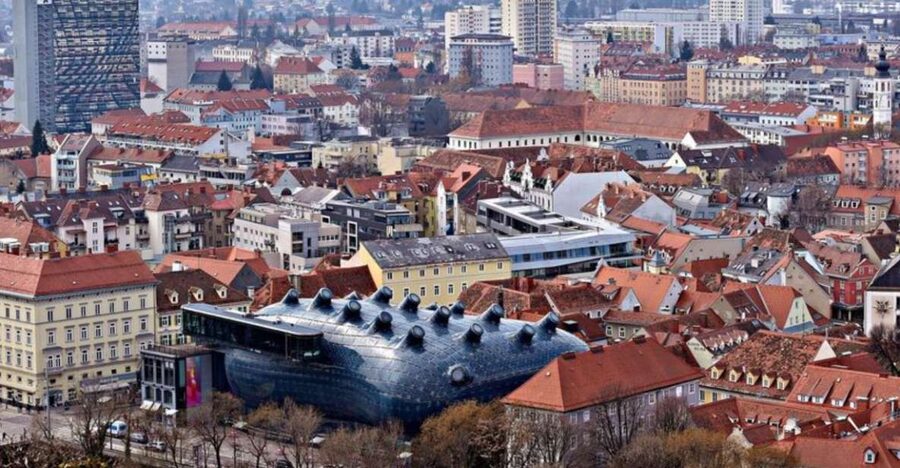
The walk begins near a view of Schlossberg, the hill that rises above the city. The hill is a strong starting point because it gives you physical orientation before you head into the streets. You can see why Graz developed around a defensible height and why the old center still feels closely tied to the hill.
The story reaches back to the Middle Ages, when Graz was home to Slavic merchants and traders. Even the city’s name has an older Slavic connection, said to mean small city. That detail is a useful reminder that Graz was not created only by the Habsburgs. Its identity grew from trade, regional politics, and contact between different cultures.
You should expect the Schlossberg portion to frame the city rather than become a long hill excursion. The full activity lasts only 90 minutes, so this is not designed as an extended exploration of every path and viewpoint. If you want a broad first look before studying the buildings below, it does its job well.
Comfortable shoes are important. This is a walking tour, and the historic center includes streets and architectural stops where you will spend much of the time on foot.
Hauptplatz and the city’s public face
From the hilltop view, the route moves into the historic center and the Hauptplatz, Graz’s main square. Today, the Town Hall dominates the space. It is an effective place to discuss how Graz changed from a medieval trading center into an important seat of regional and imperial government.
The square also gathers several buildings that reward a close look. The 17th-century Luegg House is known for its impressive stucco façade. This is the sort of place where a guide adds real value, since the surface decoration can otherwise become background scenery among the larger buildings.
You will also see the five-story White House, with a sandstone relief of the Virgin Mary. Its height and religious image point to a period when civic and spiritual life were closely tied. The building is not just an attractive façade. It helps show how private architecture, faith, and public space overlapped in old Graz.
The 16th-century Eagle Pharmacy adds another layer. Its name and age connect the square with the city’s commercial life, while the nearby Palais Sturgkh reaches back to the 14th century. In a short stretch, you move through several centuries rather than seeing one uniform architectural style.
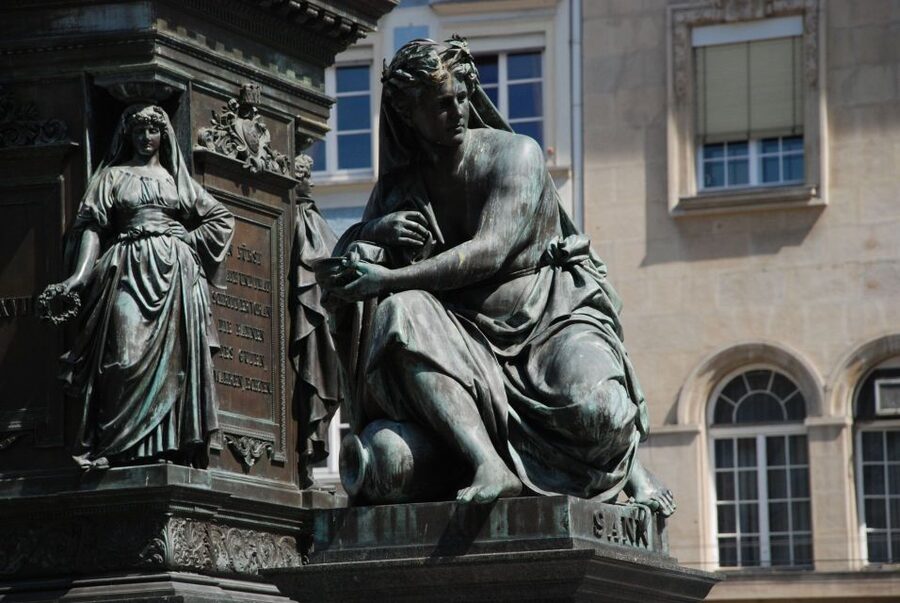
The fountain and statue of Archduke Johann date from 1878. His presence brings the Habsburg connection into the open. Graz was an imperial residence, and the city’s politics cannot be separated from the dynasty’s influence. At the same time, this is also where the Styrian Diet matters. The regional assembly helped shape local political life, and a good guide can explain how Graz operated as more than a provincial stop under imperial rule.
Landhaushof and the Styrian political story
Landhaushof is one of the strongest architectural stops on the route. Its Renaissance courtyard was the first in the city, and it gives you a clear change of mood after the busy main square.
The courtyard’s value is not only visual. It reflects the political importance of the building and the role of the Styrian Diet. This is where the tour’s political theme becomes concrete. Instead of hearing only about rulers and dynasties, you get a sense of regional government and the institutions that gave Styria its own voice.
I like this part because it shows why a walking tour can be more useful than a quick photo stop. You see the arches, proportions, and decorative details, but you also learn what kind of public life took place around them. The setting makes the connection between architecture and authority easy to understand.
Time remains the limiting factor. A 90-minute walk cannot examine the full political background of Styria in detail. If that subject especially interests you, note the guide’s explanations and use them as a starting point for a later visit or further reading.
More to book in Graz
- Private Photoshoot Walk Old Town of Graz
★ 3.0 · 3 reviews - Vienna: Private Walking Tour with a Local Guide
★ 4.6 · 1,420 reviews - Vienna: Private Walking Tour with a Guide
★ 4.7 · 962 reviews - Vienna: Wine Tasting Experience in a Private Wine Cellar
★ 4.8 · 413 reviews
Religious details hidden in plain sight
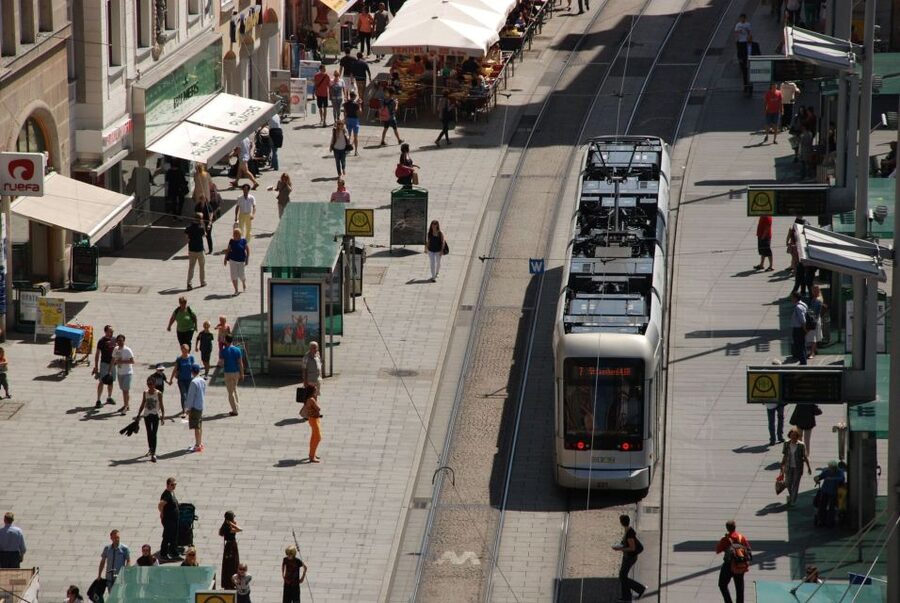
Graz’s historic center carries a strong religious and political background, and the route brings both together. The Virgin Mary relief on the White House is one visible example. The city’s churches and older buildings are not treated as isolated monuments. They form part of a larger story about power, faith, commerce, and public identity.
The strength of this approach is connection. You are not simply shown a religious image, then sent on to a palace. You can begin to see how religious symbols appeared on urban buildings and how political authority was expressed through architecture.
The tour information does not promise entry into churches or other sites, and entrance fees are not included. Plan to view the named buildings from the route unless your guide confirms that a particular interior is available. This is best understood as an exterior-focused introduction, with the option to return later if an interior catches your attention.
Kunsthaus Graz and the sharp turn into modern design
The Kunsthaus is the route’s visual surprise. Its blob-like, ultramodern form serves as Graz’s newest exhibition place and creates a deliberate contrast with the old town.
After medieval lanes, ornate façades, and a Renaissance courtyard, the Kunsthaus can feel almost playful. That contrast explains the city’s UNESCO City of Design label better than a slogan can. Graz is not frozen in its imperial past. It continues to use architecture as a way to express its present-day identity.
You should not assume the 90-minute walk includes admission to an exhibition. Entrance fees are not included, so the guide’s focus is the building and its place in the city. If you want to go inside, you will need to handle that separately.
I find this stop especially useful for people who might otherwise think Graz is only about old Europe. The Kunsthaus gives the walk a modern ending and helps tie together the city’s older political buildings and newer cultural ambitions.
The old town’s alleys and the value of a private guide
The final impression comes from walking through the old town itself. Its romantic alleys and well-preserved architecture make Graz easy to enjoy at street level. You do not need a long transfer between sights, and the short route lets you compare buildings without losing the feel of the city.
The private setup is the tour’s biggest practical advantage. You are booking a guide for your group only, with room for up to 15 people. That is particularly useful for families, friends, or a larger party arriving together. You can ask about a façade, request a little more attention to music or architecture, or ask for ideas for the rest of your day.
Guide Leo receives especially warm praise for his stories and recommendations. If Leo leads your walk, his strength appears to be turning the sights into an easy narrative and pointing you toward sensible follow-up stops. The feedback also notes that he gave useful suggestions for the rest of the day, so keep a notebook or phone ready when something catches your interest.
A private guide cannot remove every limitation. The experience has a fixed 90-minute duration, and the price is the same whether you have two people or 15. A solo visitor or couple may find a shared walking tour better value if one is available. A larger group, however, can spread the $289 cost across several people, making the arrangement much more reasonable.
Price, timing, and who gets the best value
The cost is $289 per group, with up to 15 participants. For a full group, that works out to less than $20 per person. For four people, it is roughly $72 per person, while for two people it is a much steeper private-guide purchase.
That calculation is the key to deciding. You are paying for exclusivity, a live guide, and a focused route, not for entry to attractions. The value is strongest when you care about context, want to ask questions, or have a group that prefers to move together.
The 90-minute length is also worth considering. It fits neatly into a first afternoon in Graz and leaves time for lunch, museums, shopping, or a later return to the Kunsthaus. It is not long enough for a full city tour, a museum visit, and extended interior sightseeing. Think of it as a well-organized introduction.
The meeting point is next to the fountain in the middle of the Hauptplatz, at Hauptpl. 1, 8010 Graz. That central location makes the tour easy to place into a day of sightseeing. Check the available starting times when booking, since the exact start time is not fixed in the information provided.
You can cancel up to 24 hours before the activity for a full refund, and you can reserve now and pay later. Those policies help if your schedule in Graz is still shifting.
Who should book this Graz walk
I would recommend this tour to a group that wants a private introduction without committing to a half-day program. It suits first-time visitors who want the main historical framework, architecture fans who enjoy comparing Renaissance and modern design, and families who benefit from a guide setting the pace.
It is also a good choice if you want Graz to feel like a living city rather than a collection of old façades. The tour includes imperial residence history, the Styrian Diet, religious references, music and architectural heritage, and the city’s current cultural identity.
You may want something else if your main goal is entering museums, touring interiors, or studying one subject in depth. Entrance fees are not included, and the short duration keeps the focus on orientation and storytelling. You will see a lot, but you will not exhaust Graz.
The current rating is 4.9 from four reviews, and the strongest praise centers on the guide’s storytelling, interesting sights, insider knowledge, and useful suggestions for later. That fits the tour’s design: it gives you a clear framework, then leaves you better prepared to explore on your own.
Should you book it?
Book this walk if you have a private group and want Graz explained by a local guide in English or German. The route gives you Schlossberg views, the Hauptplatz, Habsburg connections, Landhaushof, and the Kunsthaus in a compact 90 minutes.
For one or two people, compare the price carefully. For a family or group of up to 15, the cost becomes much easier to justify. Bring comfortable shoes, expect mostly exterior sightseeing, and treat the tour as your introduction to Graz rather than the whole city.
FAQ
Where does the Graz Private Walking Tour meet?
The meeting point is next to the fountain in the middle of the Hauptplatz, at Hauptpl. 1, 8010 Graz, Austria.
How long does the tour last?
The tour lasts 90 minutes.
How much does the private tour cost?
The price is $289 per group of up to 15 people.
Is the tour private?
Yes. The activity is for a private group, and the guide will be with your group only.
Which languages are available?
The tour is available in English and German.
Are entrance fees included?
No. Entrance fees are not included in the tour price.
What should I bring?
Bring comfortable shoes for the walking route.
Can I cancel the tour for a full refund?
Yes. You can cancel up to 24 hours in advance for a full refund.
Just added in Graz
- Graz city tours★ 3.5 · 9 reviews
- Graz Scavenger Hunt and Sights Self Guided Tour★ 4.0 · 9 reviews
- Graz Funicular Ride and Schlossberg Picnic Experience★ 5.0 · 5 reviews
- Graz Old Town Highlights Private Walking Tour★ 5.0 · 4 reviews
- Graz Private Walking Tour With A Professional Guide★ 5.0 · 5 reviews
- Explore Graz in 60 minutes with a Local★ 5.0 · 7 reviews
- Private Photoshoot Walk Old Town of Graz★ 3.0 · 3 reviews
- Graz: Funicular Ride & Schlossberg Picnic Experience★ 4.8 · 4 reviews
Walking Tours, compared.
Guided Walking Tour of City Center Highlights
Read our review →
Guided Walking Tour of City Highlights & Hidden Gems
Read our review →
Vienna Historic Center Small Group Walking Tour
Read our review →
Browse the lists this tour appears in