
Reviewed · WALKING TOURS
Salzburg Introduction Walking Tour
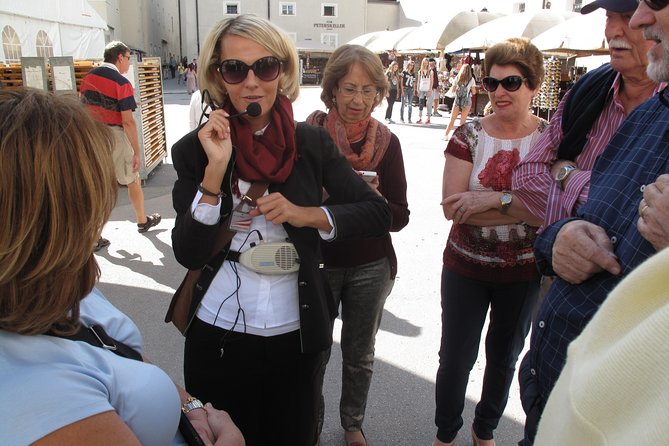
Salzburg’s story unfolds best on foot, and this tour puts the city’s grand squares, crooked lanes, music legends, and medieval past into one clear route. You’ll move from the commercial heart of Getreidegasse to the broad spaces shaped by Salzburg’s prince-archbishops, with an expert guide explaining what you are seeing rather than simply naming it.
I like the small-group format, which can mean a personal walk with only two people, and I like the mix of Mozart, salt commerce, church power, and The Sound of Music. The main caution is price: at $180.21 per person, this is a serious spend for a walking tour, so it makes the most sense if you want history and personal discussion, not just a quick photo stop.
I also like that the guides can adjust the walk to your interests. Lisa, Liza, Claudia, Astrid, Gabe, and Natalie are among the guides praised for clear explanations, local perspective, humor, and thoughtful pacing. One possible weakness is that a guide who presents many separate facts without enough overall structure may leave you wanting a simpler timeline.
Key points at a glance
- Getreidegasse and its passageways: See Salzburg’s old commercial center, with narrow lanes and medieval character still intact.
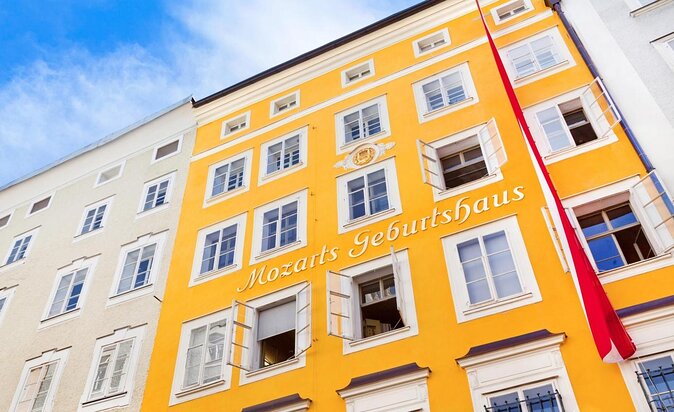
- Mozart beyond the famous name: Visit the exterior of his birthplace and hear about Wolfgang and Nannerl Mozart’s childhood in the city.
- Churches, courts, and power: Connect the baroque squares, the archbishops’ Residence, the Festival Halls, and St. Peter’s Abbey.
- More than Mozart: Learn about Salzburg’s salt trade, medical advances, local customs, and composer Michael Haydn.
- A careful look at The Sound of Music: Hear the real von Trapp family story, including its connection to the Second World War.
- Small group, flexible pace: The tour is advertised for a small group, with capacity shown as either six or eight depending on the booking details.
Starting in Salzburg’s Burgher Town

The walk begins at Linzer Gasse 39 at 9:30 am in the meeting details. The broader tour description also mentions morning or afternoon departures, so check the exact option available when you book.
From here, you enter Salzburg’s historic center and begin with the old Burgher Town. This part of the city is not about grand views alone. It is about how people moved, traded, worshipped, and lived in a tightly packed medieval town.
The route leads through narrow, crooked streets and the small passageways connected with Getreidegasse. These lanes help explain Salzburg’s old social and commercial structure. Shops and workshops once worked within a compact urban setting, while the archbishops ruled from grander spaces nearby.
I like this opening because it gives you a useful contrast right away. Salzburg is often presented as a postcard city of domes and palaces, but Getreidegasse shows the practical side of town life. You see the working city before moving into the ceremonial one.
The walk is also a useful first-day choice. One visitor found that learning the city’s layout early made the rest of the stay easier. That is exactly the value of an introduction tour: you can return later to the places that caught your eye, rather than trying to understand the old town from a map alone.
More Walking Tours in Salzburg
- Salzburg 2.5-Hour Walking Tour: Mozart, Old Town & More
★ 4.2 · 987 reviews - Salzburg: Old Town, Mozart, & Mirabell Gardens Walking Tour
★ 4.8 · 461 reviews - Salzburg Oldtown: Sightseeing Walking Tour with Licensed Local Guide
★ 5.0 · 392 reviews
Getreidegasse and Mozart’s birthplace
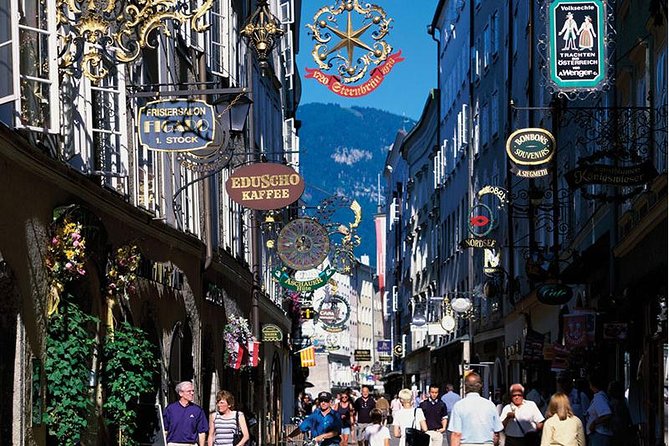
Getreidegasse is one of Salzburg’s best-known streets, but a guide adds context that you will not get from simply walking through it. Look up at the signs, façades, and tight upper stories, then listen for the story of the street as Salzburg’s commercial center.
The tour passes Mozart’s birthplace. Admission to the Mozart Residence is not included, so this is primarily an exterior stop and a history lesson rather than a museum visit.
The Mozart section covers Wolfgang and his sister Nannerl, including their childhood in Salzburg. That family angle matters. It moves the story away from the single famous composer and gives you a better sense of the household, education, and musical world that shaped both children.
Guides have also connected Mozart’s life to the wider musical culture of Salzburg. The tour includes the composer Michael Haydn, another major musical figure associated with the city. That is a welcome choice, since a Mozart-only explanation can make Salzburg’s music story seem much narrower than it was.
If you are a serious music fan, this part may feel like an introduction rather than a full specialist tour. If you want to understand how Mozart fits into Salzburg’s wider cultural life, it should be a useful foundation.
Baroque squares and the archbishops’ city
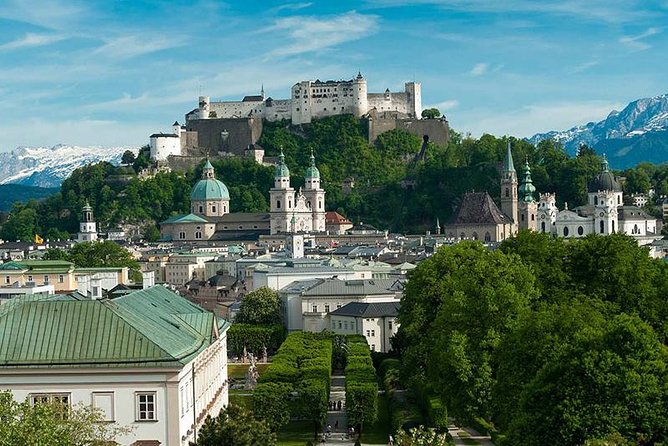
The route then opens into Salzburg’s broad baroque squares. The change in scale is striking. After the cramped lanes of the Burgher Town, these spaces communicate authority, ceremony, and the wealth of the archbishops who governed Salzburg.
Your guide explains how the city’s religious and political power shaped its buildings. This is where the tour’s historical approach earns its keep. The squares are beautiful, but their size and layout also tell you who controlled the city and how they wanted power displayed.
Expect discussion of the archbishops’ Residence and the institutions around it. You may see a sequence of churches, courtyards, façades, and public spaces that seem separate at first. The guide’s job is to connect them into a story about governance, religion, art, and city planning.
The strongest guides appear to do this in a relaxed way. Claudia has been praised for being structured and clear without making the walk feel stiff. Other guides, including Liza and Lisa, have been noted for using photos, local stories, and humor to make the past easier to follow.
The one thing to watch for is the guide’s storytelling style. One guest found that a tour packed with details lacked a clear overview. If you prefer a strong timeline, say so at the start. A good guide can then frame the details around the major stages of Salzburg’s development.
The Festival Halls and Salzburg’s musical stage
The walk passes the Festival Halls, a key stop for understanding Salzburg’s modern musical identity. This is where the city’s performance tradition becomes part of the street scene, not just something you encounter inside a concert.
Your guide can place the Festival Halls alongside Salzburg’s older churches, squares, and musical figures. That connection matters because the city’s cultural reputation did not begin with modern tourism. Music has long been tied to local institutions, religious life, court power, and public identity.
The tour does not include a performance or concert admission. You are seeing the buildings and learning their role in the city’s story. If you want a detailed look inside the halls, you will need a separate visit.
For many people, this is also where Mozart and The Sound of Music begin to overlap with the modern image of Salzburg. The guide helps separate the city’s genuine musical traditions from the way those traditions are packaged for visitors.
More walking routes in Salzburg:
- Salzburg Old Town Walking Tour, Mozart, Mirabell Gardens
★ 4.5 · 201 reviews - Salzburg Old Town Highlights Private Walking Tour
★ 4.5 · 78 reviews - Salzburg Private Walking Tour
★ 4.6 · 48 reviews - Private Walking Tour of Salzburg
★ 5.0 · 42 reviews
St. Peter’s Abbey and the oldest layers of the city
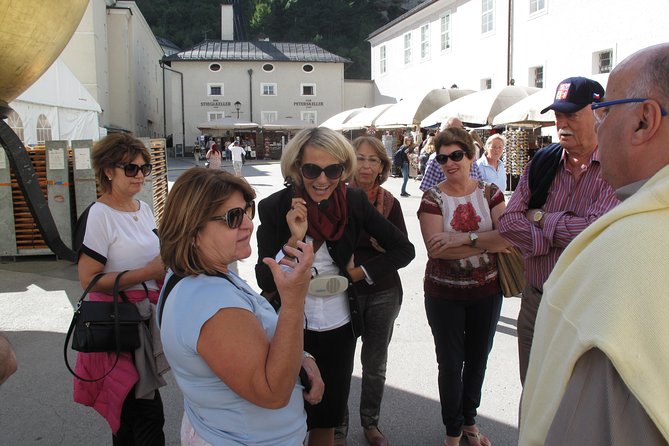
The walk continues to St. Peter’s Abbey, the Benedictine monastery dated in the tour material to 696 AD. This is one of the stops that gives Salzburg a much longer time scale than its baroque façades suggest.
The abbey helps you see the city as a religious center before it became a famous music destination. Your guide can explain the role of monasteries, church institutions, and education in the growth of Salzburg.
The setting also gives the walk a welcome pause from streets focused on shops and public squares. Several guides have taken care to find shade or a place to sit during hot weather, though the tour remains a walking experience and conditions can vary.
One especially memorable possibility is a visit to the chapel at Nonnberg Abbey, where a choir rehearsal happened to be under way during one walk. That kind of moment cannot be promised, but it shows why a local guide can add something beyond a standard route.
Do not expect every interior to be included. The tour passes major sites and explains them, but the supplied details do not promise admission to St. Peter’s Abbey or other attractions. If entering a specific building is important to you, ask before booking.
Salt, medicine, and the city behind the postcard
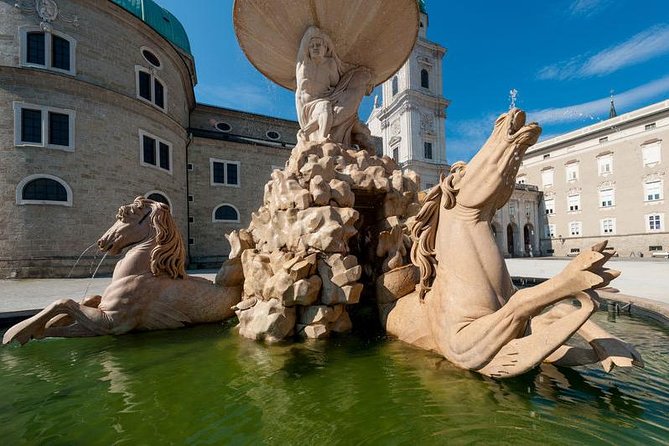
Salzburg’s name and fortune are tied to salt commerce, and this tour gives that practical subject a place in the story. The salt trade helped support the city’s power and prosperity, so it is an important counterweight to the better-known Mozart material.
You also hear about medical innovations. That detail may seem unexpected on a city walk, but it broadens your picture of Salzburg. The city was not only a religious court and music center. It was also a place where ideas, institutions, and professional knowledge developed.
This is the kind of material I value in an introduction tour. It gives you reasons behind the buildings. Instead of seeing one beautiful church after another, you begin to ask who paid for it, what purpose it served, and how the city’s economy supported its public life.
The quality depends heavily on presentation. Guides with backgrounds as professors, doctoral students, historians, journalists, art critics, or published authors can offer plenty of detail. You will get the most from the walk if you ask questions and tell the guide which subjects matter most to you.
The von Trapp family and the real Sound of Music
The Sound of Music is impossible to ignore in Salzburg, but this tour treats the von Trapp family as a real historical family rather than only as movie characters.
You learn about the family singers and the story of their refugee experience during the Second World War. That is an important distinction. The film created a beloved version of events, but the family’s actual history has its own serious political and personal context.
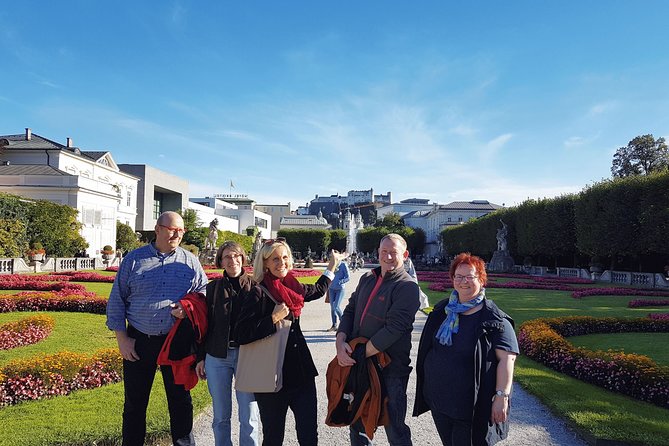
The tour can also point out filming locations and help you separate screen scenery from everyday Salzburg. Liza has been praised for giving an Austrian perspective on the film and the real von Trapp family. Another guide showed visitors useful places to return to later, including good positions in the gardens for photographs.
If you have already taken a dedicated Sound of Music tour, this section will probably feel familiar in parts. The advantage here is that the film is placed alongside Mozart, church history, local politics, and the city’s older traditions. It does not take over the entire walk.
How the guides shape the experience
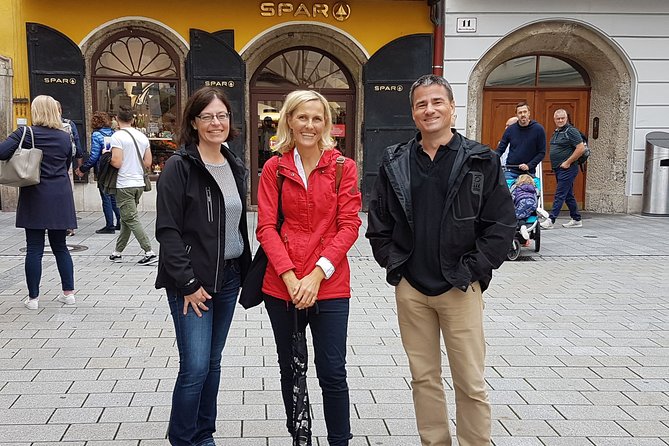
This tour’s strongest feature is its guide team. The listed qualifications are unusually academic, but the important point is how that knowledge reaches you on the street.
Lisa has been praised for clear English, thoughtful pacing, and taking care to keep people in the shade during intense heat. Liza has been described as kind, flexible, and good at using photos to support the story. Claudia is noted for humor, organization, and a relaxed manner.
Astrid offers the perspective of someone who grew up and still lives in Salzburg. Natalie has tailored the walk around the group’s interests. Gabe has been praised for explaining the city’s churches and cultural story in an engaging way.
The small-group design helps. The advertised maximum is six people in the highlights, while the additional details state a maximum of eight. In practice, the group may be smaller, and some departures have been private walks for two people without a private-tour price structure being stated separately.
That makes it easier to ask questions and change emphasis. It also means the guide can respond to weather, walking speed, or a sudden interest in Mozart, churches, architecture, or the film.
Pace, timing, and practical value
The walk is described as about two and a half hours, while the included experience is also described as a three-hour walk. Several descriptions of the actual experience refer to three hours, so allow roughly half a day rather than planning a tight connection immediately afterward.
You should be comfortable walking through the historic center for the duration. One person recorded more than 10,000 steps and still found the pace comfortable. That gives you a useful warning: the tour is not a short loop with only a few stops.
Food, drinks, hotel pickup, and drop-off are not included. The meeting point is near public transportation, and the tour ends in Salzburg rather than returning you to a hotel.
At $180.21 per person, value depends on your priorities. For a large group wanting only the main photo stops, the price will feel high. For two or a few people who want a flexible conversation with an academic guide, it can make sense, especially if the walk helps you plan the rest of your stay.
Free cancellation is available up to 24 hours before the start time for a full refund. Cancellations or changes made inside that window are not accepted for a refund.
Who should book this Salzburg walk?
I would choose this tour if you want a serious introduction to Salzburg before visiting museums, concerts, or more specialized sites. It suits history fans, architecture lovers, Mozart enthusiasts, and people who want The Sound of Music explained without letting the movie define the whole city.
It is also a good fit if you value a small group and expect to ask questions. Parents traveling with older children may appreciate the mix of music, palaces, churches, and film locations, though the walking length still matters.
I would look elsewhere if you want admission to several attractions, a food experience, a dedicated Sound of Music excursion, or the cheapest possible way to see the old town. I would also tell the guide at the start if you need a clear overview before detailed stories.
Should you book it?
Book it if you want Salzburg to make sense, not just look beautiful. The route covers the old town’s key areas, but its real value is the connection between salt, church power, Mozart, Michael Haydn, the Festival Halls, and the von Trapp family.
The price is high, yet a very small group and a strong guide can turn the walk into a useful private-feeling introduction. If you are staying several days, take it early, use the guide’s recommendations, then return to the places that deserve more time.
FAQ
How long is the Salzburg Introduction Walking Tour?
The tour is described as approximately two hours and 30 minutes. The included experience is also described as a three-hour walk, and some descriptions refer to three hours, so allow about half a day.
Where does the tour start?
The listed meeting point is Linzer Gasse 39, 5020 Salzburg, Austria.
What time does the tour start?
The meeting details list a 9:30 am start. The tour is also advertised with morning or afternoon departure options, so confirm the exact departure offered when booking.
Where does the tour end?
The tour ends in Salzburg. Hotel pickup and drop-off are not included.
What sites are included in the walking route?
The route includes Getreidegasse, Salzburg’s baroque squares, Mozart’s birthplace, the Festival Halls, and St. Peter’s Abbey. It also covers areas of the historic center and may include filming locations connected with The Sound of Music.
Is admission to the Mozart Residence included?
No. Mozart Residence admission is not included in the tour price.
What language is the tour offered in?
The tour is offered in English.
How large is the group?
The highlights describe a maximum of six people, while the additional tour details state a maximum of eight travelers. Check the booking details for the specific departure.
Can I cancel for a full refund?
Yes. You can cancel at least 24 hours before the local start time for a full refund. Cancellations and changes made less than 24 hours before the start time are not accepted for a refund.
Just added in Salzburg
- Zell am See Alpine Village Private Day Trip from Salzburg★ 5.0 · 3 reviews
- Werfen World’s Largest Ice Caves and Golling Waterfalls Tour★ 4.5 · 7 reviews
- Musical Salzburg: Follow the Trail of the Beloved Movie★ 5.0 · 5 reviews
- Private transfer from Salzburg to Vienna, 2 hours for sightseeing★ 4.5 · 7 reviews
- Viator Exclusive: ‘The Sound of Music’ Private Tour★ 5.0 · 28 reviews
- Salzburg Marionette Theater: The Magic Flute SHORT version (1 hour)★ 5.0 · 11 reviews
- Private Transfer from Salzburg to Munich with 2 hours for sightseeing★ 5.0 · 8 reviews
- Private Austrian Food Tasting Tour in Salzburg’s Old Town★ 4.5 · 3 reviews
Walking Tours, compared.
Guided Walking Tour of City Center Highlights
Read our review →
Guided Walking Tour of City Highlights & Hidden Gems
Read our review →
Vienna Historic Center Small Group Walking Tour
Read our review →
Browse the lists this tour appears in