
Reviewed · COFFEE HOUSE & CAKE EXPERIENCES
Salzburg: Apple Strudel & Salzburger Nockerl Class
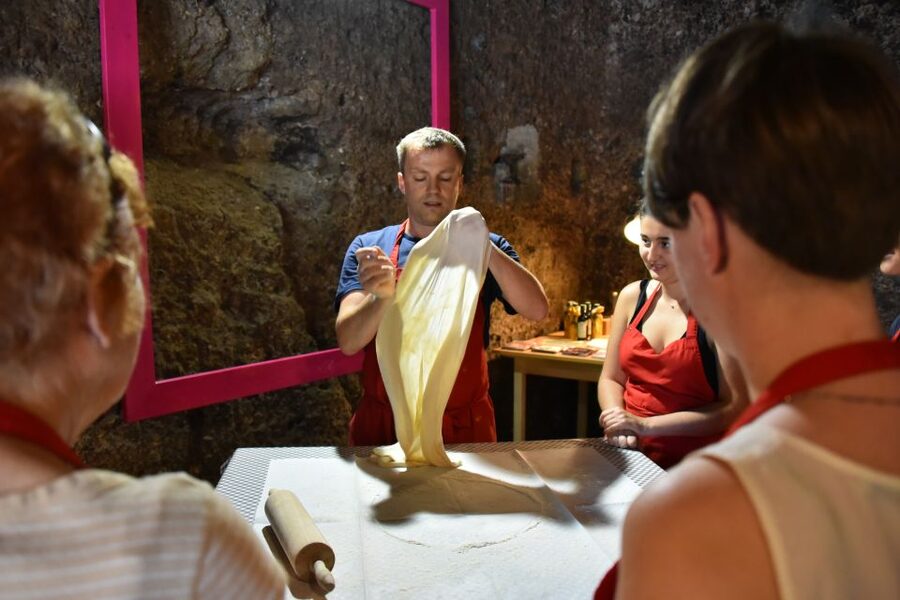
The best part of this Salzburg class is that you do not just watch a chef work. You stretch the strudel pastry, season the apples, prepare your own Salzburger Nockerl, and sit down to eat what you made. The kitchen, set in an atmospheric room carved into the hillside, gives the lesson a distinctly Salzburg feel.
I like the class for two clear reasons: it is genuinely hands-on, and the goulash soup turns the baking lesson into lunch. The instructors keep things relaxed and explain the steps in clear English, even for people with little kitchen experience. The main thing to consider is that Salzburger Nockerl has a light, unusual texture and flavor that may not suit everyone.
Key points at a glance
- Two classic Austrian desserts: Make apple strudel and Salzburger Nockerl from start to finish.
- A cozy cave-like venue: The Edelweiss Cooking School occupies an atmospheric space in the hillside.
- A proper midday meal: Goulash soup arrives while your desserts bake, followed by your own creations.
- Small working groups: Classes hold up to 15 people, with tables shared by two to four participants.
- Useful for beginners: You take part in nearly every step, with instructors guiding the process.
- Convenient central location: The meeting point is about a 10-minute walk from Mirabell Square or Mozart Square.
Why this class feels more personal than a cooking demonstration
Many food activities leave you standing at the edge of a kitchen while someone else does the important work. This one puts you at the table. You handle the ingredients, follow the method, and watch your own dessert go into the oven.
The class size helps. A maximum of 15 people is small enough for the instructors to move between tables, and the working groups of two to four keep the preparation manageable. You are not trying to elbow your way toward one shared mixing bowl.
The setup also encourages conversation. You sit with people from different countries, work through the same recipe, and later eat together at a communal table. That social side matters if you are visiting Salzburg alone or want something less formal than another restaurant meal.
The tone is friendly rather than school-like. Instructors such as Leonardo, Agnes, Johan, and Riea have been praised for clear demonstrations, patience, humor, and practical help. The exact teaching team can vary, but the format is built for amateurs, not pastry professionals.
More cake and coffee stops in Salzburg:
- Austrian Apple Strudel Cooking Class including Lunch in Salzburg
★ 5.0 · 929 reviews - Salzburg Christmas Cookies and Apple Strudel Cooking Lesson
★ 5.0 · 183 reviews - Cookies and Apple Strudel Cooking Class Including Lunch
★ 4.9 · 156 reviews
Finding the Edelweiss Cooking School near Salzburg’s old center
The meeting point is Ursulinenplatz 9, 5020 Salzburg. From Mirabell Square or Mozart Square, allow about 10 minutes on foot. That makes the class easy to fit into a day of sightseeing, particularly if you have a morning tour before it or afternoon plans afterward.
The location is more than a room with a few ovens. Several people specifically appreciated the cave-like setting, described as a space carved into the side of the hill. It gives the class a sense of place without turning it into a staged folk show.
You should still allow enough time to find the entrance. The activity information gives the address and walking distances, but it does not promise a hotel pickup or transportation. Plan to arrive at the meeting point on your own.
The space is wheelchair accessible, which is useful for visitors who need step-free access. Since cooking involves tables, ovens, and shared work areas, it is sensible to mention any specific needs when booking, even though the activity is listed as accessible.
Making apple strudel, from seasoned apples to stretched pastry
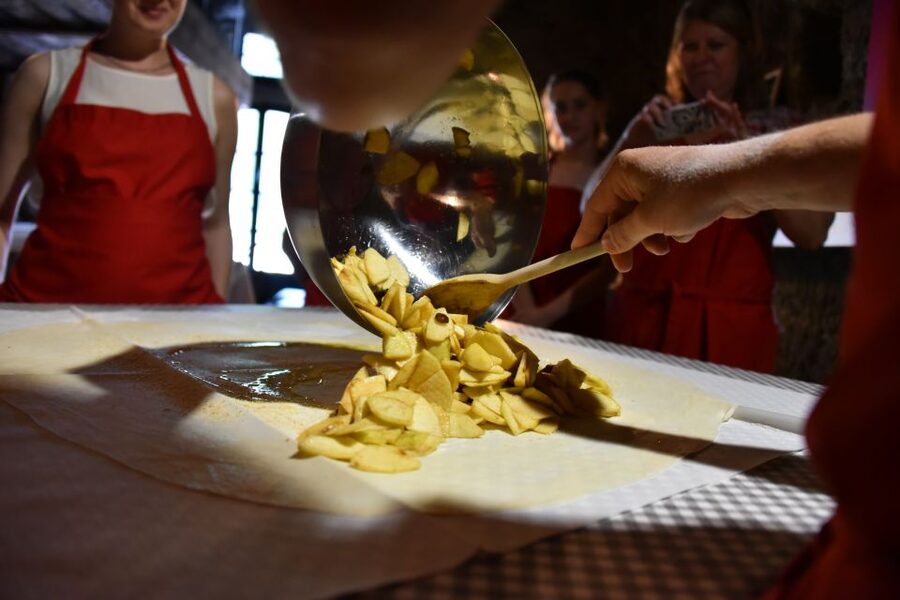
The class begins with the centerpiece: Austrian apple strudel. You are guided through the preparation rather than handed a finished pastry to decorate.
One of the most memorable tasks is marinating the apples. This is a small step, but it shows how the dessert is built. The filling must be prepared before it is wrapped, and you get to see how simple ingredients become something associated so strongly with Austrian cafés and menus.
Then comes the pastry. Stretching it out is the part that sounds intimidating, but the instructors break it down and help you along. You do not need previous baking experience. The aim is to give you a successful result while showing you the technique well enough to try it again at home.
That practical balance is one of the class’s strengths. You learn enough to understand the process, but the lesson does not pretend to turn you into a professional baker in 90 minutes. The recipes are described as easy to follow, and the school shares them online for later attempts.
The apple strudel is also the safer choice if you have limited dessert experience or want a recipe you are likely to repeat. The ingredients and method are familiar enough to adapt to your own taste. One useful bonus is that you may have leftover strudel to take with you, although the exact amount will depend on how much your group makes and eats.
Preparing Salzburger Nockerl, Salzburg’s unusual local sweet
While the strudel bakes, everyone prepares individual Salzburger Nockerl. This dessert is closely associated with Salzburg and is one of the local specialties you are likely to see on menus around town.
The dish is light and airy, with a very different character from apple strudel. You make your own portion, which means you can watch the delicate mixture come together and learn how it is handled before baking.
This is where tastes can differ. Some people find the Nockerl especially delicious, while others prefer the denser, fruit-filled strudel. I would not choose the class only because you expect to love both desserts equally. Choose it because you want to understand two traditional sweets and take part in making them.
The contrast is useful. Apple strudel teaches you about pastry and filling. Salzburger Nockerl gives you a chance to prepare a soft, delicate baked sweet. Together, they make the class more interesting than a single-recipe workshop.
More to book in Salzburg
- Vienna: Chocolate Workshop in Chocolate Museum w/ Tasting
★ 4.5 · 1,802 reviews - Chocolate workshop in Chocolate Museum Vienna “BO-YO”
★ 4.5 · 352 reviews - Nabiel’s Vienna Cooking Class
★ 5.0 · 234 reviews - Vienna: Traditional Kaiserschmarrn Cooking Class & Tasting
★ 4.5 · 179 reviews
Goulash soup makes the baking time useful
Desserts need time in the oven, so the school serves goulash soup while you wait. This is not just a token snack. The soup is treated as the savory part of the meal, and it helps make the class work as a lunch stop.
The dish is described as beef goulash or goulash soup in the activity details and participant experiences. A vegetarian option is mentioned for some dumpling-related food at the venue, but the provided information does not confirm a vegetarian version of the goulash served with this class. If that matters to you, ask before booking.
I like this part of the timing. You are not standing around watching a timer. You sit down, eat something warm, and talk with the people from your table while the strudel and Nockerl finish cooking.
Portions have been described as generous. With soup followed by two homemade desserts, you should expect a full midday meal rather than a small tasting. Drinks are not included, and at least one experience noted that drinks were cash-only, so carrying some cash is a sensible precaution.
A 90-minute activity that fits into a busy Salzburg day
The advertised duration is 90 minutes. That is short enough to slot between major sights, but long enough to include preparation, baking, soup, and tasting.
The timing works particularly well after a morning walking tour. You can finish sightseeing, walk to Ursulinenplatz, and use the class as lunch before returning to Salzburg’s museums, churches, or riverfront. It also works before an afternoon activity if your schedule allows for the stated start time.
Do not book it too tightly against an important train or timed visit. The official duration is 90 minutes, but cooking classes can feel less rigid than a museum entry slot, especially when a group is finishing food and packing leftovers. The activity information advises checking available starting times, so choose a session that leaves breathing room.
The class is offered in English. That makes the demonstrations accessible to international visitors, and the teaching style is intended for people who may not know much about Austrian baking.
What the $70 price includes, and what it does not
At $70 per person, this is not the cheapest way to eat strudel in Salzburg. A café dessert will cost much less. The value comes from combining a meal with instruction, ingredients, a distinctive venue, and the chance to make two local specialties yourself.
You are paying for more than a demonstration. The price includes the cooking activities, the ingredients used in class, the goulash soup, and the desserts you prepare. Taxes, fees, and handling charges are included. Drinks are extra.
For a family, the cost can add up quickly, but the format works well across generations. Children and teenagers can take part, and an 11-year-old and 14-year-old have been specifically described as enjoying the activity. Older family members can join too, provided everyone is comfortable working at the shared tables.
I would see the class as good value if you want an activity rather than simply a meal. It is less compelling if you have no interest in cooking or if your main goal is to sample as many different Salzburg dishes as possible in a short time.
Who will enjoy this Salzburg cooking class most
This is a strong choice for:
- First-time bakers: The instructions are broken into clear steps, and help is available at the table.
- Families: The work is active, the food comes quickly, and younger participants can take part.
- Couples and solo visitors: The shared tables make it easy to meet people without arranging a private group.
- Food-focused visitors: You learn how two local desserts are made, not just where to order them.
- Rainy-day planners: The indoor setting gives you a useful alternative to another outdoor sightseeing stop.
- Visitors with a tight schedule: The 90-minute format can fit between tours and other activities.
It may be less suitable if you want advanced pastry instruction. The class focuses on a fun, achievable introduction rather than professional technique, detailed culinary theory, or a long chef-led workshop.
It is also worth thinking about your dessert preferences. Apple strudel is broadly familiar and usually the crowd favorite. Salzburger Nockerl is softer and more distinctive, and its taste will not appeal to everyone.
Practical details before you reserve
You can cancel up to 24 hours in advance for a full refund. A reserve-now, pay-later option is also offered, which helps if you are still arranging the rest of your Salzburg schedule.
The meeting point is central enough to reach on foot from Mirabell Square or Mozart Square. There is no stated hotel pickup, so do not assume transportation is included.
The class is listed as wheelchair accessible. English is the stated teaching language. Drinks are not included, so bring money for them if you want something besides the soup and desserts.
Because the class includes shared tables and a communal meal, it suits people who are comfortable working alongside others. The maximum of 15 keeps it from feeling like a large tour, but it is still a group activity rather than a private lesson.
Should you book the apple strudel class?
I would book this if you want a compact Salzburg activity that combines local food, simple hands-on cooking, and a social meal. The cave-like venue gives it character, the instructors make the recipes approachable, and the goulash makes the experience feel like lunch rather than a short demonstration.
The best reason to choose it is the chance to leave with more than a photograph of a dessert. You learn a recipe you can try at home, taste two traditional sweets, and gain a better sense of how Austrian food fits into daily life.
Skip it if you dislike group activities, want a serious pastry course, or would rather spend $70 on several restaurant meals. For most visitors who enjoy food and have 90 minutes to spare, though, this is a practical and memorable addition to a Salzburg itinerary.
FAQ
Where does the cooking class meet?
The meeting point is Ursulinenplatz 9, 5020 Salzburg. It is about a 10-minute walk from Mirabell Square or Mozart Square.
How long does the class last?
The advertised duration is 90 minutes. Starting times vary, so check availability when choosing your session.
What will I make?
You will prepare Austrian apple strudel and individual Salzburger Nockerl. You will also receive goulash soup while the desserts bake.
Is the class taught in English?
Yes. English is the listed teaching language.
Are drinks included?
No. Drinks are not included in the price. Bring cash if you want to purchase drinks, as cash-only service has been noted at the venue.
Can I cancel the booking?
You can cancel up to 24 hours before the activity for a full refund. A reserve-now, pay-later option is also available.
Just added in Salzburg
- Private Werfen Ice Cave and Golling Waterfall from Salzburg★ 5.0 · 15 reviews
- Private Tour: Eagle’s Nest and Bavarian Alps Tour from Salzburg★ 5.0 · 73 reviews
- Alpine Majesty: Eagle’s Nest, Salt Mine Salzburg & Berchtesgaden★ 5.0 · 15 reviews
- Salzburg: Christmas/Advent Concert at Fortress Hohensalzburg★ 4.4 · 54 reviews
- Salzburg: White Water Rafting on the Salzach River★ 4.7 · 87 reviews
- Salzburg: River Rafting Trip for Beginners★ 4.8 · 102 reviews
- Salzburg: Cathedral Entry Ticket with Audio Guide Option★ 4.4 · 134 reviews
- Best of Mozart Concert and GOLDEN VIP Dinner at Fortress Hohensalzburg★ 4.5 · 138 reviews
Coffee House & Cake Experiences, compared.
Austrian Apple Strudel Cooking Class including Lunch in Salzburg
Read our review →
Salzburg Christmas Cookies and Apple Strudel Cooking Lesson
Read our review →
Typical Austrian Food Tour with Coffee House Visit
Read our review →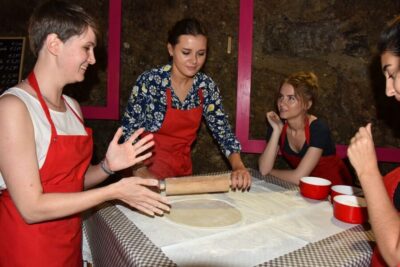
Cookies and Apple Strudel Cooking Class Including Lunch
Read our review →Browse the lists this tour appears in