
Reviewed · CITY TOURS
Innsbruck: Private City Tour by a licenced “Austria Guide”
Innsbruck’s old center packs a surprising amount into a walkable area. With a state-certified Austria Guide, you move from Maria Theresien Street into medieval lanes, stand beneath the Golden Roof, look into St. James Cathedral, and finish among the great Habsburg buildings. The route gives you both city history and a clear sense of how the Alps shaped Innsbruck.
I like the private format, since your guide can adjust the pace and answer questions without a large group slowing things down. I also like the strong local angle: Clemens Lindig leads tours himself, while Anja Hinteregge, a native of Innsbruck and schoolteacher, brings a personal connection to the city and its past.
The main thing to consider is that the basic price covers a walking tour, not admission to the Imperial Palace, Court Church, or other museums. If you want to go inside those sights, plan extra time and money, especially for a tour lasting two hours or more.
Key points at a glance
- Maria Theresien Street opens the story: See former aristocratic town palaces alongside modern shops on Innsbruck’s main urban avenue.
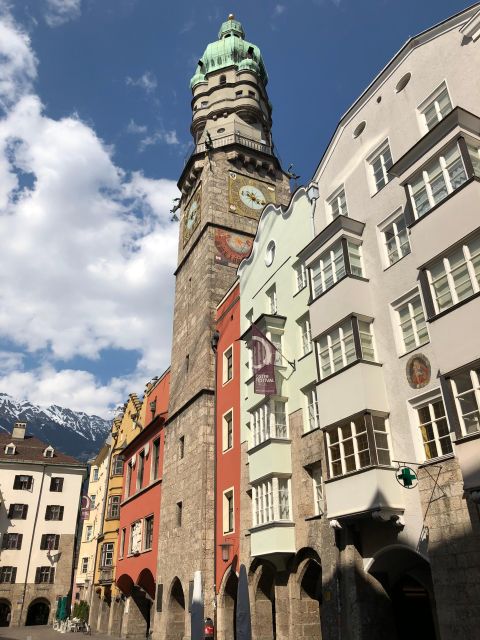
- The medieval center feels compact and atmospheric: Many houses date from the era of Emperor Maximilian I around 1500.
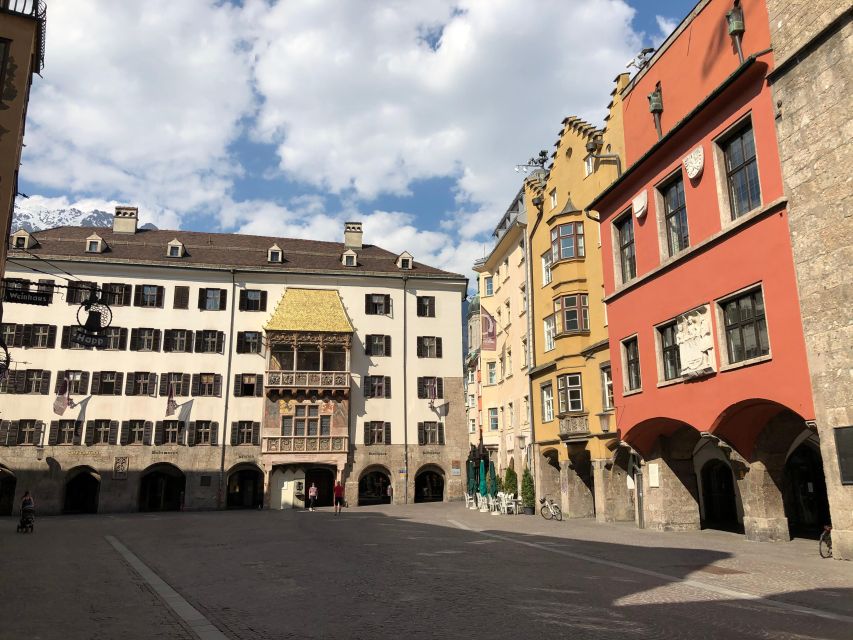
- The Golden Roof anchors the walk: Innsbruck’s best-known sight connects the city with the Habsburg court.
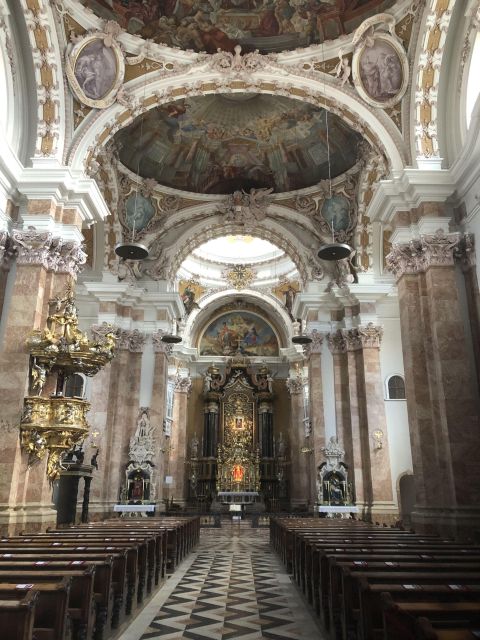
- St. James Cathedral adds serious art and ceremony: Look for Lucas Cranach the Elder’s painting of Mary with Child.
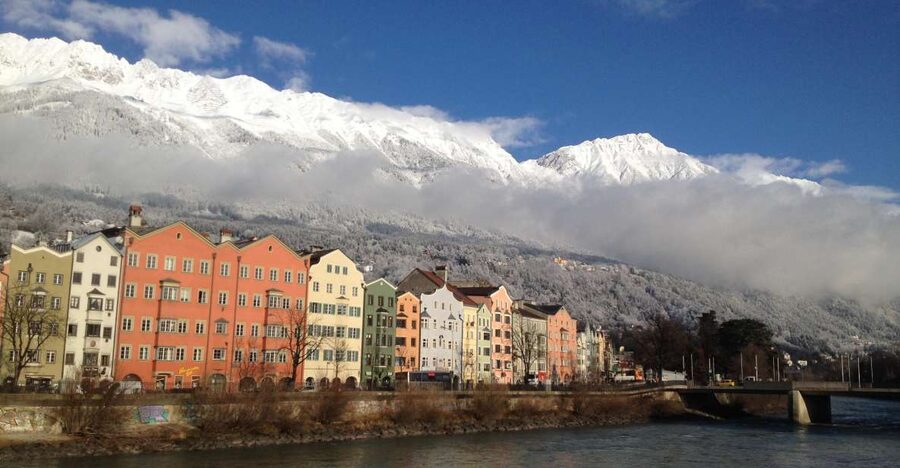
- The Inn Bridge gives you the mountain view: From the river, you can see the Northern Chain rising above the city.
- A private guide makes the timing flexible: Choose a one-hour overview or stretch the visit to three hours with an optional interior stop.
Starting on Maria Theresien Street
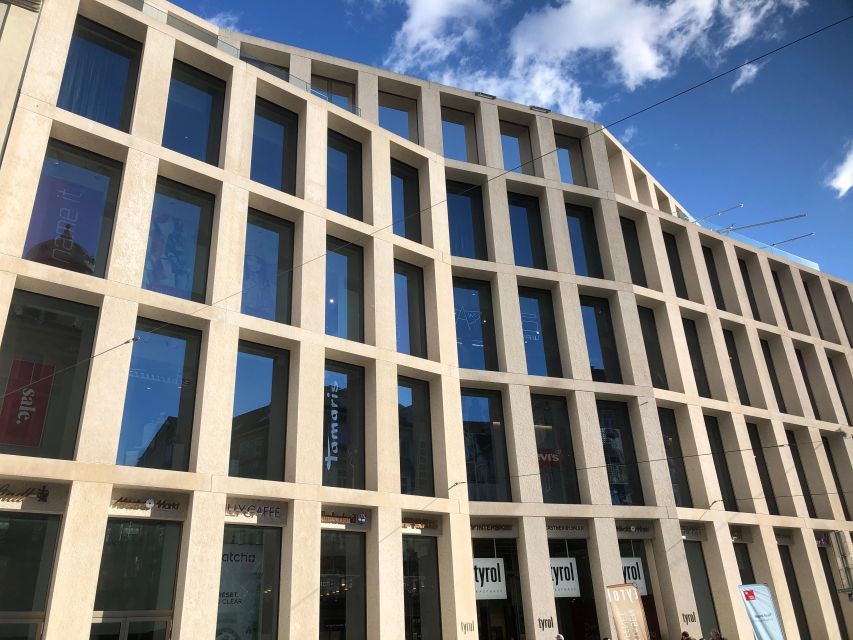
Maria Theresien Street is a smart place to begin because it shows Innsbruck as a living city, not only as a preserved old quarter. This was once the first suburb outside the medieval center. Today, former baroque town palaces line the street beside modern shopping centers.
That contrast helps you read the city. Innsbruck has long served as a meeting point between northern and southern Europe, and the street still feels like a route through the middle of town rather than a museum set. Your guide can explain how noble families used their city residences and how the street changed as Innsbruck expanded.
The walk begins at a comfortable pace here, with broad urban views before you enter the tighter old streets. If you have only a short time in Innsbruck, this opening gives useful orientation. You see where the modern center ends and the historic core begins.
The street is also a practical place to notice the tour’s private format. You can ask your guide to focus more on architecture, Habsburg politics, local life, or shopping and city orientation. The stated languages are English, German, and Japanese.
More to book in Innsbruck
- Innsbruck: City Highlights Private Guided Tour
★ 4.9 · 83 reviews - Private Full-Day Tour of Neuschwanstein Castle from Innsbruck
★ 5.0 · 79 reviews - Innsbruck: Private Tour with a Local Guide
★ 4.2 · 51 reviews
Entering Innsbruck around 1500
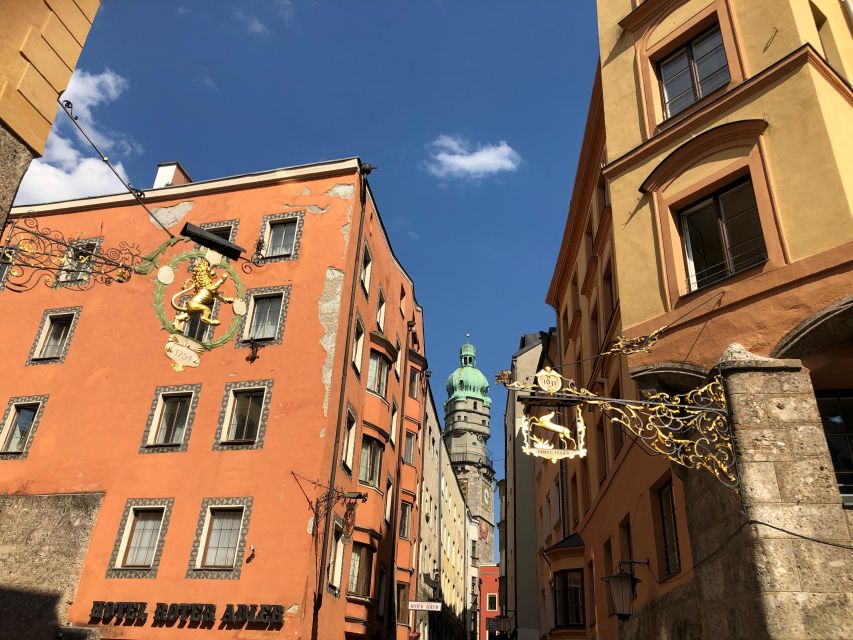
Crossing into the Old Town changes the mood quickly. The medieval center is made up of narrow streets and buildings connected with the period around Emperor Maximilian I, who ruled at the turn of the sixteenth century.
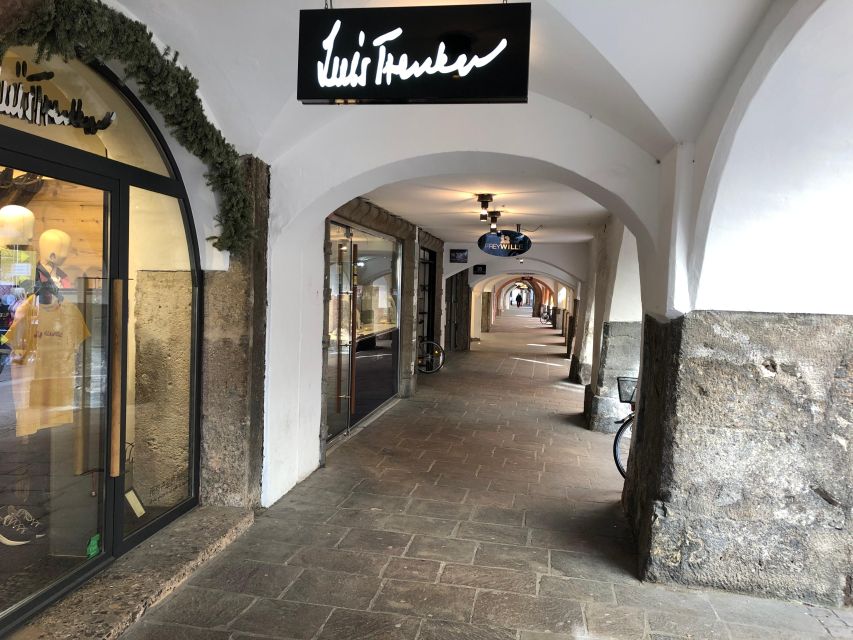
This is where a guide earns the fee. On your own, you can admire painted façades, arcades, and old stonework, but it is harder to understand why the streets developed as they did. Your guide links the buildings to Innsbruck’s role as a trading point, where merchants brought goods from distant parts of Europe.
The old center is compact, so you are not spending most of the tour walking between distant sights. Instead, the value comes from stopping often, looking up, and hearing the story behind what is in front of you. A one-hour tour can cover the main route, but it will feel brisk. For a slower walk with questions, allow two hours or more.
The medieval setting is especially useful for families and first-time visitors. Children can follow the changing streets and building shapes more easily than a long museum lecture, while adults get the political and commercial background that makes the architecture meaningful.
Pausing at the Golden Roof

The Golden Roof is Innsbruck’s signature sight and the natural center of the tour. Its bright roof tiles catch your eye, but the important story is the building’s link with Emperor Maximilian I and the Habsburg court.
This stop brings imperial history down to a single façade. Your guide can explain how the building represented power and ceremony, and how the emperor’s presence shaped Innsbruck. The Golden Roof is not simply an attractive photo stop. It helps explain why this relatively compact Alpine city became important to European rulers.
Expect this area to feel busier than the quieter side streets. The Golden Roof is the city’s main sightseeing landmark, so you may want a moment to take photographs before moving on. Video and audio recording are not permitted during the activity, so bring a camera for still images if you wish, and listen while the guide is speaking.
The private setting works well here. You can ask for more detail about Maximilian, the Habsburg family, or the architecture without holding up a large party. If you prefer a quick introduction to Innsbruck, the Golden Roof may be the point where the city’s story clicks into place.
Looking north from the Inn Bridge
The Inn River gives the city its name, and the bridge over it provides one of the clearest views on the route. From here, you look toward the Northern Chain, the mountain range rising north of Innsbruck.
This is an important pause because it connects the city’s architecture with its setting. Innsbruck was not built in isolation. Its position between the Northern and Central Alps helped make it a route between northern and southern Europe, while the river offered a natural crossing point.
The bridge also gives your eyes a break from close medieval streets. You get a wider view of the city and mountains before returning to the historic center. Weather will affect how dramatic the view feels, but the location remains useful for understanding Innsbruck’s geography.
I would not treat this as only a photograph stop. Ask your guide how the river and mountain passes affected trade and settlement. The answer will help you see why Innsbruck developed here and why its history is more than a succession of palaces.
A different kind of evening in Innsbruck:
- Tyrolean Evenings Family Gundolf in Innsbruck
★ 4.7 · 975 reviews - Top of Innsbruck: Roundtrip Cable Car Ticket
★ 4.8 · 701 reviews - Innsbruck Swarovski Crystal Worlds Ticket and Transfer
★ 4.6 · 658 reviews - Combi Entrance Ticket to Alpine Zoo and Hungerburg
★ 4.5 · 637 reviews
St. James Cathedral and Lucas Cranach
The tour continues to the Dome of St. James, one of Innsbruck’s key baroque interiors. Entry is currently free during public opening hours, but you cannot visit during church services. A small photo ticket costs €1 and can be bought inside.
The cathedral’s most important artistic feature is Lucas Cranach the Elder’s painting Mary with Child, also known as Maria Hilf. Your guide can point out why this work matters and place it within the religious and court culture of the period.
The cathedral also contains the burial place of one of Tyrol’s sovereigns. Its ceiling paintings and interior decoration add another layer to the walk, shifting the focus from public imperial display to worship, ceremony, and remembrance.
Allow a few quiet minutes here. It is easy to rush through a church on a city walk, especially when there is a lot still to see. The guide’s explanation gives the visit shape, but the interior also deserves a pause without constant commentary.
Since public access can change around services, this is one part of the route where timing matters. The cathedral visit is included only when it is open to the public, so do not assume it will be available at every starting time.
Finishing with the Habsburg court
The walk ends in front of the Imperial Palace and the Court Church. This is a strong finish because the two buildings bring together much of what you have seen: Tyrolean politics, Habsburg power, religious ceremony, and the public image of an emperor.
The Imperial Palace was home to the Tyrolean branch of the Habsburg family and their court. Even if you do not enter, the exterior helps explain the scale and confidence of imperial Innsbruck. You finish with a clearer sense of how the city’s medieval trading center became a seat of court life.
The Court Church is known for the memorial grave of Emperor Maximilian. It is described as one of the most important and beautiful imperial tombs in the Holy Roman Empire. That claim points to the church’s main appeal: it is not simply another historic building, but a carefully planned memorial to a ruler whose name appears throughout Innsbruck.
For tours of two or three hours, you can arrange an optional entry into the Imperial Palace, Court Church, or another museum. These admissions cost extra and are paid directly on site. I would choose one rather than trying to squeeze in several. The basic walk already contains plenty of stops, and an interior visit deserves enough time to be worthwhile.
What the private format changes
The tour costs $163 per group of up to 10 people. That is not a cheap individual walking tour, but it can be good value for a family or group that would otherwise book several separate places. Split among ten people, the cost is modest for a private guide. For two people, the price is harder to justify unless you care about personal attention and a flexible pace.
The tour lasts from one to three hours. That range matters. A one-hour booking is best for a quick introduction, perhaps between transport connections or before a separate museum visit. A two-hour version gives the main route room to breathe. Three hours makes sense if you want a longer conversation, a slower pace, or an optional interior admission.
Pickup is included, with a meeting point agreed in advance. Arrive 10 minutes early. Since this is a walking experience, wear shoes you can use comfortably on old-town streets and plan for changing Alpine weather, although the supplied details do not specify the exact route surface or seasonal conditions.
The activity is wheelchair accessible. Still, if you use a wheelchair or mobility aid, confirm the planned meeting point and any optional indoor visits before booking, since the walking route and individual buildings may have different access arrangements.
For groups larger than 20, headsets are mandatory. You can bring your own system, or the provider can arrange one for €30, paid in cash by the tour leader on site. Groups of up to 10 are covered by the advertised private rate, so this tour is particularly straightforward for families, couples traveling with friends, and small organized parties.
The guide makes the history personal
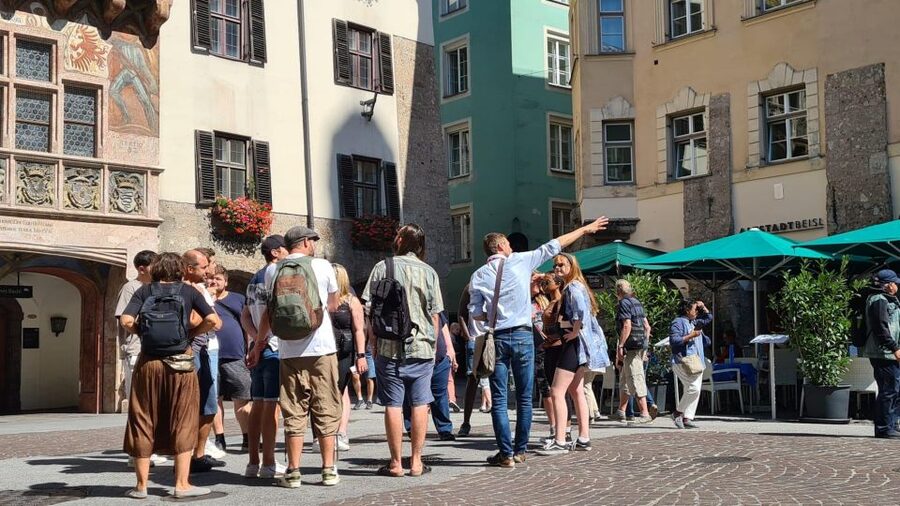
Clemens Lindig is the named provider and an Austria Guide. The guide’s role is more than pointing out façades. A state-registered, certified guide is trained to explain the country’s cultural and historical sites, which matters in a city where the main sights are linked by centuries of politics.
Clemens has led the route himself, and his style is described as friendly and well informed. Anja Hinteregge is another guide connected with the experience. She is a native of Innsbruck and also works as a schoolteacher, bringing a local point of view and clear English to the walk.
Anja’s approach includes Austrian and Habsburg history, Innsbruck’s story, and personal wartime memories from her mother and grandparents. That kind of firsthand family context can make the twentieth-century portion feel less like a detached timeline. It also shows why a local guide can add something beyond standard dates and names.
The strongest praise focuses on three things: clear explanations, a warm manner, and the ability to adjust the tour to the group’s interests. One guide gave a group useful suggestions for the rest of its time in Innsbruck, which is exactly the sort of help you should request before the walk ends. Ask about museums, sights, or how to use your remaining hours.
Who should book this Innsbruck walk
I would choose this tour if you want a clear first look at Innsbruck and prefer conversation to a recorded audio guide. It suits first-time visitors, families, small groups, and anyone interested in the Habsburg period but unsure where to begin.
It is also a good fit if you want to combine major sights with a local perspective. The route covers the places most visitors expect to see, but the guide can explain how Maria Theresien Street, the river crossing, the medieval lanes, and the imperial buildings connect.
You may want a different plan if your main goal is a long museum visit. The base price includes no admission to the Imperial Palace, Court Church, or other museums. In that case, choose a two or three-hour version and arrange one interior stop in advance.
The tour is offered in English, German, and Japanese. The high overall rating, 5 out of 5 from 18 bookings, matches the experience’s strongest features: personal guiding, useful local advice, and a good balance between history and sightseeing.
Should you book it?
Book this tour if you want a well-paced introduction to central Innsbruck, especially with a small private group. The route covers the Golden Roof, St. James Cathedral, the Inn Bridge, and the Habsburg court without wasting time on long transfers.
For the best value, book at least two hours and decide ahead of time if you want to add the Imperial Palace, Court Church, or a museum. Choose the one-hour version only if you need a quick orientation. The tour is not the cheapest way to see Innsbruck, but for a group of several people, a personal Austria Guide can make the city far easier to understand.
FAQ
How long does the private Innsbruck tour last?
You can book the tour for one, two, or three hours, depending on availability and your chosen starting time.
What languages are available?
The tour is offered in English, German, and Japanese.
Is the tour private?
Yes. It is a private group experience, priced at $163 for a group of up to 10 people.
Are admissions to the Imperial Palace and Court Church included?
No. The walking tour does not include those admissions. Optional entries can be arranged for an additional cost, paid directly by the customer on site.
Is entry to St. James Cathedral included?
Entry is currently free during public opening hours. Visits are not possible during church services. A €1 photo ticket can be purchased directly inside the cathedral.
Are headsets required for large groups?
For groups larger than 20 people, an audio system such as Quiet Vox is mandatory. You may bring your own, or the provider can arrange one for €30, paid in cash by the tour leader on site.
Just added in Innsbruck
- Innsbruck – capital city of tyrol, privat tour – local guide★ 5.0 · 31 reviews
- UP STREAM SURFING – The new way of surfing a river★ 5.0 · 5 reviews
- Private Tour of Swarovski Crystal World from Innsbruck★ 4.5 · 10 reviews
- Dolomites Private Tour from Innsbruck: “Taste” of other Italy.★ 5.0 · 12 reviews
- Paragliding in the morning★ 5.0 · 10 reviews
- CITY QUEST INNSBRUCK: uncover the secrets of this city!★ 5.0 · 3 reviews
- Private tour of Tyrol’s beer history★ 5.0 · 4 reviews
- Innsbruck Scenic eBike Tours★ 5.0 · 117 reviews
City Tours, compared.
Guided Walking Tour of City Center Highlights
Read our review →
Guided Walking Tour of City Highlights & Hidden Gems
Read our review →
Skip-the-Line Schonbrunn Palace Guided Tour and Vienna Historical City Tour
Read our review →
Browse the lists this tour appears in